
Wet Paint, Mutual Love.
I've Been to a Hundred Studio Visits. Here's What Makes One Worth It.
Walking into an artist's studio is never disappointing. It's easily one of my favorite activities in the art world.
That might be the most honest thing I can tell you about my job. I've been doing this for over a decade — gallery floors, museum archives, art fairs that blur together into one long fluorescent corridor — and the studio visit is the one thing that has never let me down. Not once.
It's like being a kid in a candy shop. The smells, the sounds, the sights — it is intoxicating to those of us who obsessively collect and amass and study and are so enriched by this creative energy. There is a catalytic life spirit in an artist's studio that I have not found anywhere else I've looked for it, and I've looked everywhere.
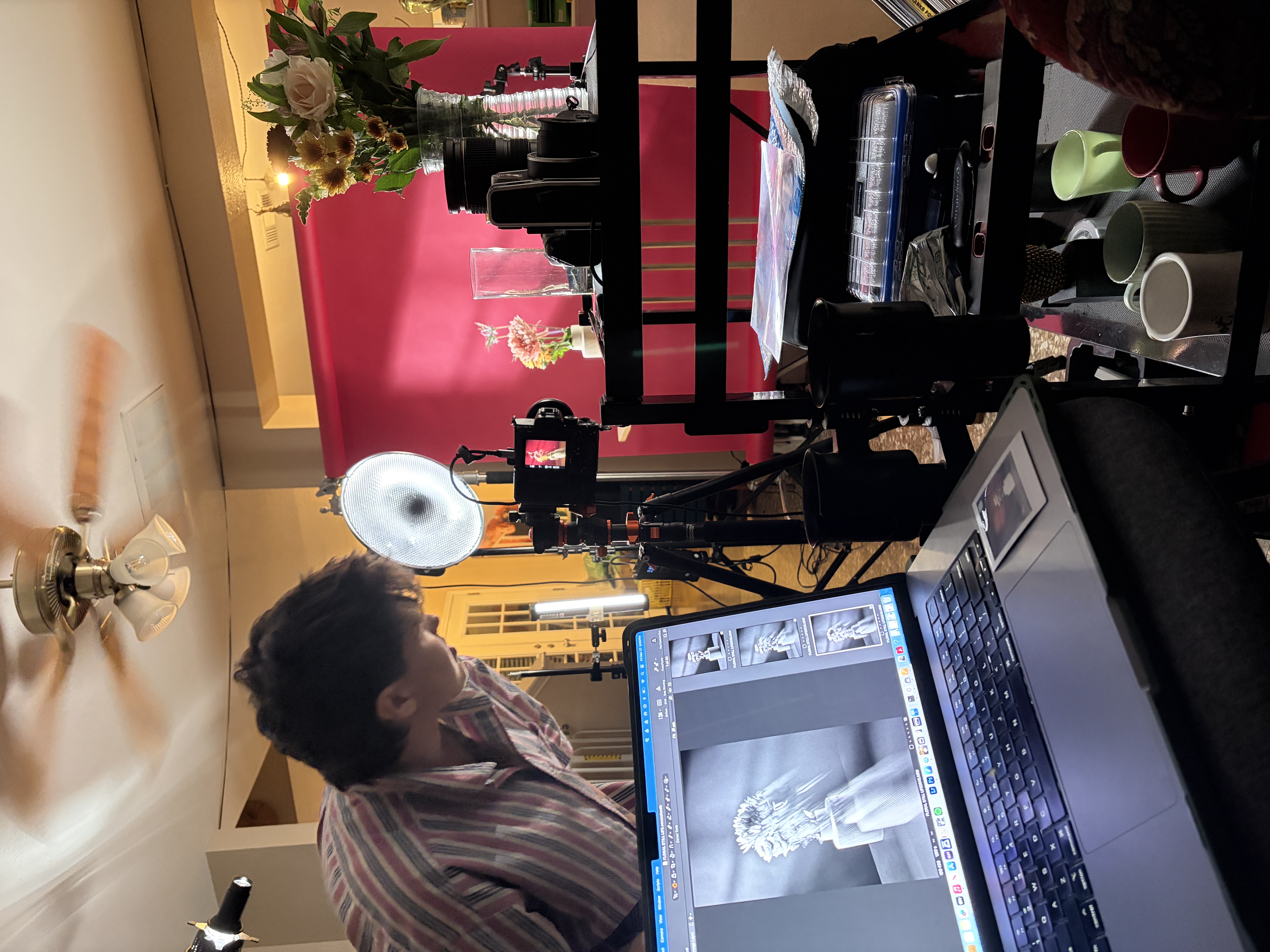
inside one studio look with Ima Leupp
One of my favorite visits was to a small local artist whose studio was part of her home. I had seen her work online, tracked her across a few websites, even encountered one piece in person. I thought I knew what I was walking into. I didn't. The moment I stepped through the door it felt like visiting an old friend — even though she was a complete stranger. We had something we mutually loved, her art, and it felt like we'd known each other for lifetimes. She welcomed me in. I met her pets. And then I turned a corner and my jaw hit the floor.
Because there is nothing — nothing — like standing in front of vibrant, hyper-realistic, wildly alive canvases that you've only ever seen on a screen. Nothing like the smell of drying oil paint and weathered canvas painted over again and again. Nothing like the artist's apron caked with years of color, brushes drying in turpentine, a thread of palo santo cutting through it all. You can't digitize that. You can't replicate it at a fair. It lives only there, in that room.
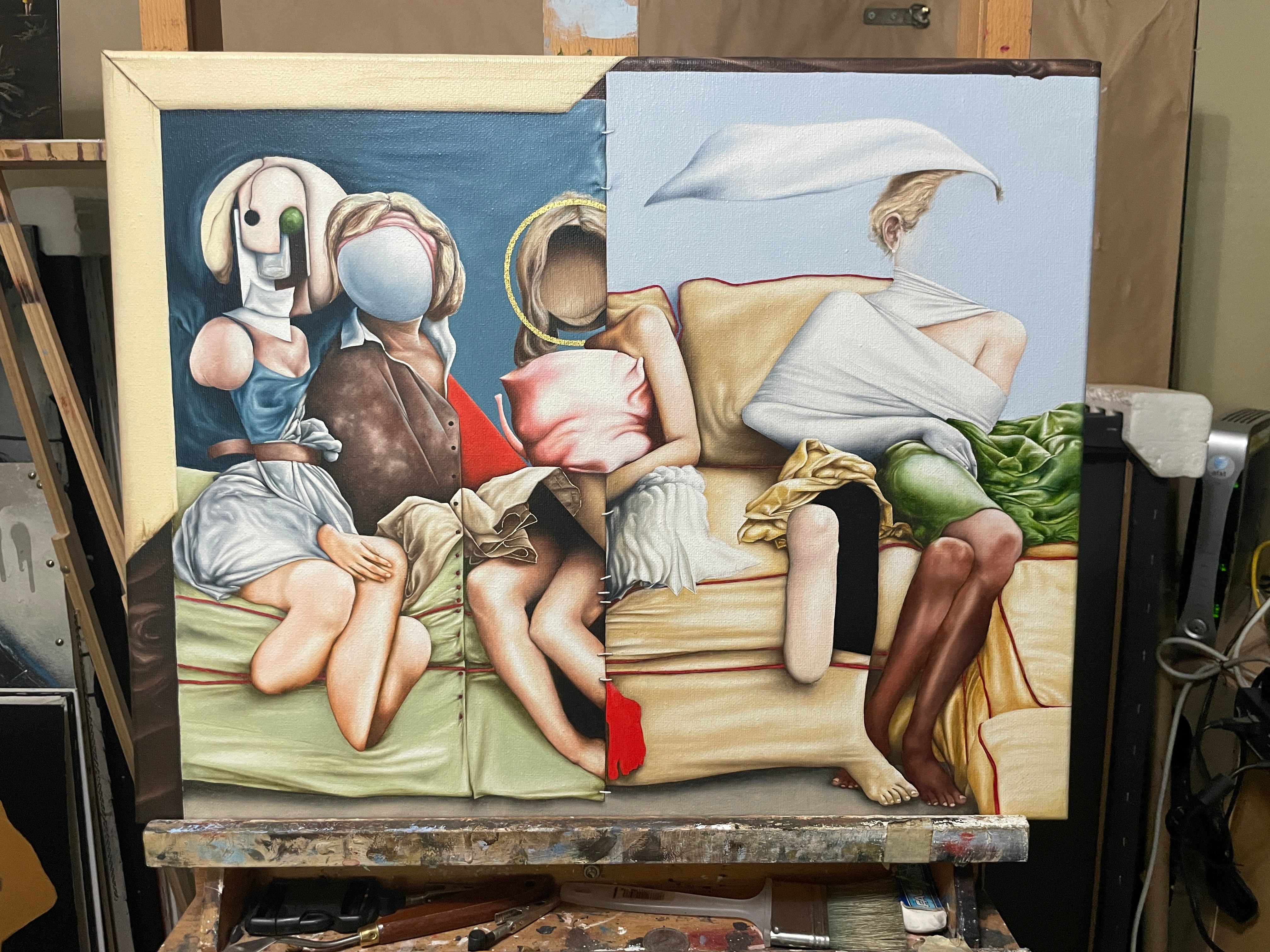
inside the studio with Michael Torres
I think about it the way I think about being in a cathedral, or standing in a vast landscape at the exact last moment of sunset when the light does that thing it does and the gravitational force of the world seems to shift slightly. You happen to be in the most miraculous location at the right time. That's a studio visit. That's what it actually is.
But here's the part that matters for you, if you're a collector:
This isn't just a feeling. I ran a team of sales consultants at a contemporary gallery for years, and it became undeniable — artistically, relationally, and in the actual numbers — that introducing a consultant, galleries, or collector to an artist's studio environment changed everything. Not theoretically. In the data. In conversion rates. In the depth and longevity of those collector relationships. It became so obvious that we made it a requirement. Every artist we worked with, we found a way to bring collectors into their world. Even virtually. Even a ten-minute video tour of the studio. It didn't matter. The effect was the same.
I think I know why. An artist in their studio is a completely different person than an artist at an opening. You put a paintbrush in a painter's hand and watch how they handle a canvas — sometimes the way an experienced parent holds a fourth child, completely naturally, without thinking — and you understand something about them that no biography or press release could tell you. My fiancee is a photographer, and I've watched this same thing happen with her. Put a camera in her hand and she can talk to anyone in the world. It's an amplification of self. The tools of the trade become an extension of the person, and when you see that, you don't just understand the work differently. You trust it differently.
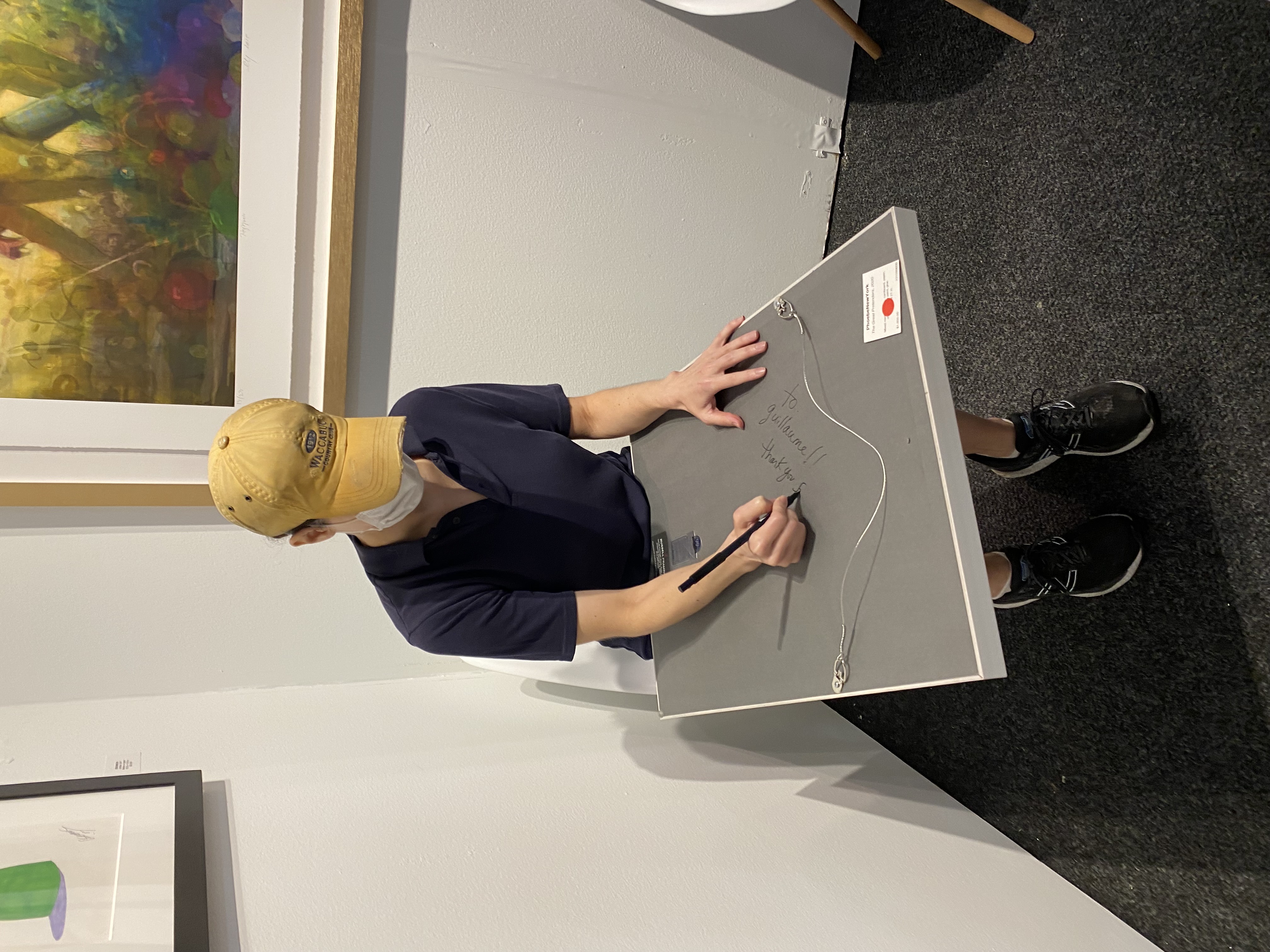
hand written dedication with an anonymous artist
What I want collectors to understand is that a studio visit is a luxury, it's not an add-on or a given. It is the most important thing you can do before acquiring a significant work by a living artist, if you or the person you've worked with has built that level of trust with the creative.
It will change what you see when you look at the painting on your wall. It will change the story you tell about it. And in my experience, it will almost certainly deepen your commitment to that artist's career in ways that no gallery presentation ever could.
I've been to a hundred of them. The ones that were worth it all had the same thing in common: I walked in prepared to look, and I left having actually seen something.
That's the whole difference.
Artists: are your studios open to collectors? What are some tips you have for hosting a studio visit?
