
Art Collecting 101: PART IV — The First Purchase
Crossing the psychological threshold
There's a version of this I've watched play out more times than I can count.
Someone stands in front of a work they love. Their heart rate is up. They're trying to talk themselves into it and out of it at the same time. And underneath all of it is this quiet, almost superstitious fear: what if this one defines everything?
Like the first piece sets the theme. Locks in the direction. Tells the story of who you are as a collector forever.
I get it. But I want to push back on it.
Think about a softball player stepping up to the plate for the first at-bat of her career. She hits a home run. Incredible. Does that mean she hits one every time after? Does that first swing determine every swing that follows? Of course not. What it does is prove she can play. It starts something.
Your first acquisition works the same way. It is not a thesis statement. It is not a permanent record. It is a beginning, and beginnings are allowed to be imperfect. You are not the same person you were five years ago. You won't be the same collector in five years either. The work you buy and your relationship to it will grow and change with you. And that's not a flaw in the process, it's the whole point.
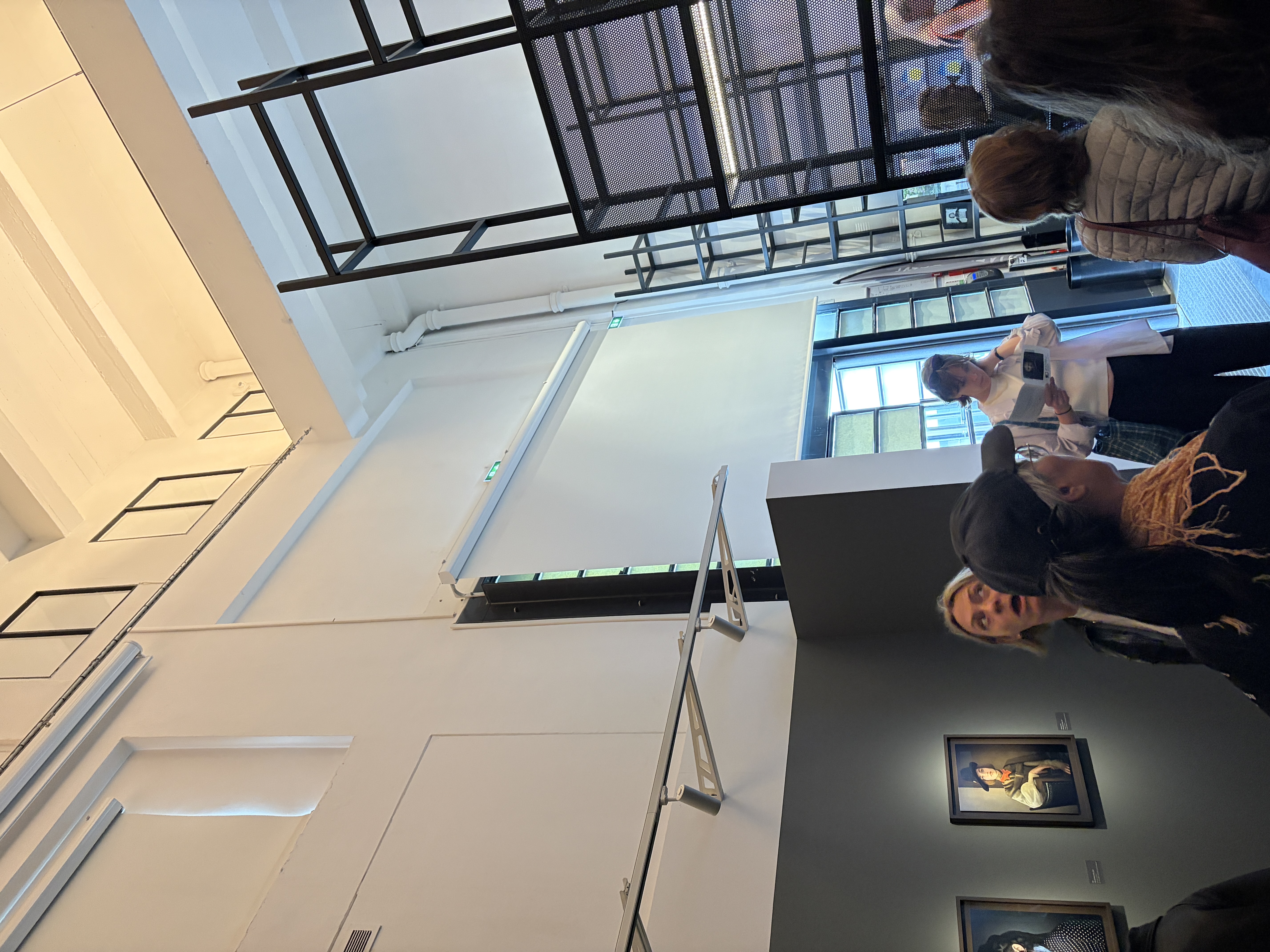
An interesting glimpse inside a gallery view. Where to start? What to read?
Now. Let's talk about the real hesitation.
Because I don't think it's actually about choosing wrong. That's the polite version. The real version is something closer to: what if I spend real money on something and it turns out I don't know myself as well as I thought I did?
And I'll say this plainly: the psychological hesitation is necessary.
If you felt nothing before making this kind of purchase, I'd wonder if it actually matters to you. The resistance you feel is proportional to the stakes. Art is not a necessity in the way food and water are necessities. [I would argue it is absolutely a necessity for a life well lived, but that is a longer conversation.] The point is: the hesitation is appropriate.
There's a difference between hesitation that asks good questions and hesitation that becomes a wall. The questions are useful. Do I believe in this artist? Do I connect to where they come from, why they make what they make? Does this specific piece mirror something back to me, challenge me, make me think?
Those questions are the scaffolding. They're how you climb over the psychological block, not around it. The collectors I've seen make purchases they never regret are the ones who can answer most of those questions before they say yes.
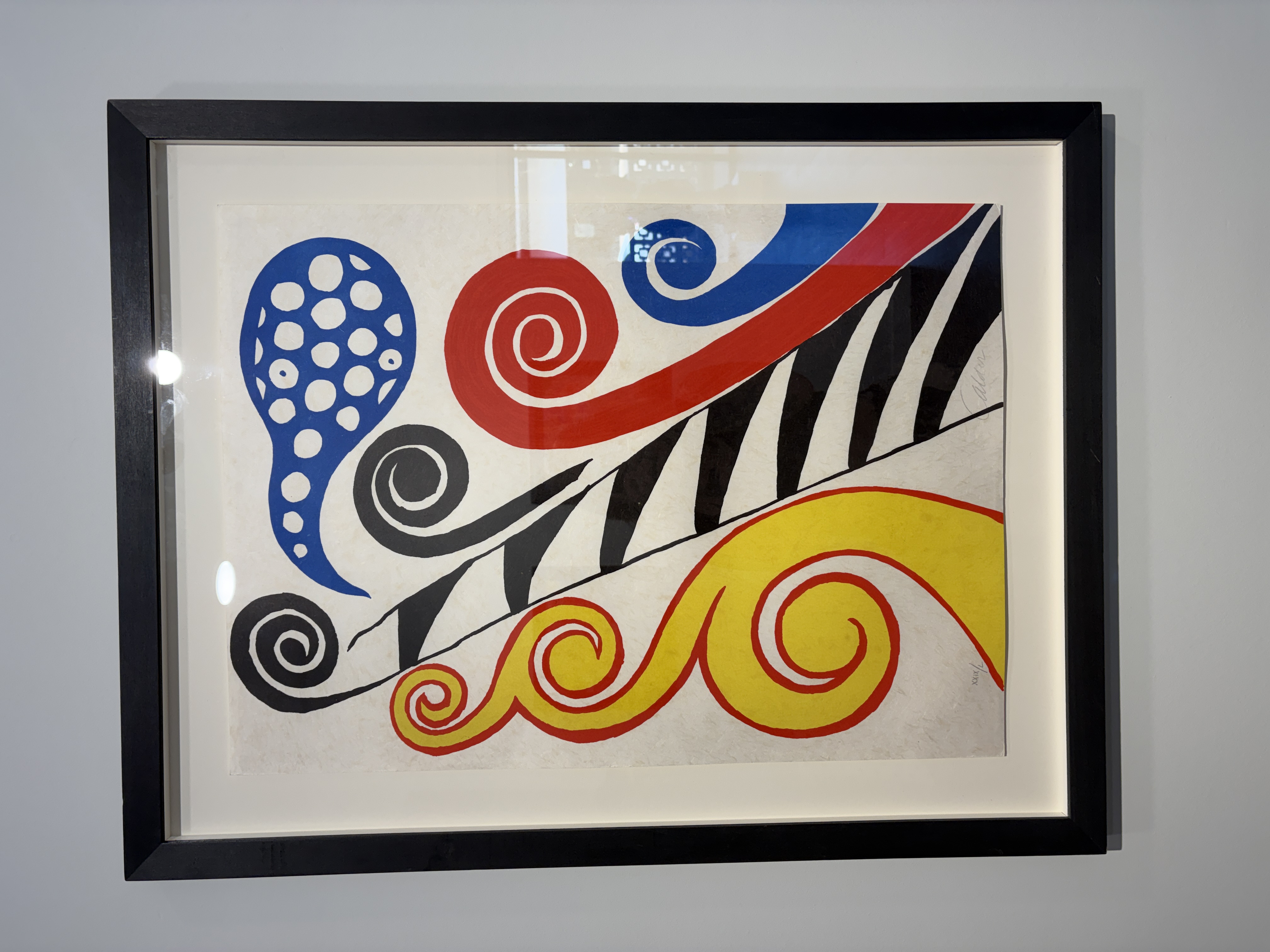
Alexander Calder Lithograph available for acquisition— can you live with this?
Which brings me to the one that actually matters most.
Can I live with this?
Not in theory. Not on a wall in a gallery. In your home, every morning, over years.
I want you to think about what I mean by that seriously. Is there a room for it, practically speaking? Is the scale right? Does it work within the flow of how you actually live? Those are real questions and they have real answers, which is why working with someone who knows what they're looking at makes a difference.
But there's a version of the question that goes deeper than logistics.
Is this something you want to be in relationship with? Because that's what living with a work of art is. The initial feeling, that adrenaline rush of I have to have this, everything is aligning, the stars are in order, that's real and it matters. Let yourself feel it.
But then ask: what happens after? Is this a story that belongs to my life right now, or is it a story I love in the gallery but can't quite claim as my own yet? Is the price point going to make me uncomfortable six months from now? Is it something my kids will encounter every day, and do I feel good about that?
Everyone's answers are different. The questions are the same.

A gallery walk through I lead about understanding color theory; breaking down the work of Josef Albers
The hardest part of all of this is that most people try to answer these questions alone, or in conversation with the one person whose job it is to sell them the work.
That's not an honest mirror. That's bias.
What you need is someone who can hold the questions with you, reflect back what you're actually asking, and help you build the ladder from I want this to I'm ready for this.
That's what the first acquisition actually requires. Not more research. Not more time. A real conversation with someone who isn't selling you anything except clarity.
What question are you sitting with right now? Leave it in the comments and I'll answer it directly.
