
Reading the Art Market Reports- Here's What They Actually Say So Far
Reading the latest art market reports from inside the gallery—and what the numbers reveal about trust, patience, and conviction.
Every spring the art world performs the same ritual.
It's that time of year again in the art world when reports begin arriving.
Banks publish them. Consultants interpret them. Advisors forward them around with notes like worth reading or interesting data.
And many of us read them with a familiar motivation: not necessarily to discover something new, but to see whether the numbers confirm what we've already been feeling inside galleries and studios.
First, because by the time these reports appear, the shift has usually already happened.
You can feel it in conversations with collectors. in the pace of acquisitions. in the kinds of questions people ask before deciding to live with a work.
Second, because the news tends to be roughly the same every year— if you don't dig in deeper with a bit of context.
While some of us await the hundred pages of high level reporting from UBS and art market economist Clare McAndrew and CEO of Art Basel Noah Horowitz tomorrow, several other reports already identify what we already know to be true.
What follows is a simplified retelling of these purportedly impressive numbers, and what it really means if whether you're an advisor, gallerist, artist, collector, or enthusiast.
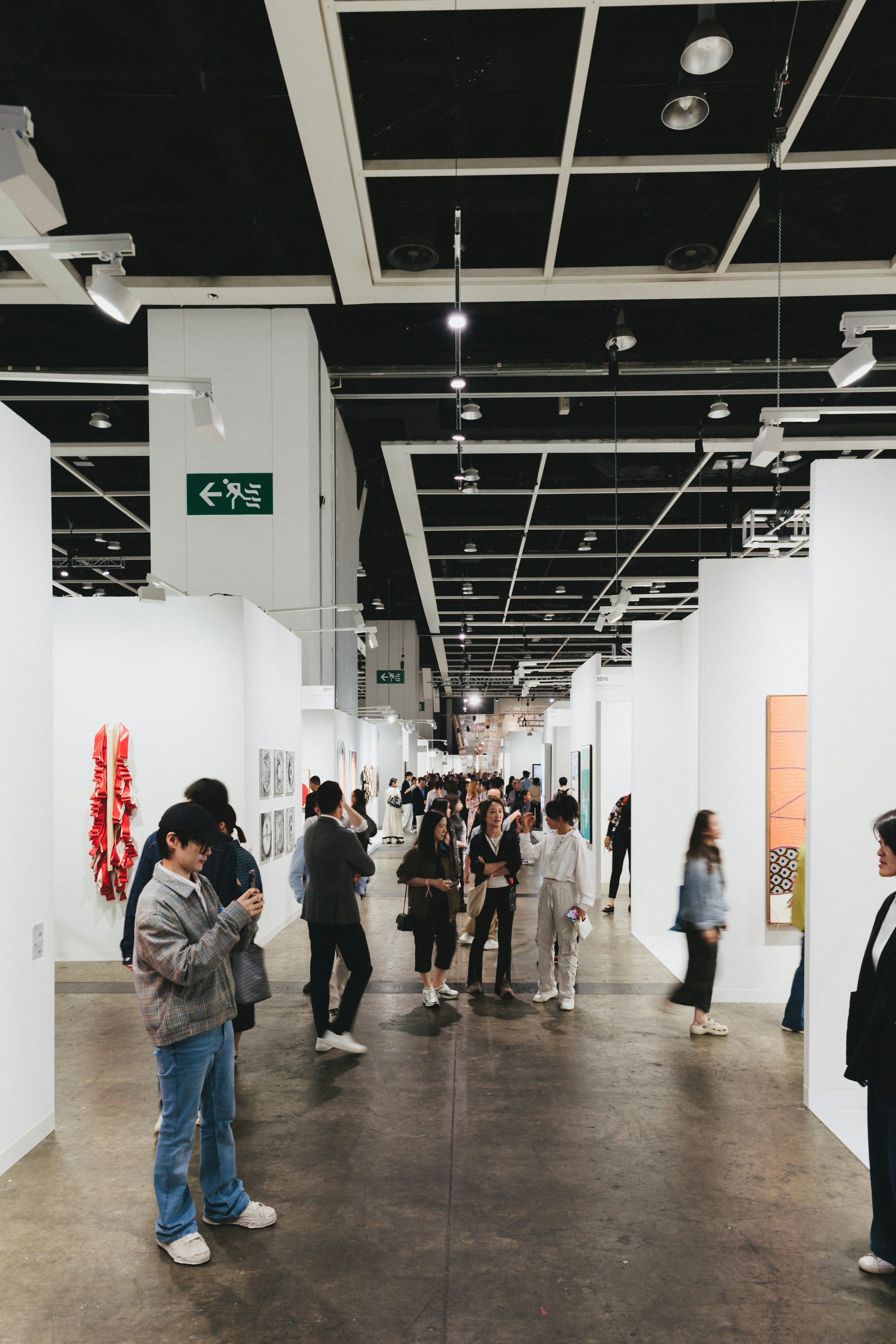
The return of discipline
One of the clearest signals comes from the newest Bank of America–ArtTactic U.S. Art Market Report, which suggests the American auction market has begun to stabilize after several volatile years.
Sales increased 23 percent, reaching roughly $3.17 billion, with much of the demand concentrating around historically significant artists and major estates.
Analysts were careful about how they described the recovery.
"What we saw was not a return to speculation, but a return to discipline."
In other words, collectors are less optimistic about riskier lots—new artists, one-off a-typical works, and impulse buys were way less frequent.
Collectors are returning to the fundamentals that have always shaped serious collections: context, quality, and time (read: Name Brand).
A market that asks better questions
For those of us who spend our days working between artists and collectors, that shift feels familiar.
When markets move too quickly, attention often gravitates toward whatever is loudest. It's pretty well known we live in an attention economy, for better or worse. The art market isn't immune from similar visibility trends, but perhaps suffers the most.
Collectors are showing up for fair previews and VIP exhibition openings, but visibility does not translate to tangible sales like it used to.
When collectors slow down, something else begins to matter again.
Depth. Meaning. Legacy. And in many cases, strong impact.
Collectors begin asking questions that extend beyond the moment of acquisition:
Where does this artist sit historically? How does the work evolve over time? Who else believes in the work?
Those questions rarely dominate a speculative market.
But they return quickly when collectors begin thinking in decades rather than quarters.
The geography of collecting is shifting
The report also points to a notable change in where collectors are emerging in the United States.
Buyers in the western United States—including California, Washington, and Arizona—accounted for the largest share of art purchases, representing 35 percent of the total.
Meanwhile, the Northeast has steadily lost market share over the past decade.
In 2015, collectors in that region accounted for more than half of purchases above $1 million. By today, that share has fallen to roughly one-third.
Rising wealth in states such as Florida and Texas, combined with expanding cultural ecosystems in cities like Los Angeles and Miami, has redistributed buying power across the country.
As an Austin-based gallerist, I can say we have had a massive influx of buyers previously located in New York City, Los Angeles, and the like. Their buying habits have remained the same, generally. Their understanding of an acquisition pipeline, artistic narrative, and auction performance needs a short on-ramp.
Meanwhile, this influx of 'established collectors' has elevated the conversation in HNW circles, creating a small tide of wealthy, potential new patrons.
"The report also suggests that the geography of collecting in the United States is shifting. Buyers in the western United States—including California, Washington, and Arizona—accounted for the largest share of art purchases in 2025, representing 35 percent of the total. Meanwhile, the Northeast has steadily lost market share over the past decade. In 2015, collectors in that region accounted for more than half of purchases above $1 million. By 2025, their share had fallen to roughly one-third. Rising wealth in states such as Florida and Texas, along with a growing art ecosystem in cities like Los Angeles and Miami, has helped redistribute buying power across the country." - Daniel Cassady, Senior Writer, ARTnews
Anyone who has spent time in the contemporary art world has already seen this shift happening.
Just a week ago, Opera Gallery announced its official opening in Houston— adding the Texas location to its list of Paris, London, New York, Miami, Bal Harbour, Aspen, Monaco, Geneva, Dubai, Beirut, Hong Kong, Singapore, and Madrid.
New collectors are entering the market from places that historically sat outside the traditional centers of art commerce.
And with them come new sensibilities about how collections are built.
THIS is perhaps the most actionable finding in thus released reports. Capitalizing on new collectors will make or break the market locally, regionally, and nationally for US-based gallerists, advisors, and artists.
The art market remains globally dominant
The broader global picture reinforces this shift.
According to the Artprice Annual Report, the United States continues to dominate the global art market, accounting for the largest share of auction sales and strengthening its leadership position internationally.
That dominance has been accompanied by continued growth in global auction activity, which the report estimates increased 12 percent year over year.
But the growth is uneven.
Certain segments—particularly blue-chip artists—continue to command strong demand, while speculative contemporary markets remain more volatile.
For example, Jean-Michel Basquiat works continue to trend and seek seven to eight figure estimates; while emerging artists are rarely making the marquee sales at major auction houses.
Which brings the art market closer to something resembling equilibrium.
Luxury is facing a similar reckoning
Outside the art world, the broader luxury industry is experiencing a parallel moment.
For years, luxury brands relied heavily on pricing power. According to KPMG, prices for leading luxury goods rose more than 50 percent between 2019 and 2023, meaning much of the sector's growth came from price increases rather than higher sales volumes.
That strategy eventually reaches a limit.
"Luxury brands may be reaching the limits of their pricing power."
Analysts increasingly describe a phenomenon known as "luxury fatigue"—a sense among consumers that price increases have outpaced perceived value.
At the same time, luxury executives now see the future of the industry less in volume and more in long-term client relationships and experiential engagement.
"Customer experience and loyalty emerge as the strongest growth opportunities."
In other words, even luxury brands are rediscovering something the art world has long understood.
Objects alone are not enough.
Meaning matters.
Why art often moves first
The art market has always been slightly ahead of other luxury sectors in this respect.
It is difficult to manufacture cultural significance.
A watch can rely on engineering. A handbag can rely on branding.
But an artwork ultimately relies on something much harder to fake: context.
Collectors know that the significance of a work will eventually be tested—by time, scholarship, exhibitions, and institutional attention.
That awareness naturally encourages patience.
And patience tends to produce discernment.
What that means for gallerists, artists, and advisors—gone (sadly) are the days of late 2020/2021 where excitement was enough to purchase an artwork. Now, and perhaps more responsibly, collectors are testing that excitement to see if it lasts.
Only then, and with reassurance from other buyers, scholars, institutions, and a good advisor, will they seek the furtherance of understanding where an artist or artwork places in their collections and homes.
What this moment asks of artists
For artists, this shift may feel uncomfortable.
Markets that move quickly can sometimes reward visibility over substance (again, the attention economy, more on this later).
But markets that slow down often reward something deeper:
a body of work that builds coherence over time a practice that develops its own language work that continues to hold attention long after the initial excitement fades
These qualities are harder to measure in market reports.
But they are exactly the qualities that survive them.
What this moment asks of galleries and advisors
For galleries and advisors, the responsibility becomes clearer as well.
Our role is not simply to sell.
It is to build context.
To place artists within conversations larger than a single exhibition.
To help collectors understand not just what they are acquiring, but why it matters.
Because collectors rarely buy art in isolation.
They buy belief.
And belief tends to accumulate slowly.
The future belongs to conviction
Every market cycle eventually returns to the same truth.
The strongest collections are rarely built quickly.
They are built through curiosity, patience, and conviction.
When collectors slow down, they begin asking better questions.
We—the artists, advisors, gallerists—should be excited to answer these questions. In my humble (and stubbornly bold) opinion, if you're exasperated by a collectors questions, you're in the wrong market.
When questions return to the center of the market, something else returns as well.
Trust.
Key Stats of Note:
Drawn from Bank of America's proprietary art spend data, ArtTactic's market analytics, and economic insights from Bank of America's Chief Investment Office.
- Fewer works, stronger outcomes: The number of lots sold declined nearly 20%, reflecting tighter supply and heightened selectivity from both buyers and sellers. At the same time, sell‑through rates reached a three‑year high, signaling improved alignment on pricing and expectations.
- Guarantees played a central role: The share of guaranteed value in New York Evening Sales climbed to 78% in 2025, the highest level of the past decade, suggesting risk aversion among consignors. Guaranteed lots outperformed their low estimates by more than 10%, a three-year high.
- Historical categories lead performance: Impressionist and Modern segments drove the rebound, while Contemporary and Young Contemporary categories continued to reprice.
- Women artists extend long‑term gains: Sales of works by women artists rebounded after a dip in 2024 and are up 105% over the past decade. Women artists also outperformed men in resale returns.
- The West leads overall U.S. art spend: Anchored by California but spanning Washington, Arizona, and more — the West accounted for 35% of art purchases in the U.S.
