
The Women Who Built — and Keep Building — the Art World
How women patrons shaped the art world—from Renaissance courts to contemporary collections
Happy International Women's Day
While your feed is full of incredible makers, creators, painters, sculptors and more, I thought it would be apt to also celebrate the forces behind enduring artistic legacies: the collectors and patrons.
Art history often celebrates the artist. But behind nearly every turning point in art history stands another figure: the person who recognized possibility before the rest of the world did.
And more often than history initially acknowledged, that person was a woman.
From Renaissance courts to Parisian salons to contemporary museum boards, women have shaped the trajectory of art—not simply by purchasing objects, but by cultivating culture itself.
To understand the evolution of the art world, you have to look not only at who made the work, but at who believed in it first.
Renaissance Power: The Patron as Cultural Architect
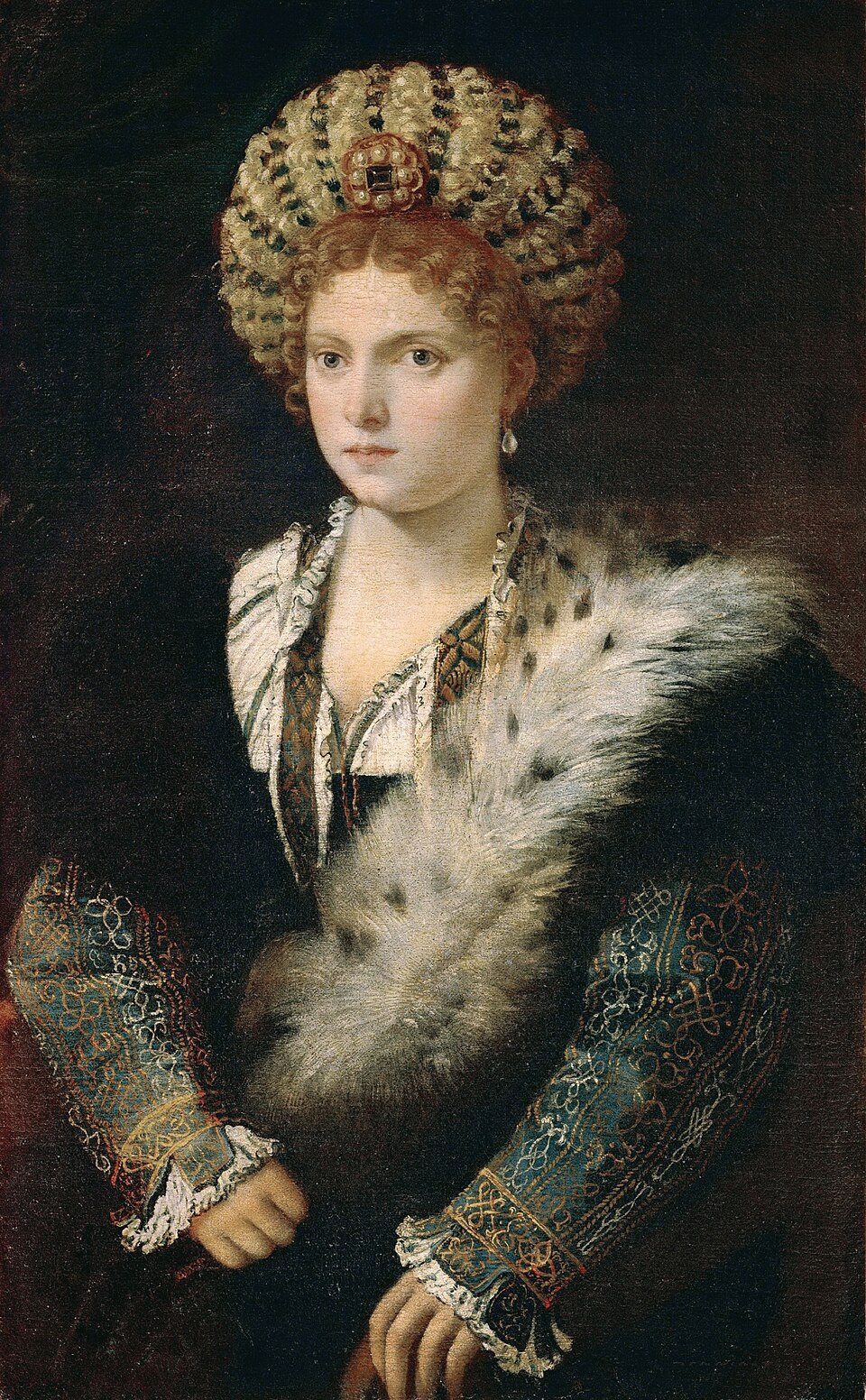
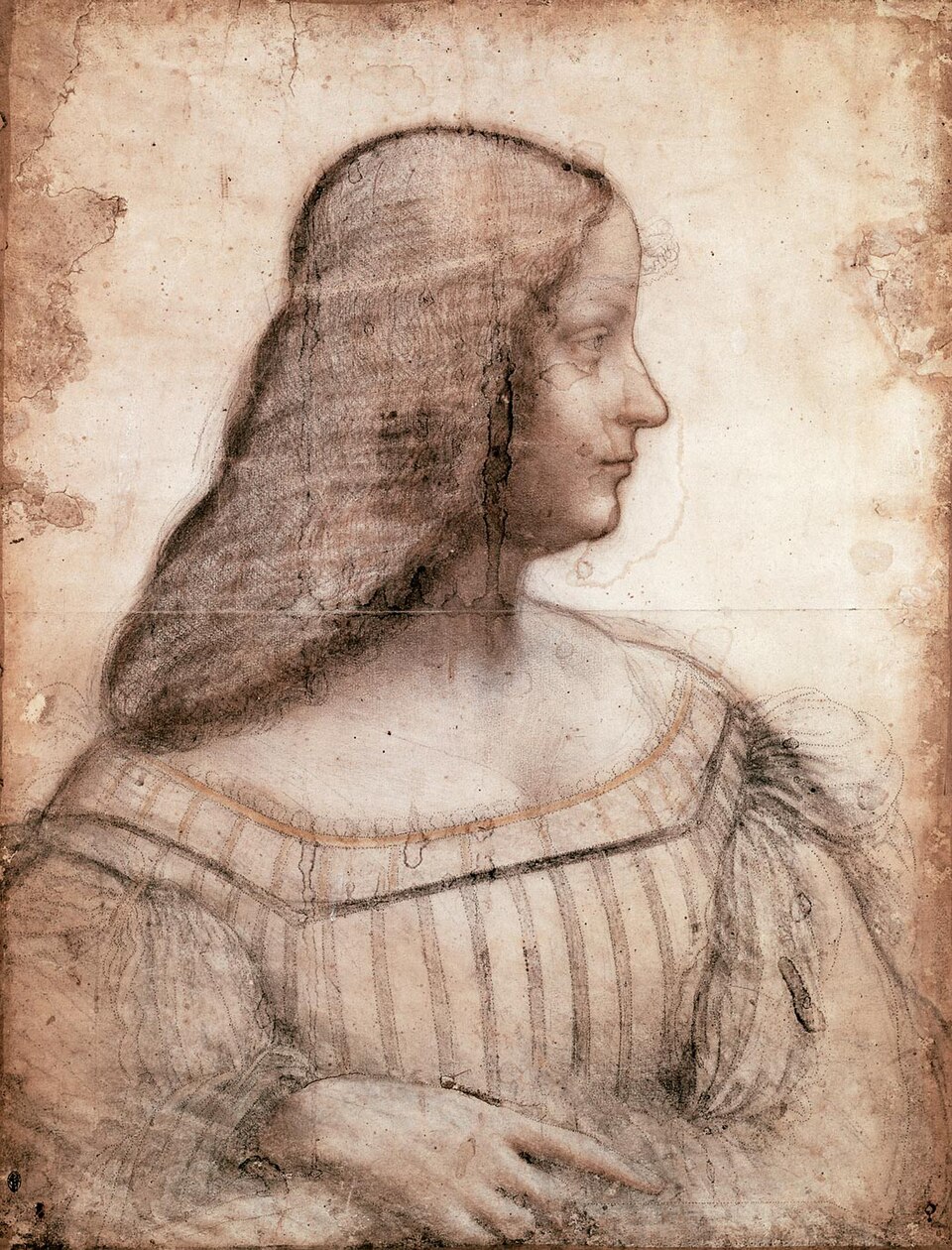
Isabella in Black, presumed to be an idealization of the 62-year-old Isabella by Titian (1536) + Portrait of Isabella d'Este by Leonardo da Vinci (c. 1499–1500)
One of the most influential patrons in Western art history was Isabella d'Este (19 May 1474 – 13 February 1539), Marchioness of Mantua.
Living in the late 15th and early 16th centuries, Isabella built one of the most sophisticated art collections in Europe. But she didn't simply acquire art—she directed its creation.
Artists including Andrea Mantegna, Perugino, and Titian produced works specifically for her private studiolo—a room devoted to intellectual reflection and aesthetic experience.
Isabella commissioned allegorical paintings, mythological scenes, and symbolic imagery that reflected her own intellectual identity. The result was something new in the Renaissance: a collector shaping artistic direction rather than merely funding it.
In many ways, she invented the modern idea of the curated collection.
Paris and the Birth of Modernism
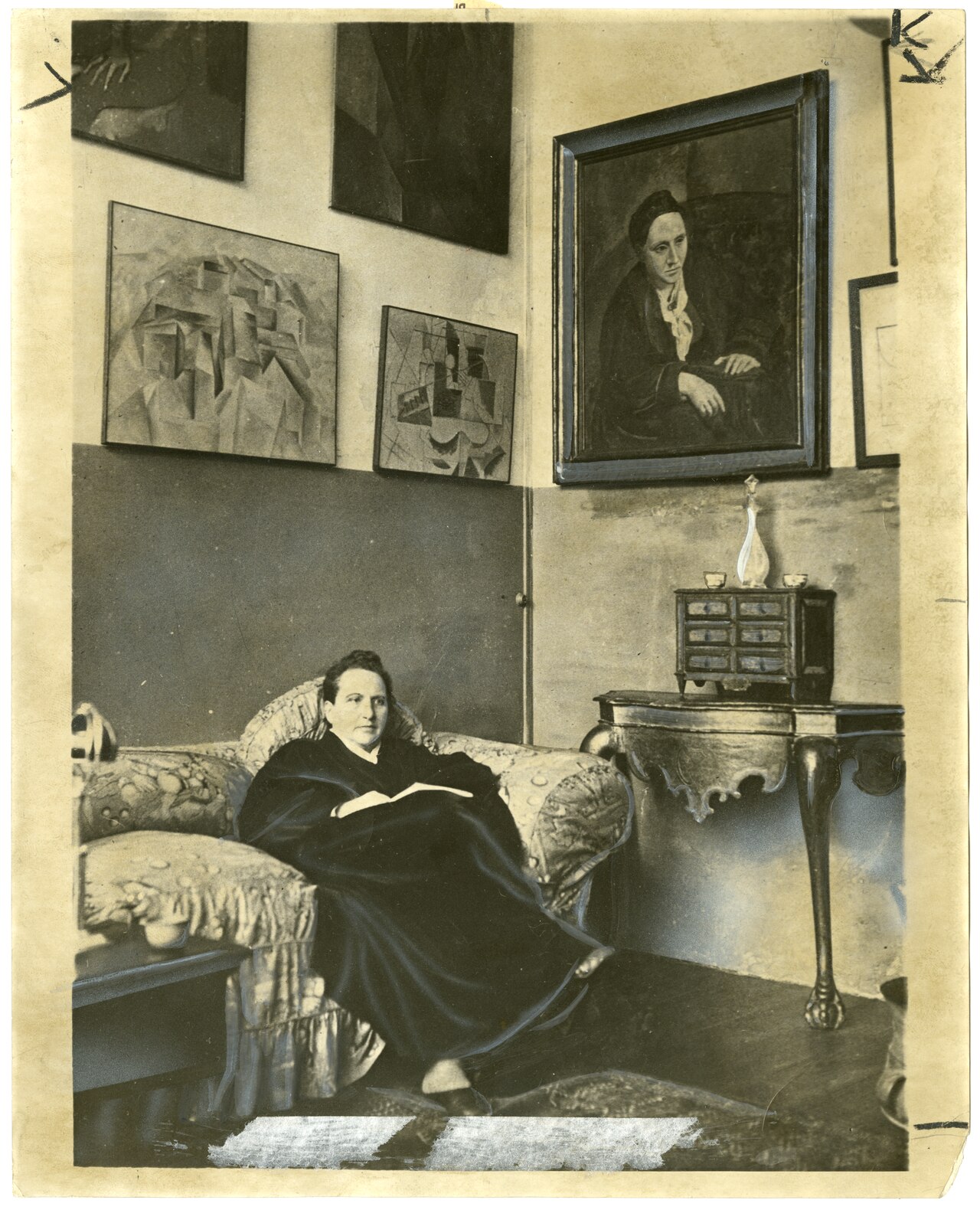
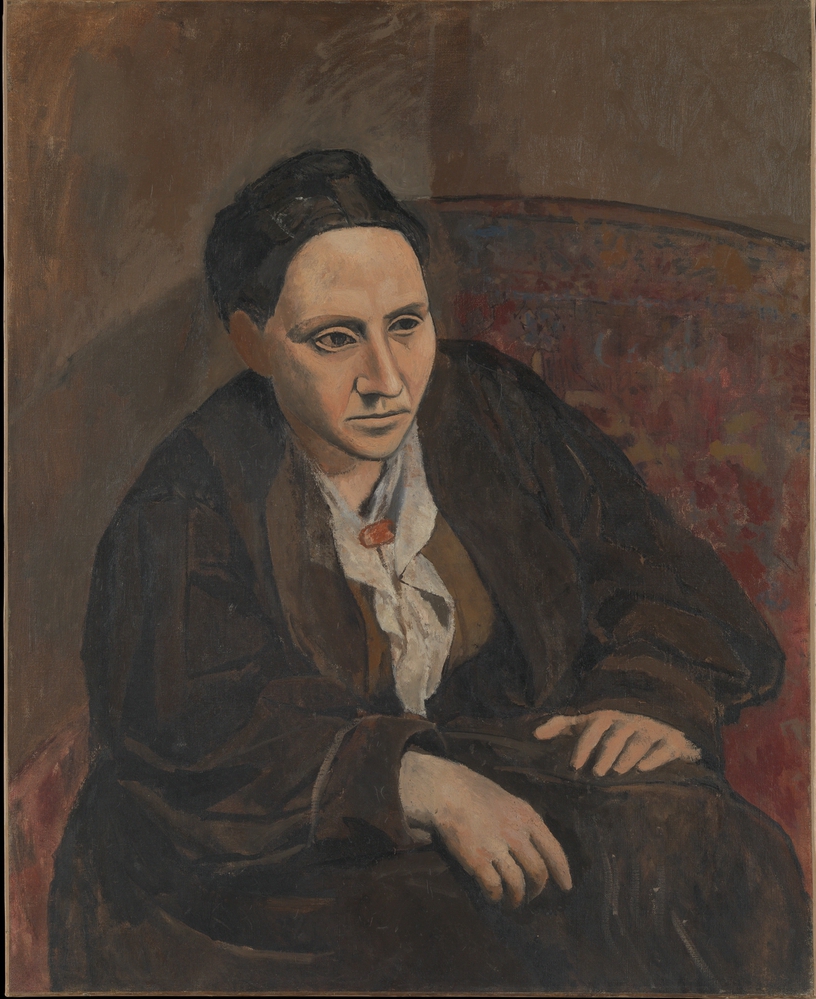
Stein in her Paris studio, with a portrait of her by Pablo Picasso, and other modern art paintings hanging on the wall (before 1910) + Pablo Picasso, Portrait of Gertrude Stein, 1906, Metropolitan Museum of Art, New York.
Four centuries later, another woman would quietly help shape an artistic revolution.
American novelist, poet, playwright, and collector Gertrude Stein (February 3, 1874 – July 27, 1946) arrived in Paris at the start of the 20th century and began collecting paintings few others understood.
"The creator of the new composition in the arts is an outlaw until he is a classic" Gertrude Stein
Works by Pablo Picasso, Henri Matisse, and Paul Cézanne hung inside her apartment at 27 Rue de Fleurus.
Every Saturday evening, artists and writers gathered there. Conversations about painting, literature, and modern life unfolded beneath works that would later define modernism.
Stein didn't simply collect art. She created a cultural ecosystem.
Her salon became one of the first spaces where modern art was not just displayed but intellectually debated.
The Collector Who Changed Museums
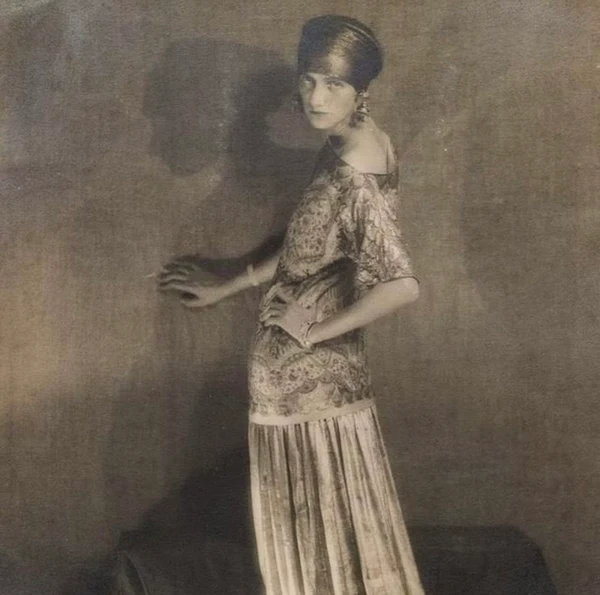
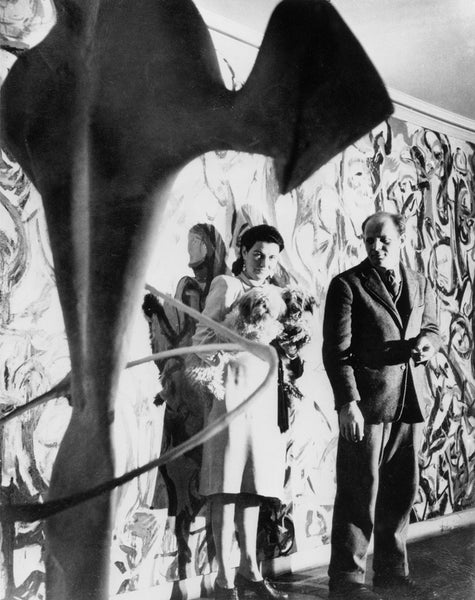
Peggy Guggenheim in Paul Poiret Couture and Vera Stravinsky, photographed by Man Ray in Paris, 1924 + Guggenheim with Pollock, New York, 1946
If Stein helped incubate modernism, Peggy Guggenheim (August 26, 1898 – December 23, 1979) helped institutionalize it.
Born into a wealthy American family, Guggenheim spent the 1930s and 40s collecting artists who were still considered radical: Jackson Pollock, Max Ernst, and Marcel Duchamp among them.
"I TOOK ADVICE FROM NONE BUT THE BEST. I LISTENED, HOW I LISTENED! THAT'S HOW I FINALLY BECAME MY OWN EXPERT" Peggy Guggenheim
Her New York gallery Art of This Century became a critical launching point for Abstract Expressionism.
Later, she transformed her Venetian palazzo into the Peggy Guggenheim Collection, now one of the most important modern art museums in Europe.
Guggenheim understood something many collectors eventually learn: buying art can shape history.
Contemporary Patronage: Influence Beyond the Market
Today, women collectors continue to shape the art ecosystem in profound ways.
Agnes Gund (August 13, 1938 – September 18, 2025)
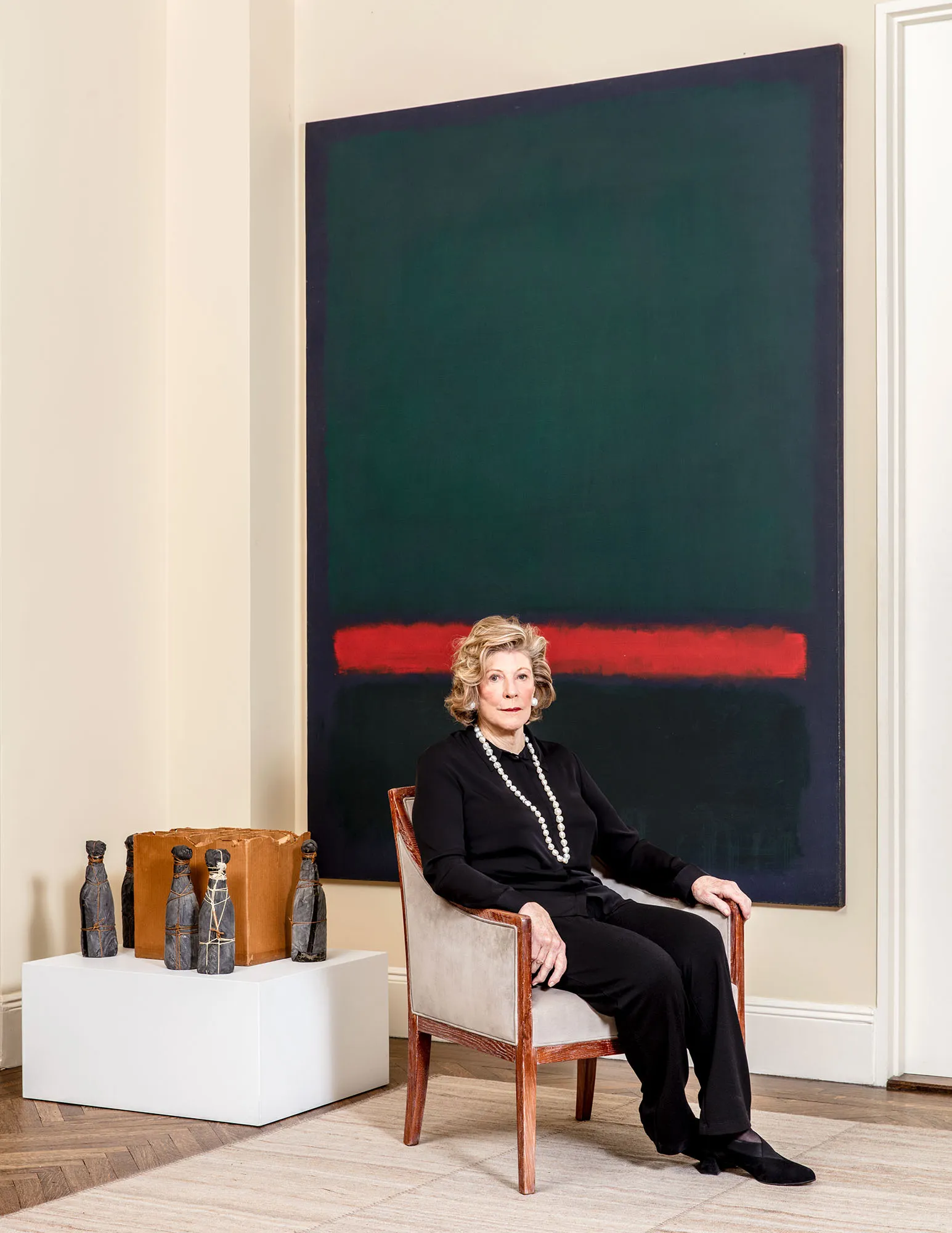
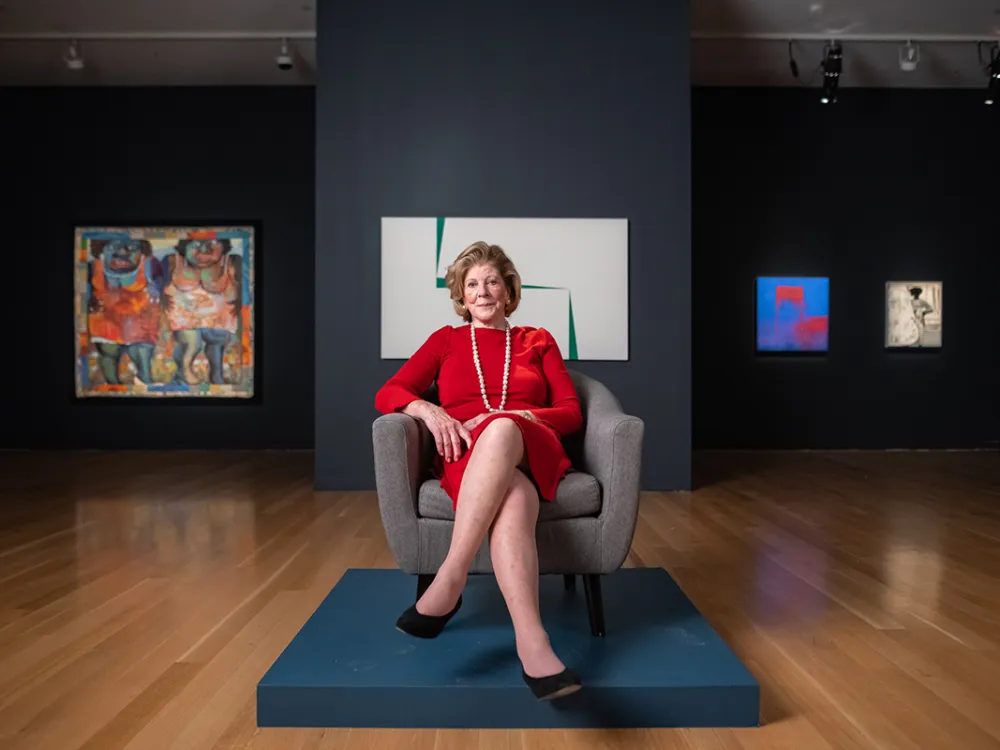
Agnes Gund for Vogue Photographed by Stefan Ruiz + Sotheby's
Few acts of patronage have resonated as widely as Gund's decision in 2017 to sell Roy Lichtenstein's Masterpiece and transform the proceeds into the Art for Justice Fund, a philanthropic initiative addressing mass incarceration in the United States.
For Gund, collecting was always been tied to public responsibility. As president emerita of the Museum of Modern Art and a longtime supporter of arts education, she spent decades expanding access to art while advocating for social change.
"Where is the place in school that these kids will find their confidence if there is no arts program?" Agnes Gund
Her example reframed what a collection can do. Instead of serving solely as cultural capital, art can become a form of civic leverage—an asset capable of funding justice initiatives, education programs, and community investment.
Alicia Keys (b. 1981)

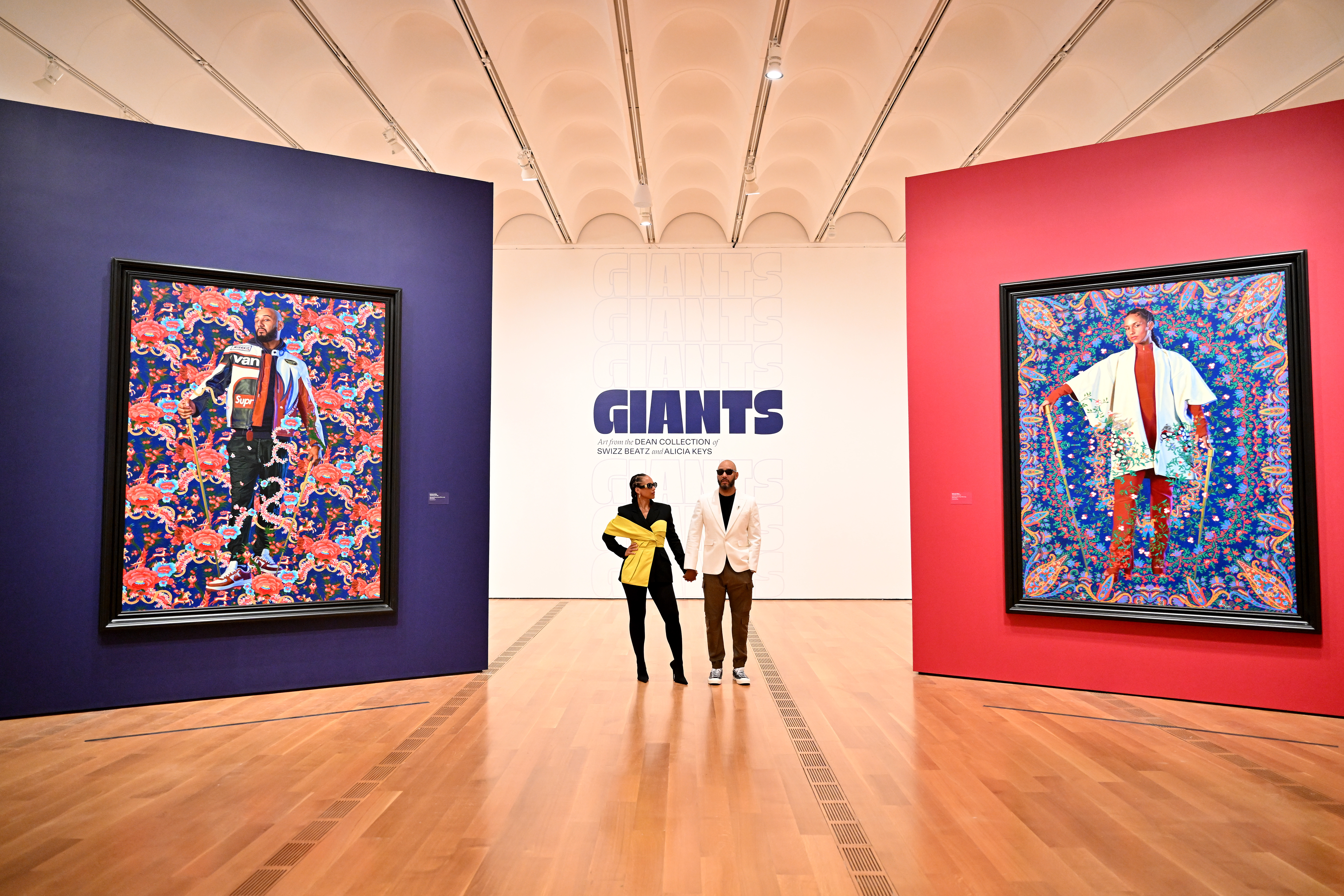
Alicia Keys, Alicia Keys and Swizz Beats beside their Kehinde Wiley portraits at "GIANTS"
Among today's most influential collectors shaping the cultural conversation is Alicia Keys, whose collection—built with her husband Swizz Beatz—has evolved into one of the most important private holdings of contemporary Black art in the world.
Known collectively as The Dean Collection, their holdings include works by artists such as Gordon Parks, Carrie Mae Weems, Kehinde Wiley, Amy Sherald, and Titus Kaphar—artists whose work engages questions of history, representation, and identity.
But what distinguishes Keys as a collector isn't simply the caliber of the works. It's the philosophy behind how they are shared.
Rather than keeping the collection private, Keys and Beatz have consistently opened it to the public through exhibitions, museum partnerships, and educational initiatives. Their landmark exhibition Giants: Art from the Dean Collection of Swizz Beatz and Alicia Keys at the Brooklyn Museum placed their collection directly into the institutional conversation, presenting artists across generations whose work expands the narrative of contemporary art.
The exhibition title—Giants—was intentional. It positioned the artists not as emerging voices seeking validation, but as foundational figures whose cultural influence already reverberates across music, fashion, film, and visual art.
Keys often speaks about collecting less as ownership and more as responsibility. In interviews, she has framed the collection as a way of protecting cultural memory—ensuring that artists who reflect the complexity of contemporary life are preserved and celebrated.
"Our stories are powerful. Our art is proof" Alicia Keys
In that sense, the Dean Collection operates almost like a living archive of the present moment: a record of the visual language shaping our era.
For collectors watching the evolving art market, Keys represents a model of a new kind of patron—one where cultural influence, institutional collaboration, and public access intersect. The goal is not simply to acquire important works, but to ensure those works enter the broader story of art history.
Emily Wei Rales (b. 1976)
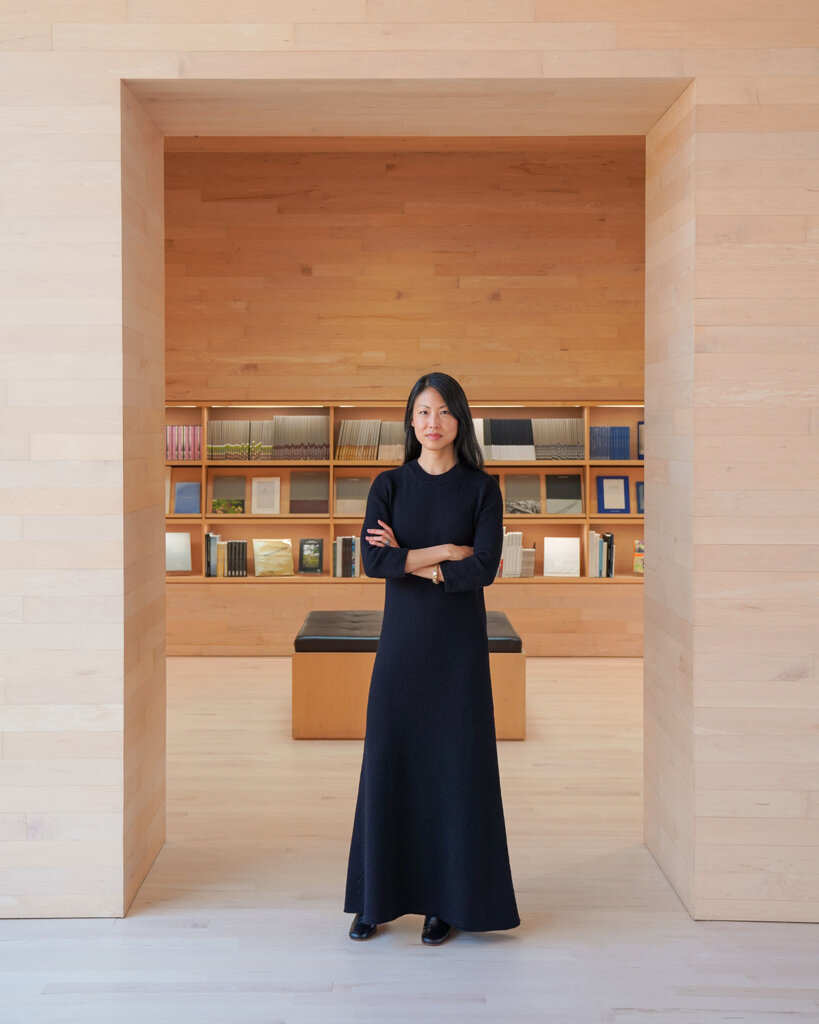
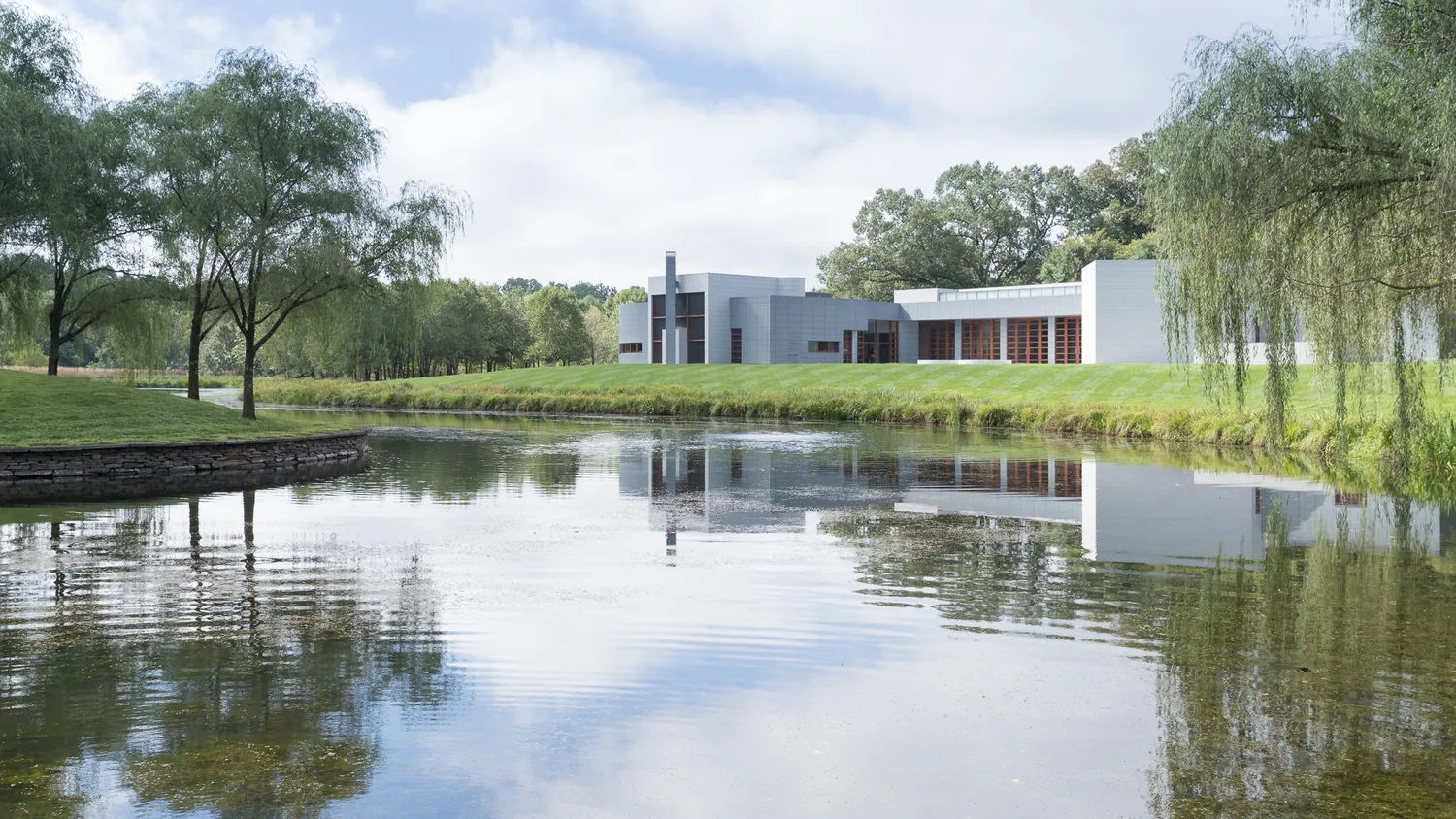
Emily Wei Rales, Glenstone
Another collector reshaping the landscape of contemporary art—quietly but profoundly—is Emily Wei Rales.
Together with her husband Mitchell Rales, she founded Glenstone Museum, a 300-acre museum campus just outside Washington, D.C. But unlike traditional institutions built around encyclopedic collections, Glenstone operates more like a contemplative landscape for art—where architecture, nature, and slow looking are part of the experience.
Rales, who serves as the museum's director, has shaped the collection with a curatorial precision rarely seen in private museums. Instead of assembling a wide-ranging survey, Glenstone focuses deeply on a smaller number of artists, allowing works to be installed permanently and thoughtfully rather than rotated quickly through exhibition cycles.
Artists such as Louise Bourgeois, Roni Horn, On Kawara, and Mark Rothko are given entire rooms—or sometimes entire buildings—to themselves.
The result feels closer to a pilgrimage than a museum visit. The architecture by Thomas Phifer is restrained and luminous; pathways wind through meadows and water features before visitors even encounter the art. Every decision—from lighting to spacing to visitor flow—is designed around the idea that art deserves time.
In an era when museums increasingly compete for spectacle and attendance numbers, Rales' approach represents something radical: slowness.
Her model of collecting isn't about quantity or market visibility. It's about building an environment where art can be experienced with the kind of attention it was created to hold.
"If the past century has shown us anything about artists, it is that they have an almost boundless capacity not only to confront some of the most harrowing events in modern history, but also to affirm the values that we hold dear as a society." Emily Wei Rales
And in doing so, she has quietly created one of the most influential private museums in the world.
The Thread Through Art History
What Isabella d'Este, Gertrude Stein, Peggy Guggenheim, and today's collectors remind us is that collecting does not have to correlate with wealth. It begins with attention—and a certain amount of courage.
It is recognition.
The willingness to trust your eye before the market does. To ask questions, study deeply, seek advice, and sometimes make the wrong decision in the process of finding the right one. Every serious collection starts as a series of conversations: with artists, with advisors, with history, and eventually with yourself.
The most meaningful collections aren't built overnight or by accident. They are shaped slowly—through curiosity, conviction, and the quiet bravery of following what genuinely moves you.
Artists may create the work—but patrons often create the conditions that allow that work to exist, circulate, and endure.
They build the rooms where art is seen.
They shape the conversations around it.
Art history rarely tells their stories as loudly as it should.
But look closely enough, and you begin to see them everywhere.
