
What a Photograph Can Do That a Painting Never Could
Justine Tjallinks at the Musée de la Photographie Charles Nègre, Nice
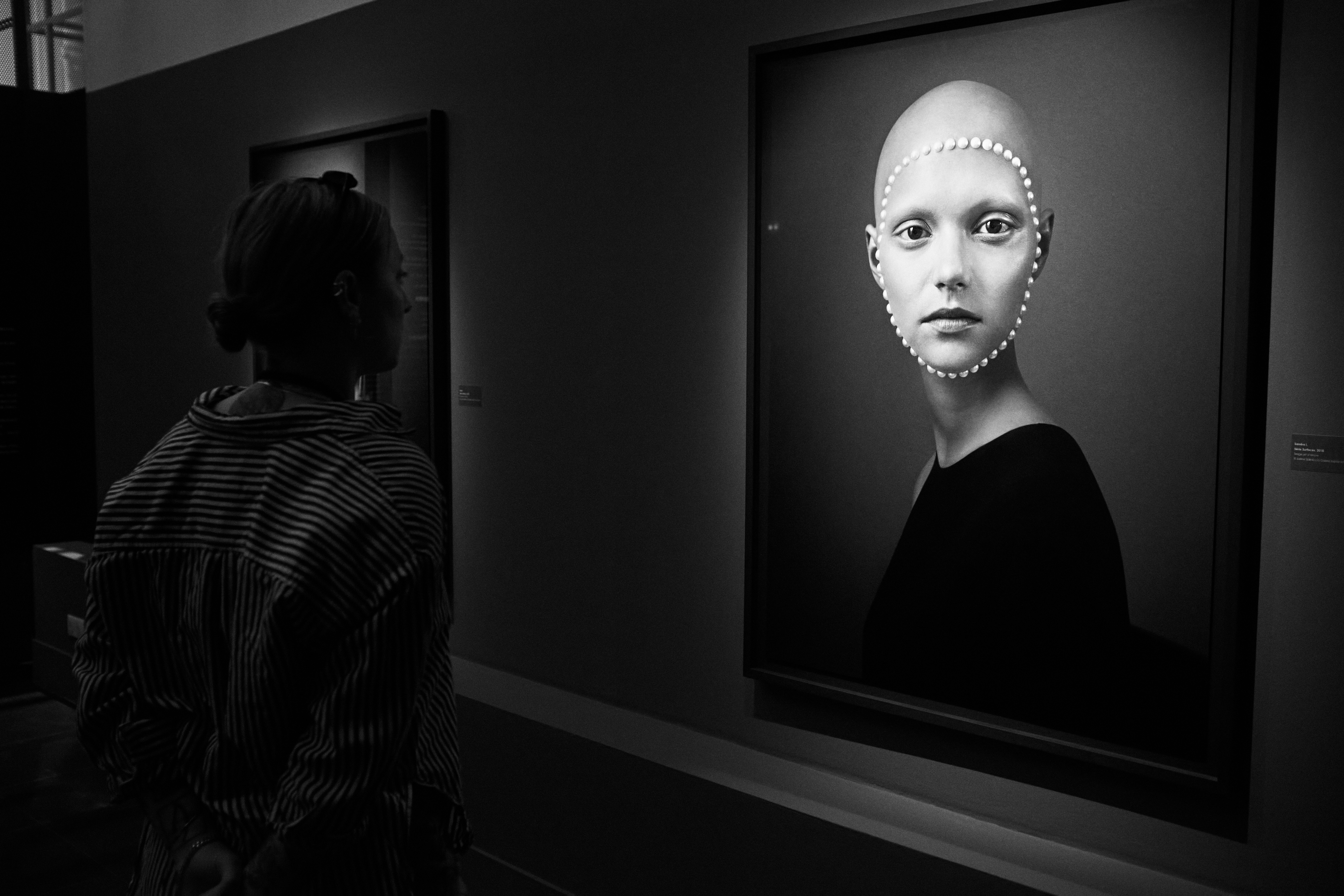
Viewing Justine Tjallinks Vision at Musée de la Photographie Charles Nègre, Nice
A few weeks ago I was in the south of France, and I made a point of getting to the Musée de la Photographie Charles Nègre in Nice. It's tucked in the old town, housed in a former electrical plant from the 1930s — the industrial bones still there, overhead crane and all. The kind of space that either fights with the work or serves it. In this case, it served it completely.
The exhibition was Vision by Justine Tjallinks, a Dutch photographer based between Amsterdam and Paris who started her career as an art director for fashion titles before deciding she wanted to make her own images. That background is all over her work — in the costuming, the makeup, the control of every element in the frame. But it doesn't feel like fashion photography. It feels like something else entirely.
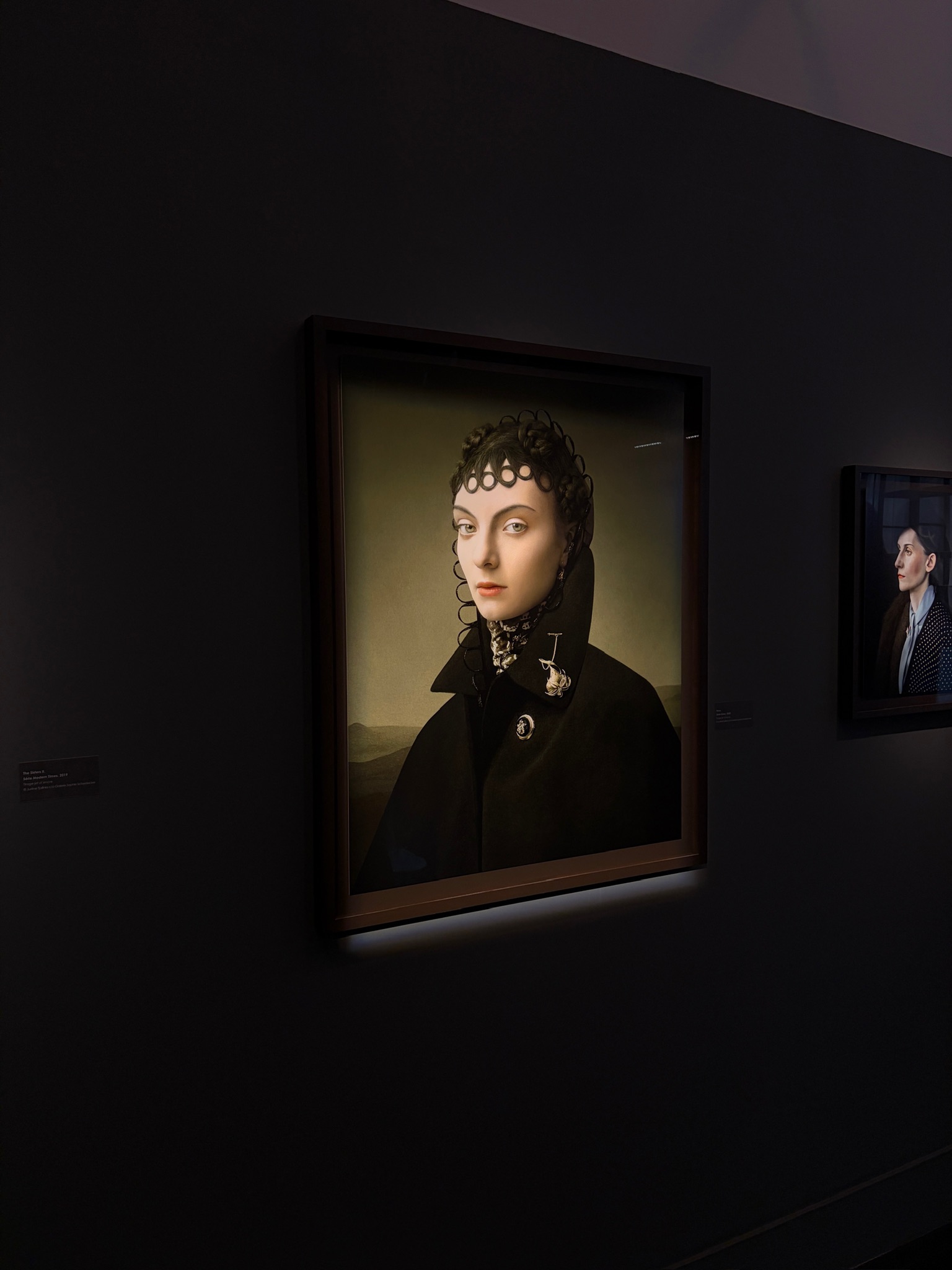
Walking into a dimly lit room with spotlights falling on photographs at massive scale and also miniature scale, the effect was immediate. Her work looks like what would have happened if a Dutch master had mapped out the photographic process before the machine existed. Muted palettes. Balanced compositions. The kind of light that doesn't announce itself. She street casts her models in Amsterdam, spends hours on poses and details, and her process, by her own account, involves up to 200 rounds of digital editing — not AI-assisted, not automated. She is drawing on a screen, stroke by stroke, adding depth, adding softness, pulling something out of the image that the camera alone didn't capture. Having watched my partner do this kind of work, I want to be clear: that is not a click and a filter. That is hand and eye and hours.
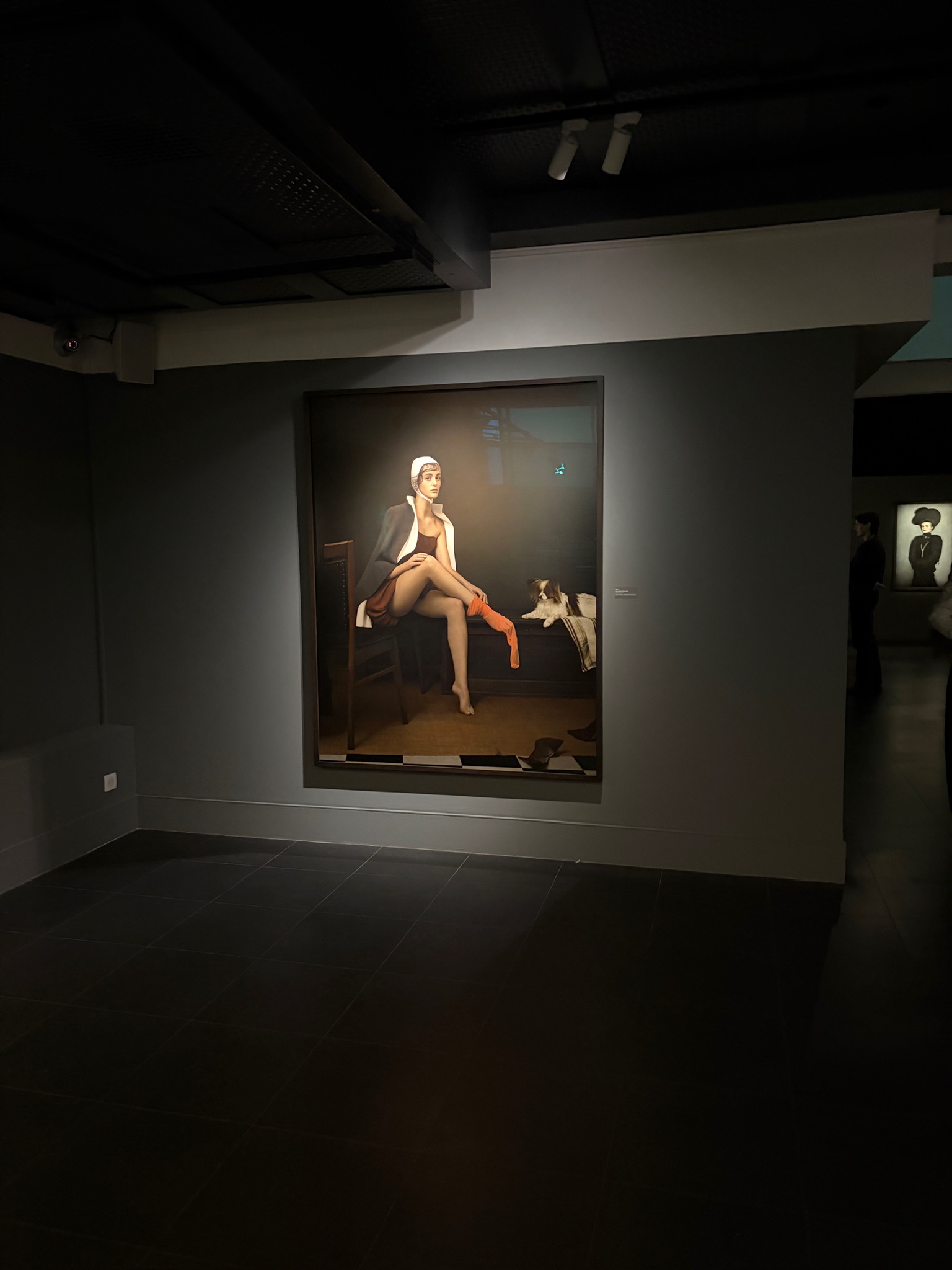
The result is photographs that feel like velvet. There's a depth and texture to them that shouldn't be possible in the medium. And then the cognitive dissonance of realizing you are looking at a photograph, not a painting — at scale, in softness, in the way light falls across a face. It's a strange experience, and a good one.
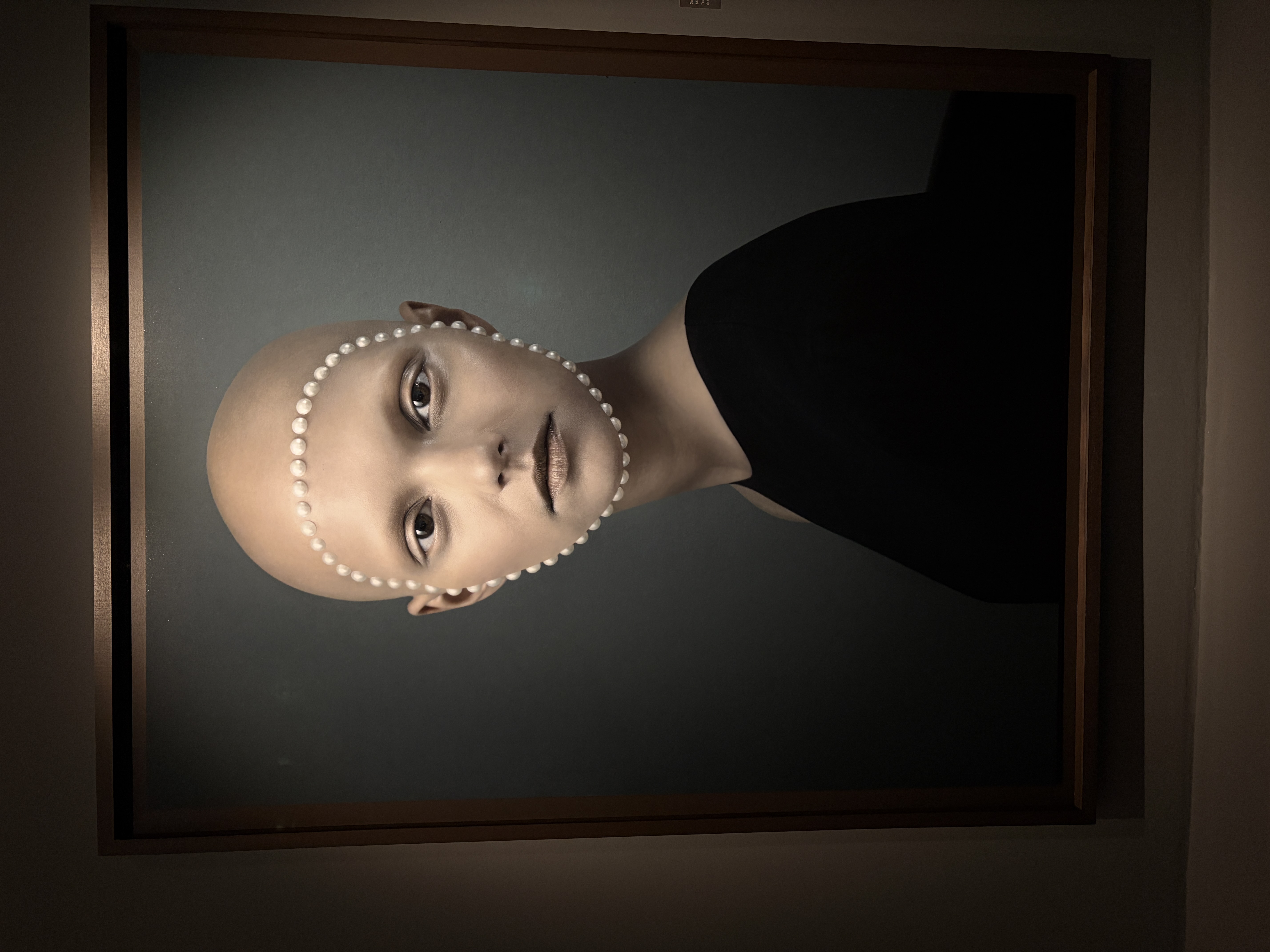
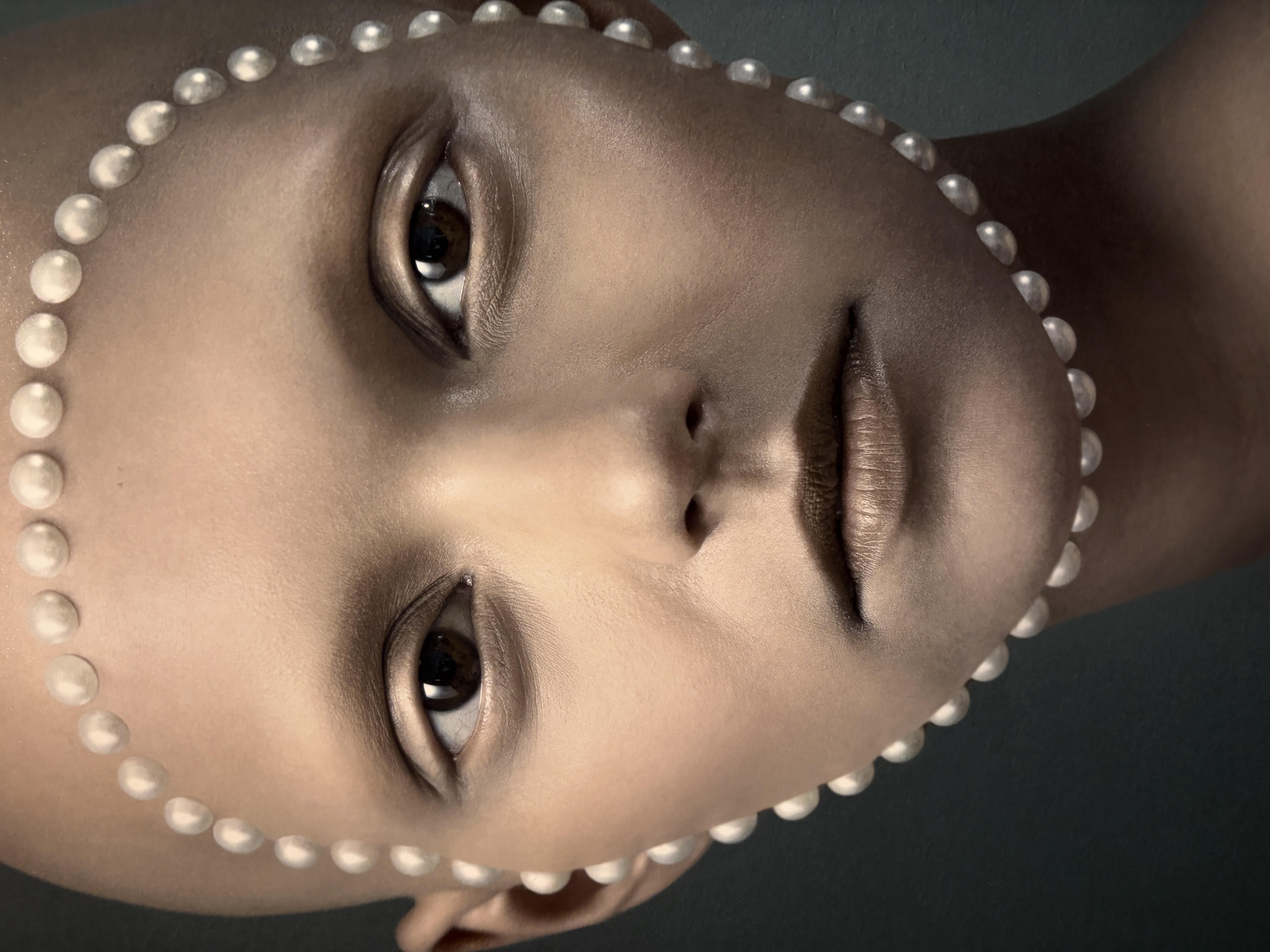
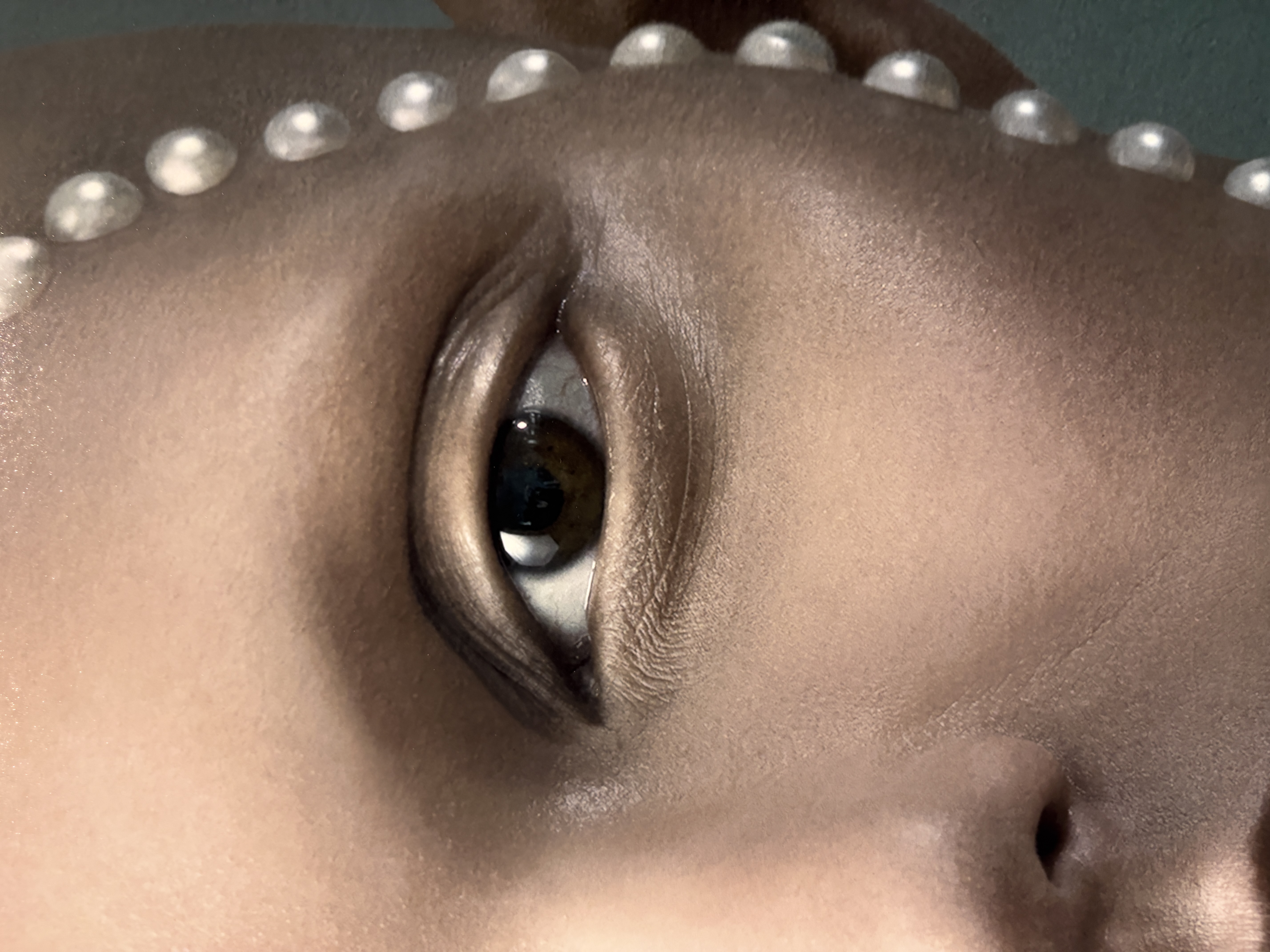
Sandra I, Justine Tjallinks
The shots that stayed with me weren't the most overtly dramatic. I wasn't drawn to the pieces that leaned hardest into the Diane Arbus register — the raw, the strange, the deliberately unsettling. What got me were the portraits where she holds the tension between centuries without collapsing it. A contemporary body, a contemporary face, posed as if we could reach backward through time. And then something just slightly off: a piece of jewelry that doesn't belong to the 1600s, a haircut, a placement of makeup. A note that tells you these are living people, right now, in the millennium, arranged as if a wormhole opened and a Flemish painter stepped through to light them.
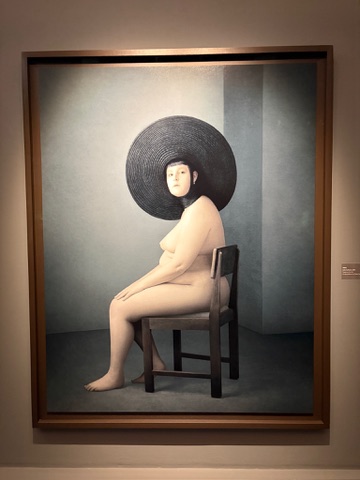
Photography gets underestimated because of the machine. The click of a shutter, the assumption of documentation. Tjallinks is a useful corrective. Standing in front of her work, the medium is precisely the point — a painting of this subject, even a beautiful one, wouldn't have the same effect. It's the photograph-ness of it that makes the time warp work. The realism of the medium is what makes the illusion possible.
If you have any reason to be in Nice, the Musée de la Photographie Charles Nègre is worth your time on its own. That it housed this show when I happened to be there felt like luck.
I will be buying this exhibition book…
Justine Tjallinks: Vision By Sophie Agon, Aurora Larocca €39,00 Coming soon SKIRA Estimated end of July, 2026
Vision is much more than a photography book: it is a sensory experience, an invitation to relearn how to see. In this book, Justine Tjallinks presents a body of work in which each image is born from an inner gesture, carefully considered long before any encounter with the model. Photography becomes a space for rigorous composition, nourished by pictorial inspiration inherited from the Flemish masters, where light, posture and texture interact with silent precision. On the border between reality and imagination, her portraits are constructed layer by layer, revealing a restrained, profound, almost meditative presence. Behind this masterful aesthetic lies a deeply human and committed approach. The artist asserts a feminine gaze freed from the rigid norms of beauty and visual hierarchies inherited from history. She celebrates long-marginalised singularities: non-standard bodies, faces bearing complex stories, visible or invisible differences. Without exoticism or voyeurism, Justine Tjallinks seeks the truth of the gaze and the expressive power of what disturbs and moves us. Vision offers another way of perceiving the world, where difference becomes an essential value and beauty is revealed in fragility, vulnerability and encounter. A powerful and necessary book that transforms the act of looking into an act of consciousness.
Justine Tjallinks (b. 1984) is an autodidact Dutch visual artist. She started her career in fashion as Art Director for leading fashion titles in the Netherlands. After spending years working with photography as a visual language, she realised that the fashion world and its ideals of human beauty had become creatively limiting for her. In 2014, at the age of 29, she decided to quit her job to become an artist.
Justine is above all a portraitist who is deeply inspired by the complexity and layered aspects that make us human. Inspired by various Old Masters from between the Golden Age and Magical Realism, her work is predominantly influenced by the use of refined colour palettes and staged compositions, which she adapts to reflect the current zeitgeist.
Despite her admiration of the past, her work is contemporary. She creates her own visual language by granting herself the freedom to cleverly blur the lines between fantasy and reality, mixing today's societal influences in her artworks, perturbing and questioning the viewer.
Justine often scouts her sitters on the streets. She spends days at railway stations and in city centres looking for faces that accord with the creative ideas she has in mind. She has a talent for recognising extraordinary beauty in those who might commonly be considered ordinary, as well as in those who physically stand out in a crowd.
She has no fear of otherness.
To create her artworks, Justine holds the photo shoot in her studio. Her sitters are dressed in sophisticated clothing (often collaborations with contemporary couturiers) and placed in a theatrical setting, testifying to her scenographical creativity. Like a film director, she directs, styles and transforms her models in order to tell the viewer something personal about herself. She then spends countless hours editing the images, adding and changing (mostly digitally) brushstrokes, slowly building layers of files (up to 200 layers per work) until a balance is reached and a work comes alive. This meticulous process gives Justine Tjallinks' photographs a quasi-pictorial rendering.
In her work, Justine's desire is to break free from the shackles of modernity, while also paying a humble tribute to humanity.
Justine currently lives and works in The Hague and Paris.
