
The Abstract Permission Slip
Why abstraction might be the most honest thing you can add to your collection
Some view collecting like interior decoration with a bigger budget. The work is beautiful, it's representational, it's immediately legible — a scene you can describe to a dinner party guest in one sentence. There's nothing wrong with that.
BUT: Abstraction asks something different of you.
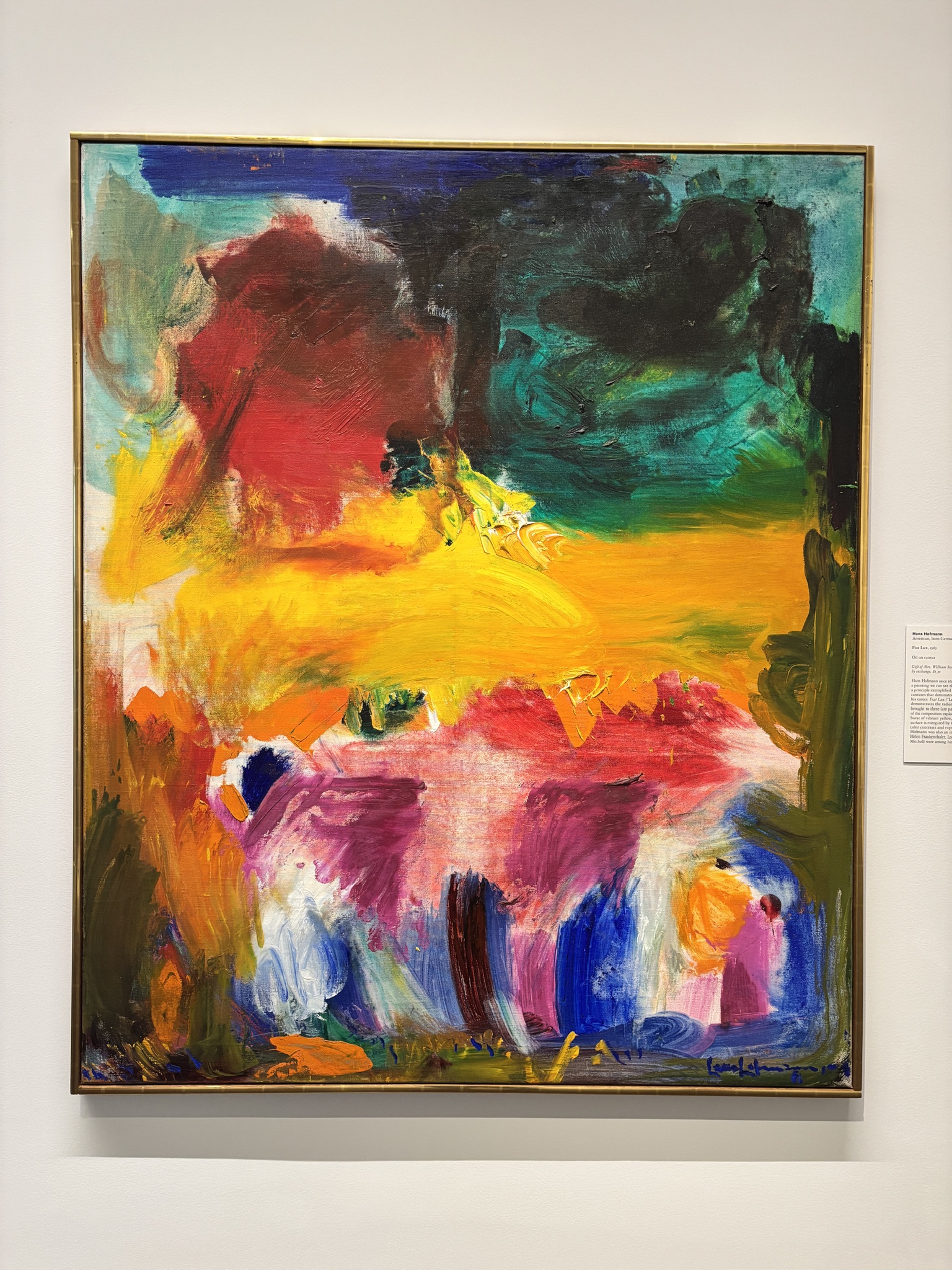
Hans Hoffman at MFA Houston
I was recently consulting with a collector couple where the dynamic between them is one of the most interesting I've encountered. He is overwhelmingly intellectually driven. She is emotionally intelligent in the way that makes a room feel different when she walks into it — warm, perceptive, genuinely giving. Separately, you might assume you know exactly what each of them needs on their walls. Together, the collection they're building is something more interesting than either of those assumptions.
It would have been easy to answer their brief with representational work. One-to-one objects with clear, legible meaning. Something that says what it means the moment you look at it. But I didn't think that was right for them, and more importantly, I didn't think it was right for the collection they're capable of building.
What I wanted to give them was work that would invigorated them — intellectually, emotionally, over time. Work that doesn't exhaust its meaning on first encounter.
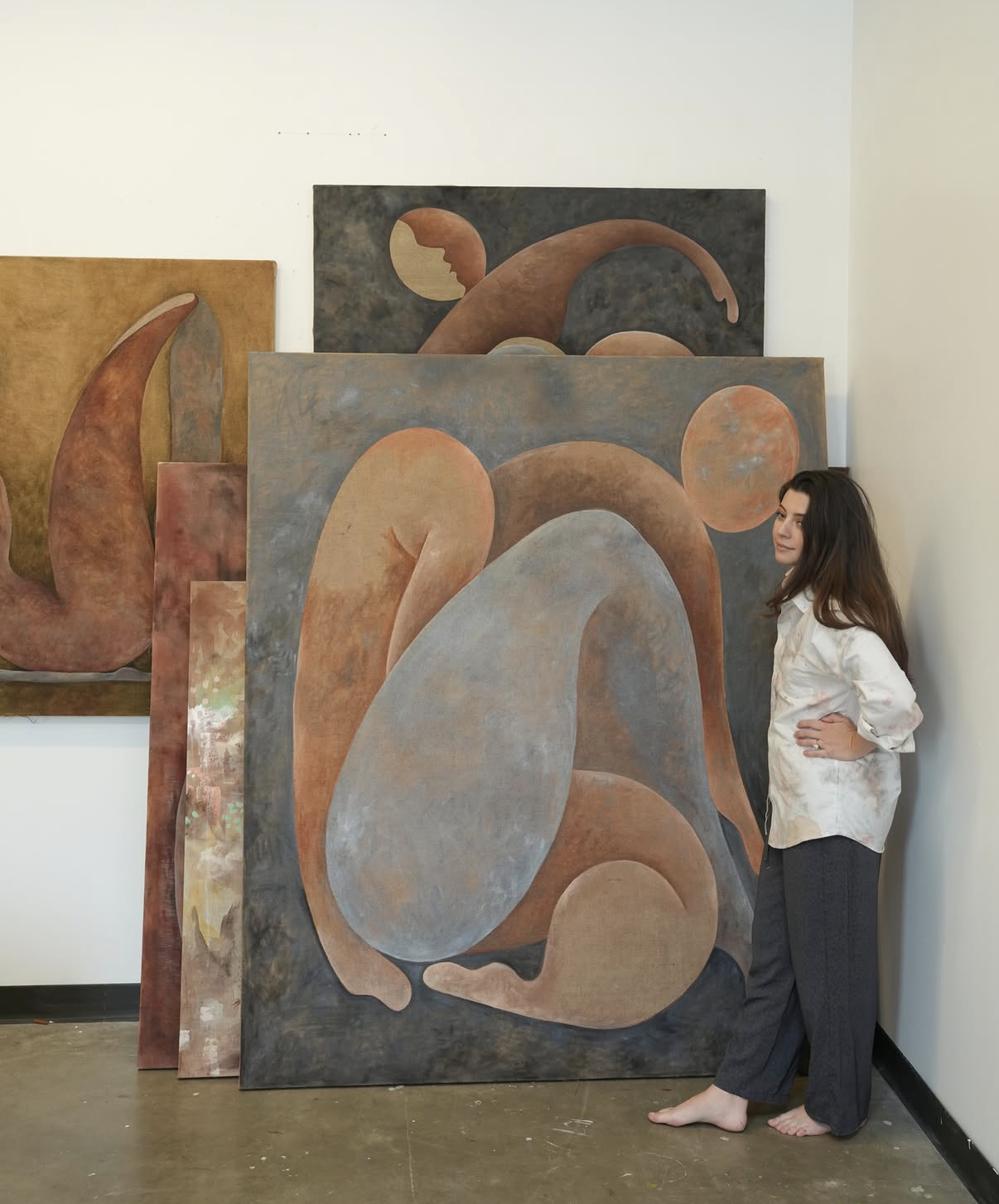
Austin-based artist, Laura Clay
That's the case for abstraction and semi-abstraction. Not as a category preference, but as an important pillar of a collecting philosophy.
Here's what I've noticed in years of this work: a lot of collectors feel genuine trepidation about abstract and semi-figurative art. Not because they're incapable of engaging with it — they absolutely are — but because somewhere along the way, the world taught us that everything has a right answer. That comprehension is the goal. That if you stand in front of a painting and can't name what it means, you've failed a test.
Art is the one place where that framework actively works against you.
The best works of art are not necessarily documentary. They are not mathematical equations with a single correct solution you must arrive at to prove yourself worthy. They are open systems. And the meaning you bring to them — your reading, your projection, your lived experience — is not a consolation prize for not knowing the real answer. It is the point.
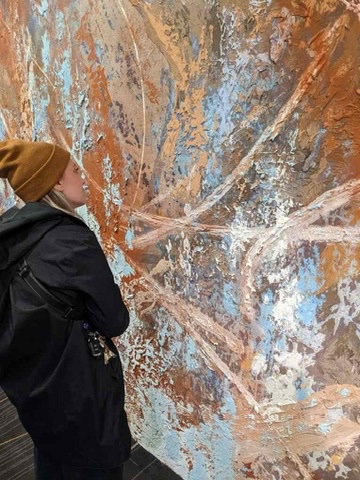
Jose Parla at the University of Texas
This is why I love this category. And this is why I keep coming back to it when I'm sourcing for collectors who are ready to build something that lasts.
Right now I'm deep in a sculptural search for this particular collection, and the thematic brief is operating at what I'd call mythological scale. Think the storyline of Odysseus, or Sirens, or Hercules, or Achilles. We're also looking for works that carry themes of bravery, family, courage, endurance — the kind of ideas that don't have an expiration date.
It would be easy to find a sculpture that announces itself. A ship that looks like a ship. A mermaid on a rock singing. And there's a place for that kind of clarity. But I think collectors are smarter than that — I know they are — and the more interesting question is what happens when you give them permission to look at something and assign their own meaning to it.
A piece of sculpture that evokes the feeling of Sisyphean effort without illustrating it literally will live differently in a home. It asks something of everyone who encounters it. The children who grow up around it will develop their own relationship to it, independent of whatever the adults decided it meant. That's not ambiguity as a flaw. That's depth as a feature.
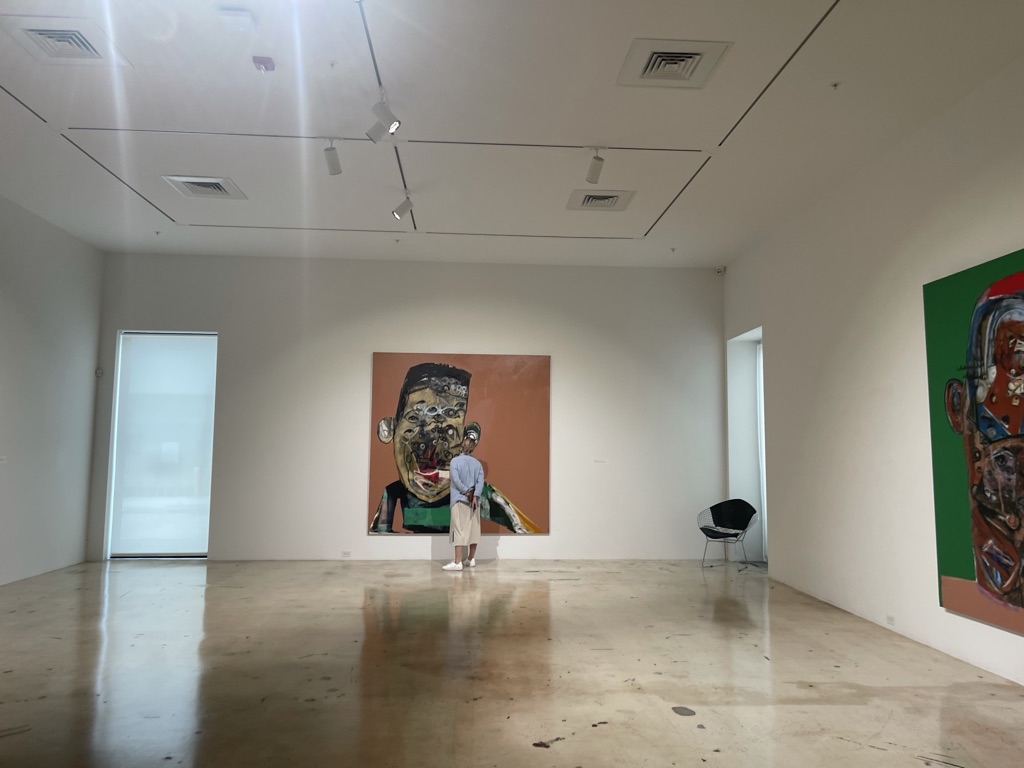
Viewing God Gave Me A Song by Genesis Tramaine at the Rubell Museum, Miami
Semi-abstraction sits in a particularly useful place for collectors who are making this shift. It gives you enough — a gesture toward the figure, a reference to form, a hint of the recognizable — without completing the sentence for you. It trusts you to finish the thought. The best semi-figurative work operates the same way a great metaphor does: you know it's pointing at something, you feel the direction, and what you find when you follow it is yours.
If you've been collecting representational work and wondering whether to expand into this territory, the answer is probably yes — and the question is just which work, and in what context.
The right abstract or semi-abstract piece for your collection is not the one that confuses you. It's the one you keep thinking about after you leave the room. That's the difference between difficult and inexhaustible. The first wears off. The second is what you're actually building toward.
If you're thinking about expanding your collection in this direction, I'd love to talk.
If you're an artist, curator, or gallerist that has recommendations in this vein, please send them my way
