
McQueen Legacy: The Next Generation of Art
How Gary James McQueen Brings Lee's Vision to Life
Fashion has dominated the headlines this year.
New York and Paris have already moved through another cycle of runway shows. Creative directors continue to rotate through major houses while sustainability regulations tighten, fast fashion faces political scrutiny, and luxury brands are under increasing pressure to prove the integrity of their supply chains. At the same time, technology is quietly reshaping the industry—from digital design tools to AI-assisted production and virtual fashion environments that exist entirely outside the physical runway.
In other words, fashion is changing again.
But some of the most interesting work connected to fashion right now isn't happening on a runway at all.
It's happening on gallery walls and in collectors' homes.
Gary James McQueen—nephew of the late Alexander McQueen—has quietly and consistently developed a body of work that translates fashion's visual imagination into something else entirely: digital sculpture, photography, and lenticular artworks that shift as the viewer moves past them.
At first glance, the works resemble photographs.
Then you move.
And the image moves with you.
A skull fractures into gold. A figure dissolves into shadow. Flowers appear to bloom across the surface of the body. What initially looks like a static image slowly reveals itself as something more fluid—an object suspended somewhere between sculpture, photography, and illusion.
The result feels less like looking at a picture and more like encountering something alive.
The Shadow of Savage Beauty
Long before Gary James McQueen began exhibiting his own work, the McQueen name had already altered the relationship between fashion and the museum.
In 2011, the Savage Beauty exhibition became one of the most visited shows in the history of the Metropolitan Museum of Art. What visitors encountered inside the galleries was not simply clothing displayed on mannequins, but a theatrical environment in which garments appeared alongside natural history references, anatomical imagery, mythology, and romantic symbolism.
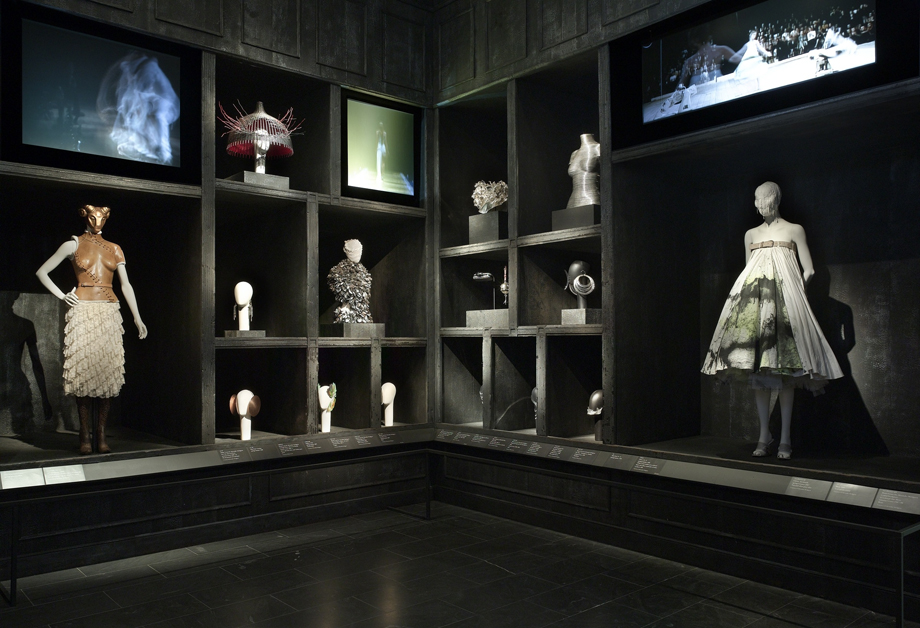
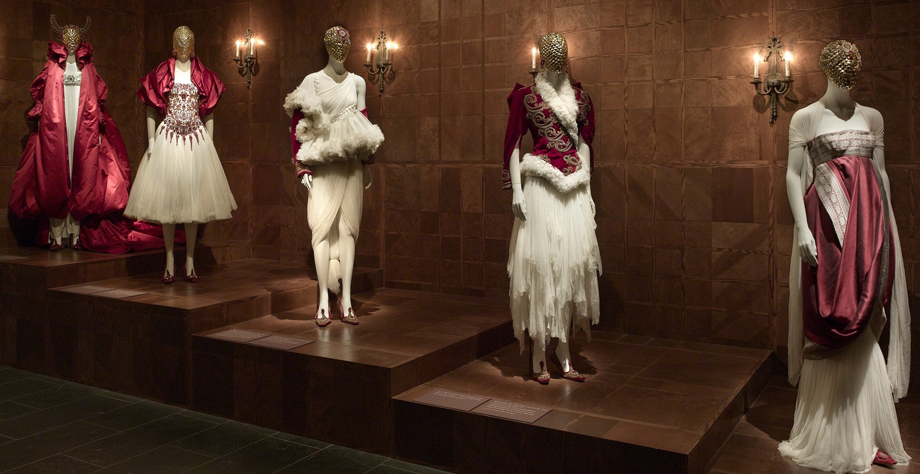
Gallery photography by The Photograph Studio, The Metropolitan Museum of Art
When the exhibition traveled to the Victoria and Albert Museum in London in 2015, it broke attendance records again.
What Savage Beauty ultimately demonstrated was that fashion could operate with the same symbolic and emotional depth as painting or sculpture. The garments functioned less like seasonal objects and more like artifacts from a darker, more imaginative world—one where beauty and mortality coexisted in uneasy harmony.
What most museum-goers may not have known is that the frontispiece—a gilded portrait of "Lee" (as GJM calls him)—was done by his reverent nephew.
Using one of the last sitting photographs taken of Alexander McQueen, Savage Beauty fronted one of the world's most successful fashion/museum crossover bodies of work, and still lives on in collectible form today.
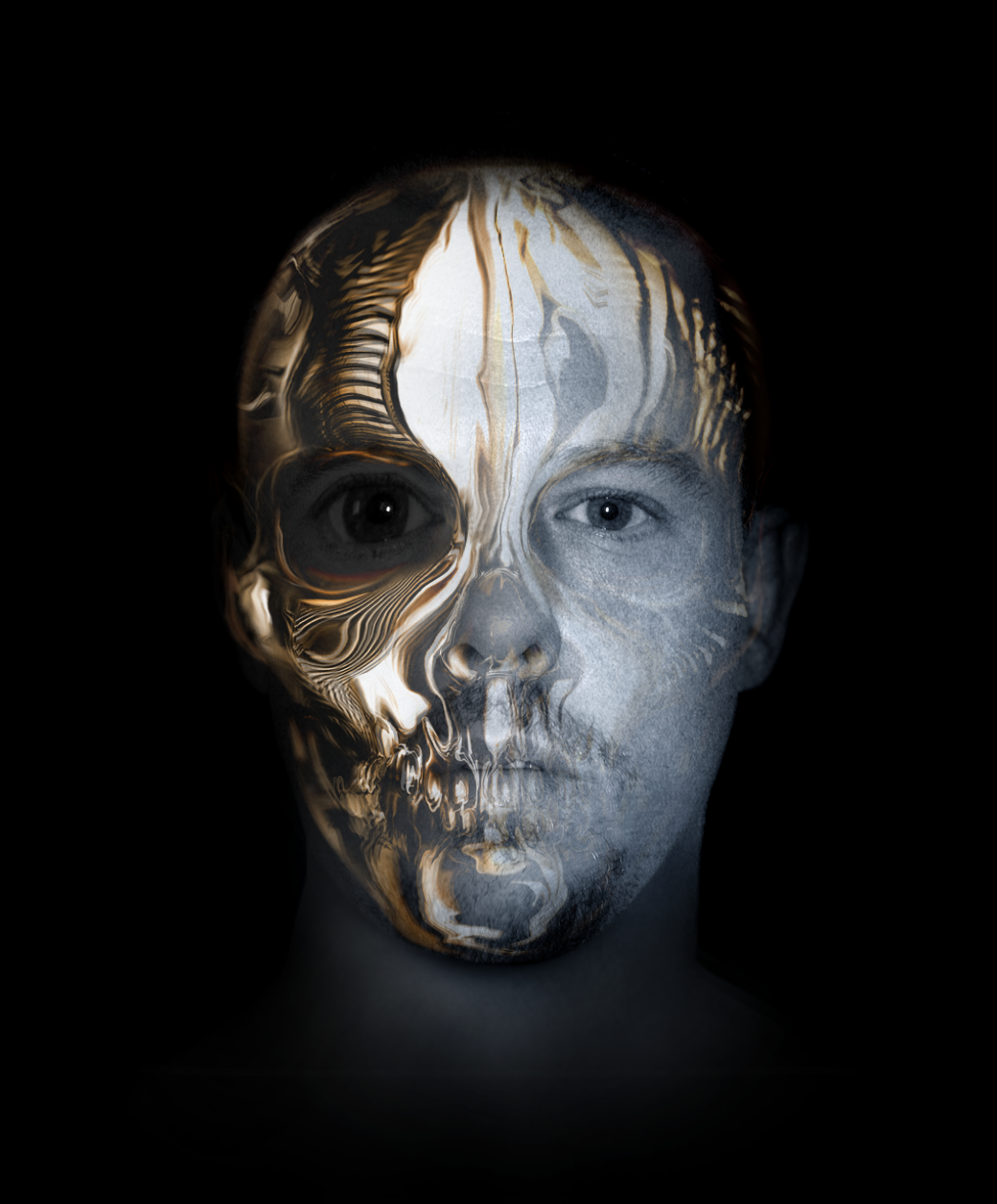
Gary James McQueen, Savage Beauty
Gary James McQueen grew up inside the now-infamous universe captured in Savage Beauty. Before establishing his own artistic practice, he worked within the Alexander McQueen studio as Head of Textiles, helping to develop prints and imagery that would appear on garments moving down the runway.
But the work he makes today does something subtly different.
Instead of translating art into fashion, he translates fashion's visual language back into art.
Life, Death, and the Vanitas Tradition
Across Gary James McQueen's work, one theme appears again and again: transformation.
The imagery frequently returns to symbols that have circulated through art history for centuries—skulls, flowers, anatomical forms—objects traditionally associated with the Vanitas tradition in European painting. In the 16th and 17th centuries, artists created still lifes filled with symbolic objects meant to remind viewers that beauty, youth, and power were temporary.
Skulls sat beside wilting flowers. Hourglasses measured the passing of time. Candles burned down to smoke.
These images were not meant to be morbid. They were philosophical reminders that life itself was fragile and fleeting.
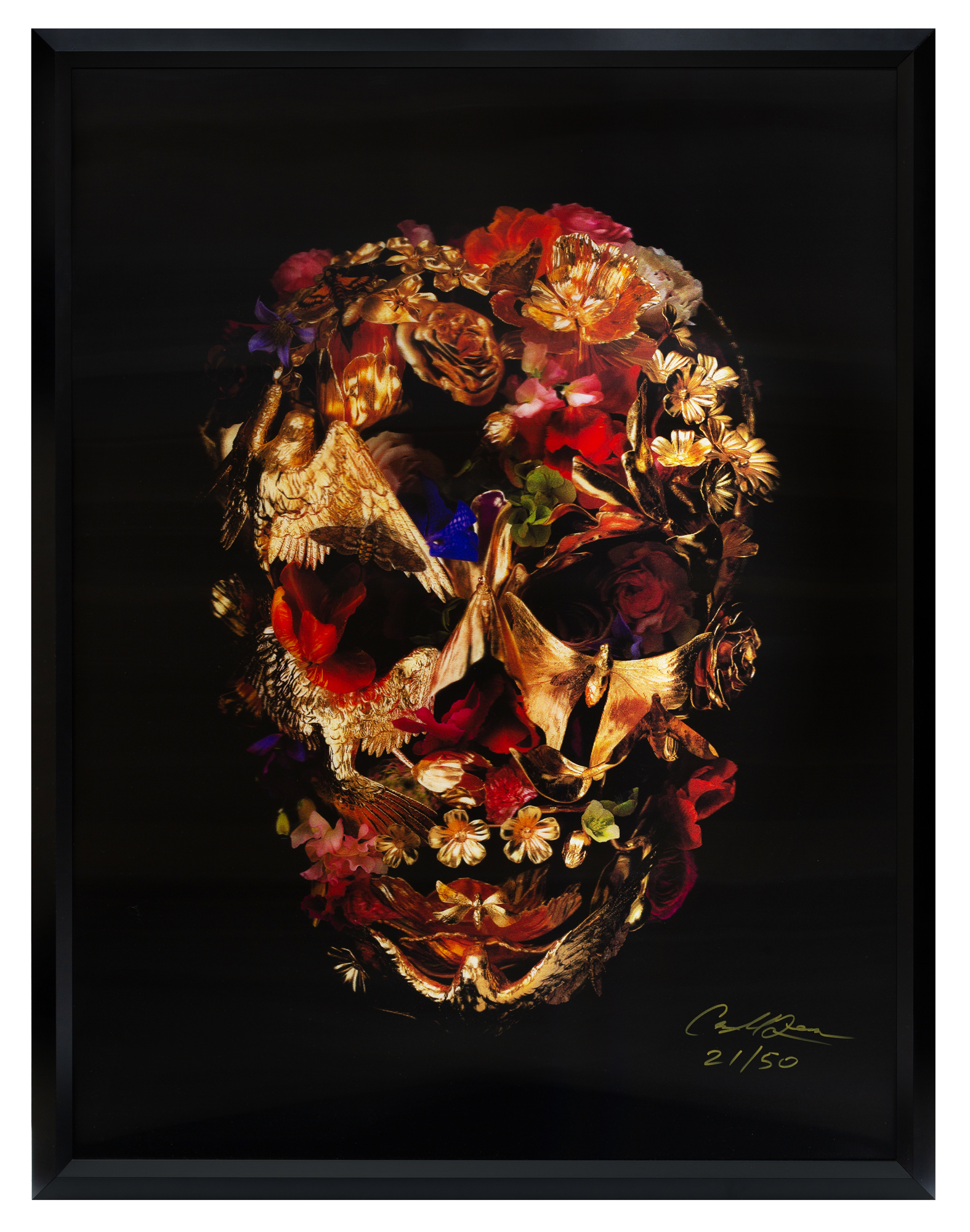
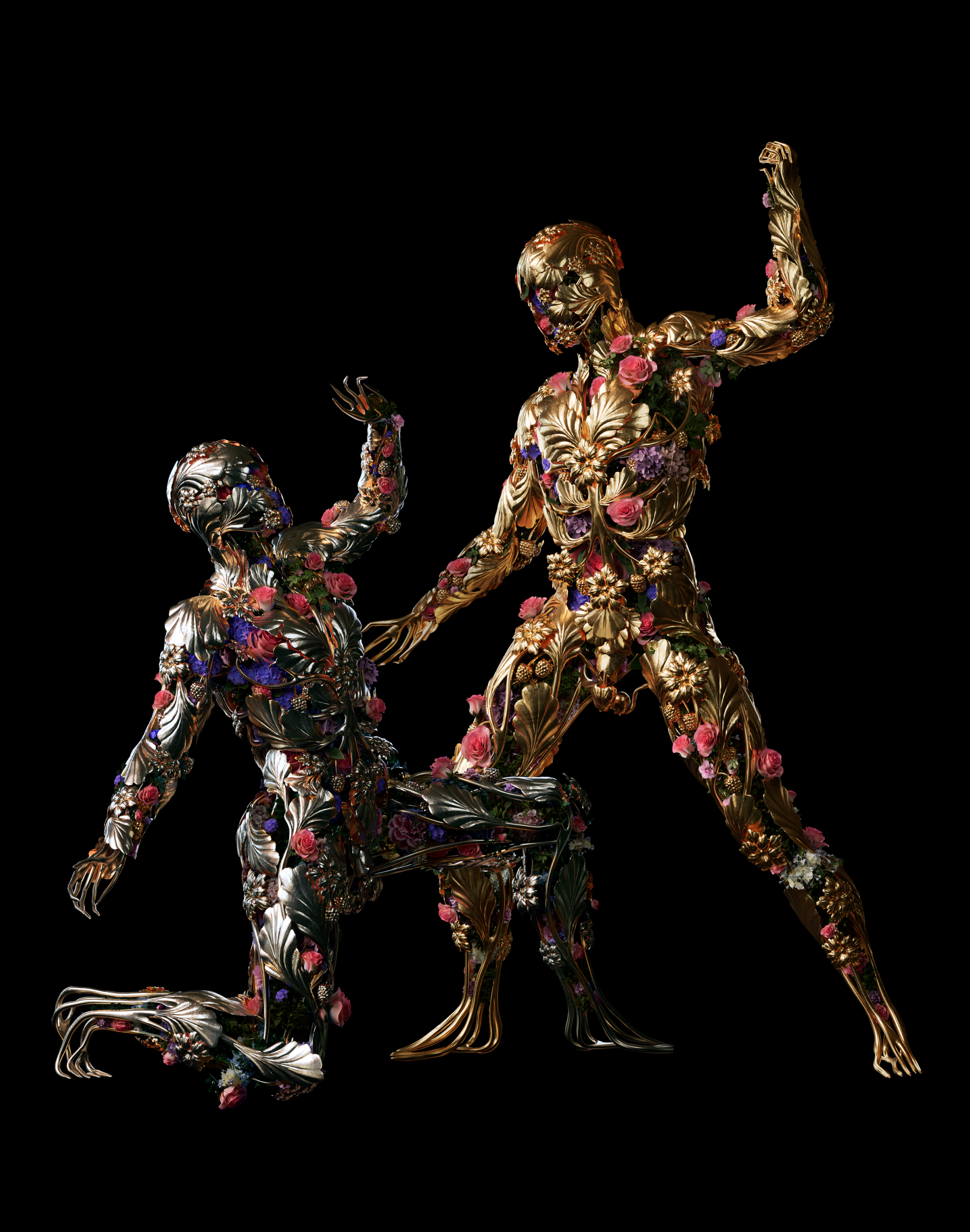
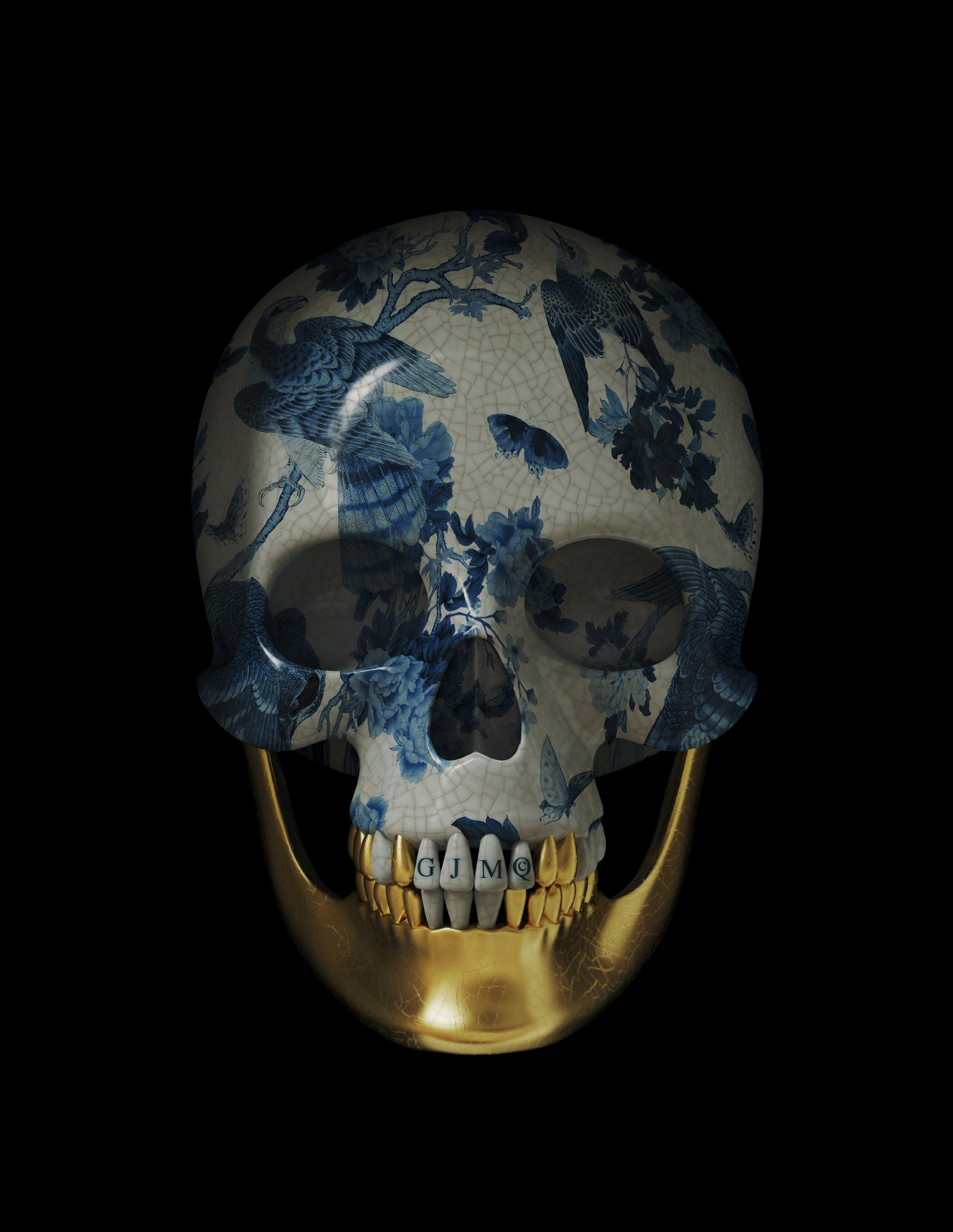
Gary James McQueen: Eternal Bloom, The Laws of Nature, Kintsugi Skull
McQueen's work revisits those same symbols but interprets them differently. Rather than presenting mortality as an ending, his imagery suggests a continuous cycle of transformation in which destruction and renewal coexist.
The skull fractures and reforms. Flowers bloom through bone. The body dissolves into the natural world that surrounds it.
In this way, his work feels less like a warning and more like a meditation on change itself.
The Flayed Angel
One of the most emotionally resonant works in McQueen's practice draws directly from both anatomical illustration and fashion history.
The Flayed Angel references a Victorian anatomical image by Jacques-Fabien Gautier, an illustration that also influenced Alexander McQueen's design language. In Gary's interpretation, a solitary figure turns away from the viewer wearing a sculptural red garment that reveals the architecture of the spine beneath.
The image later served as the conceptual starting point for McQueen's digital fashion collection Guiding Light, where similar imagery appeared within the visual environment of the show itself.
For those curious about how these ideas first began to take shape in his work, the film version of the collection offers a glimpse into that world.
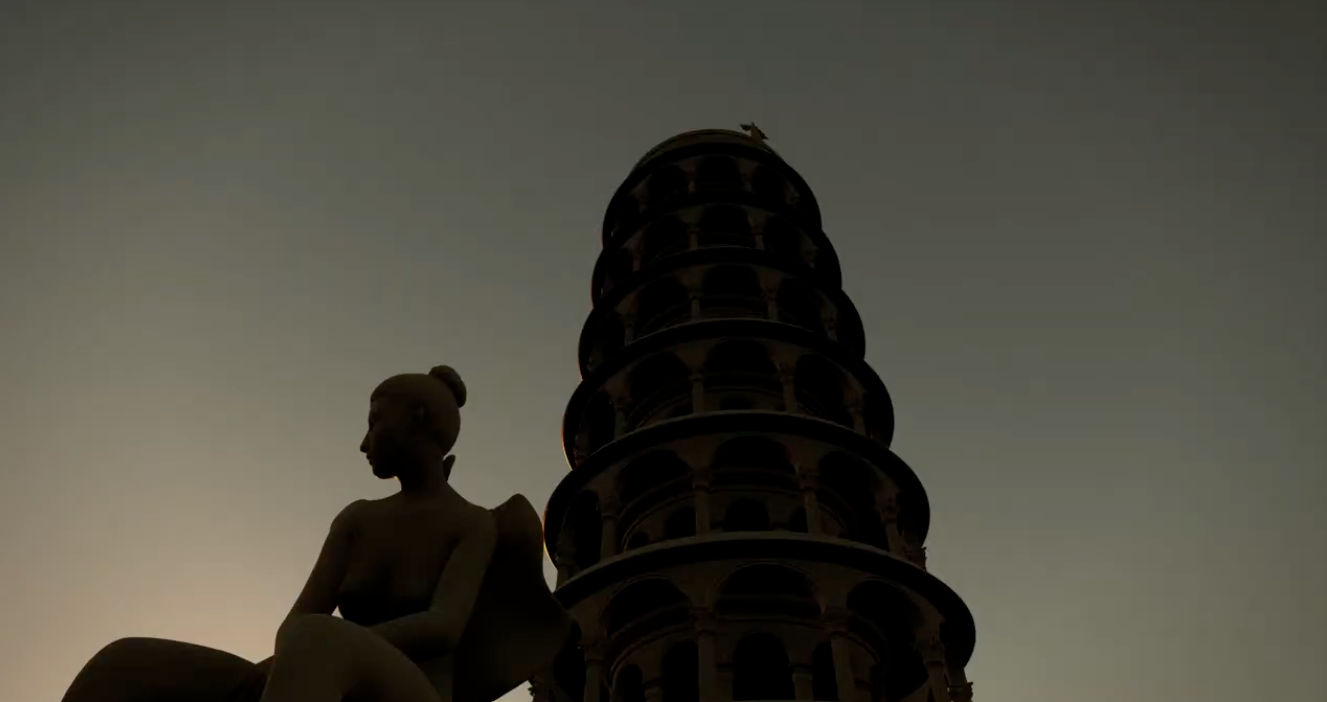
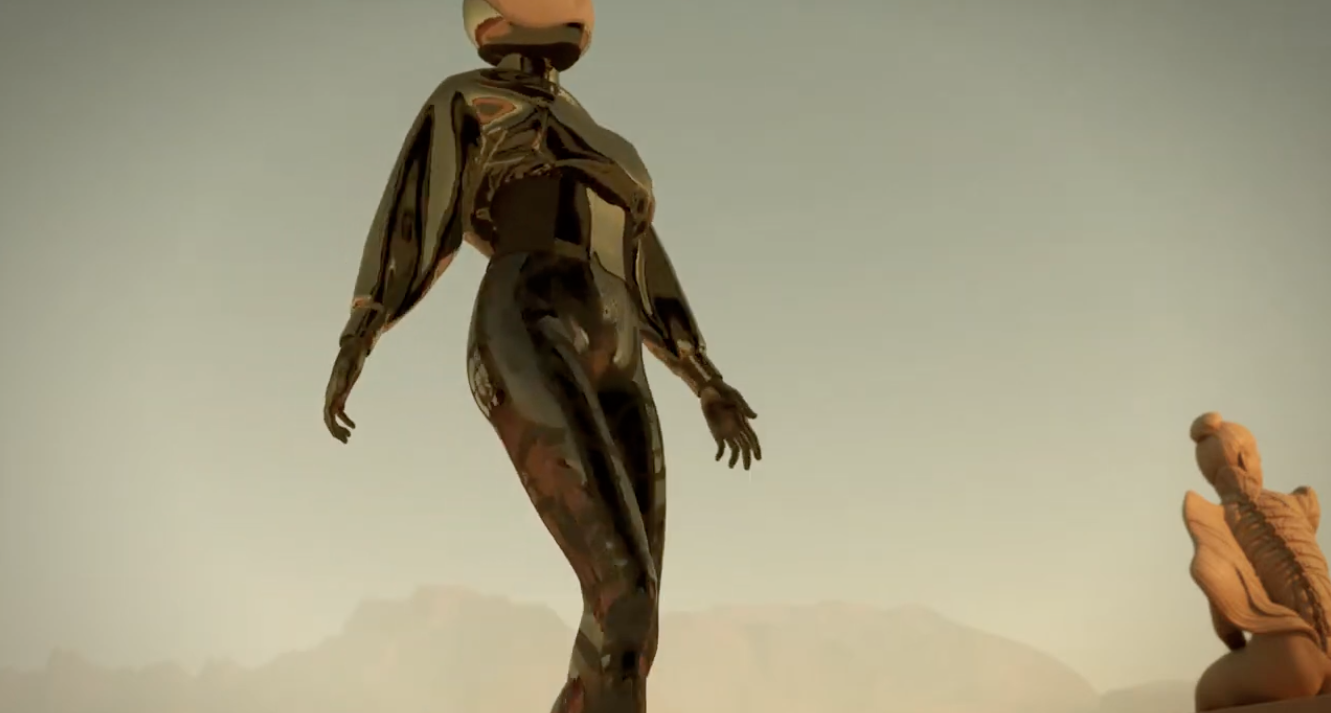
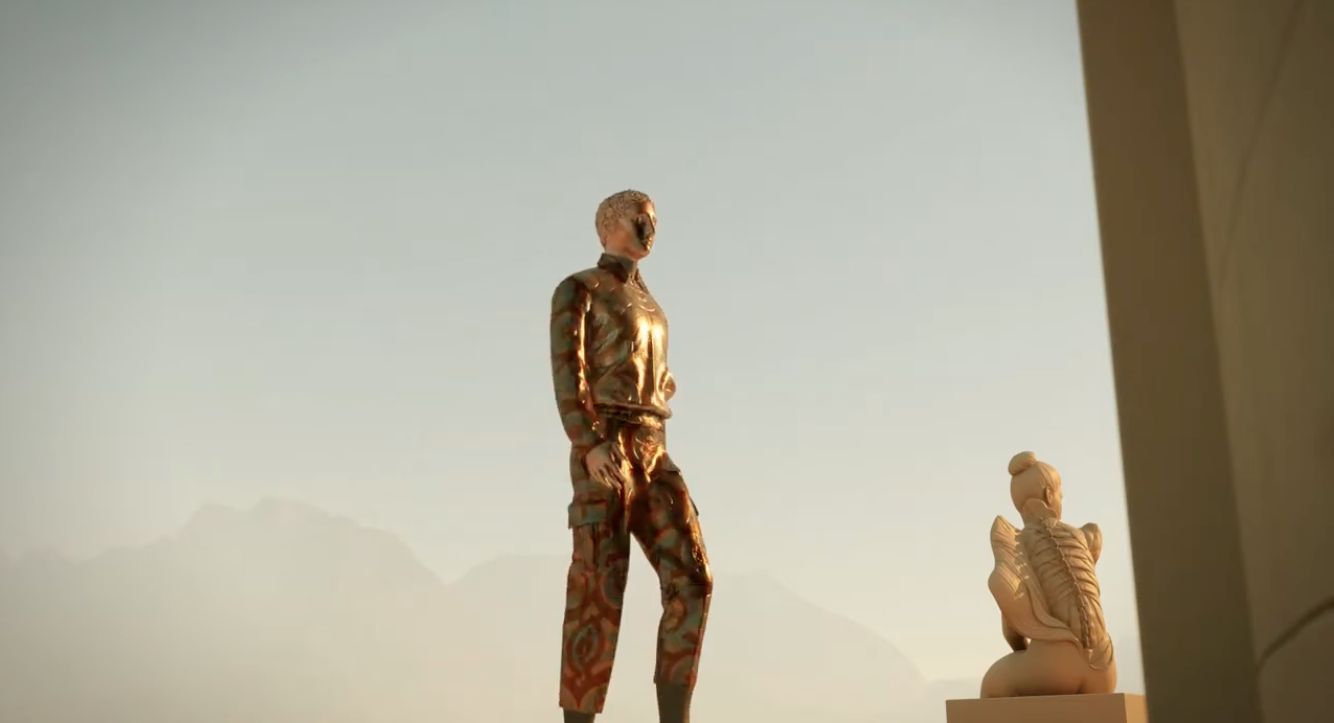
Stills from Gary James McQueen's "Guiding Light"
Watching the film, it becomes clear that McQueen's interest lies not only in creating images but in constructing entire mythological environments where those images can exist.
Form & Flora: Classical Beauty Reimagined
If the earlier works in McQueen's practice explored mortality through skulls and anatomical imagery, his newest collection, Form & Flora, turns toward something more luminous: the relationship between classical beauty and the living world.
The series unfolds like a contemporary mythology. Figures reminiscent of Greco-Roman sculpture—Venus, Eros, lions, horses, and allegorical forms—appear to emerge from marble-like surfaces before becoming overtaken by cascading golden flora that seems to grow organically across their bodies. Each image begins as a digitally sculpted figure modeled with the precision of classical statuary and is then translated into a lenticular artwork that shifts subtly as the viewer moves past it.
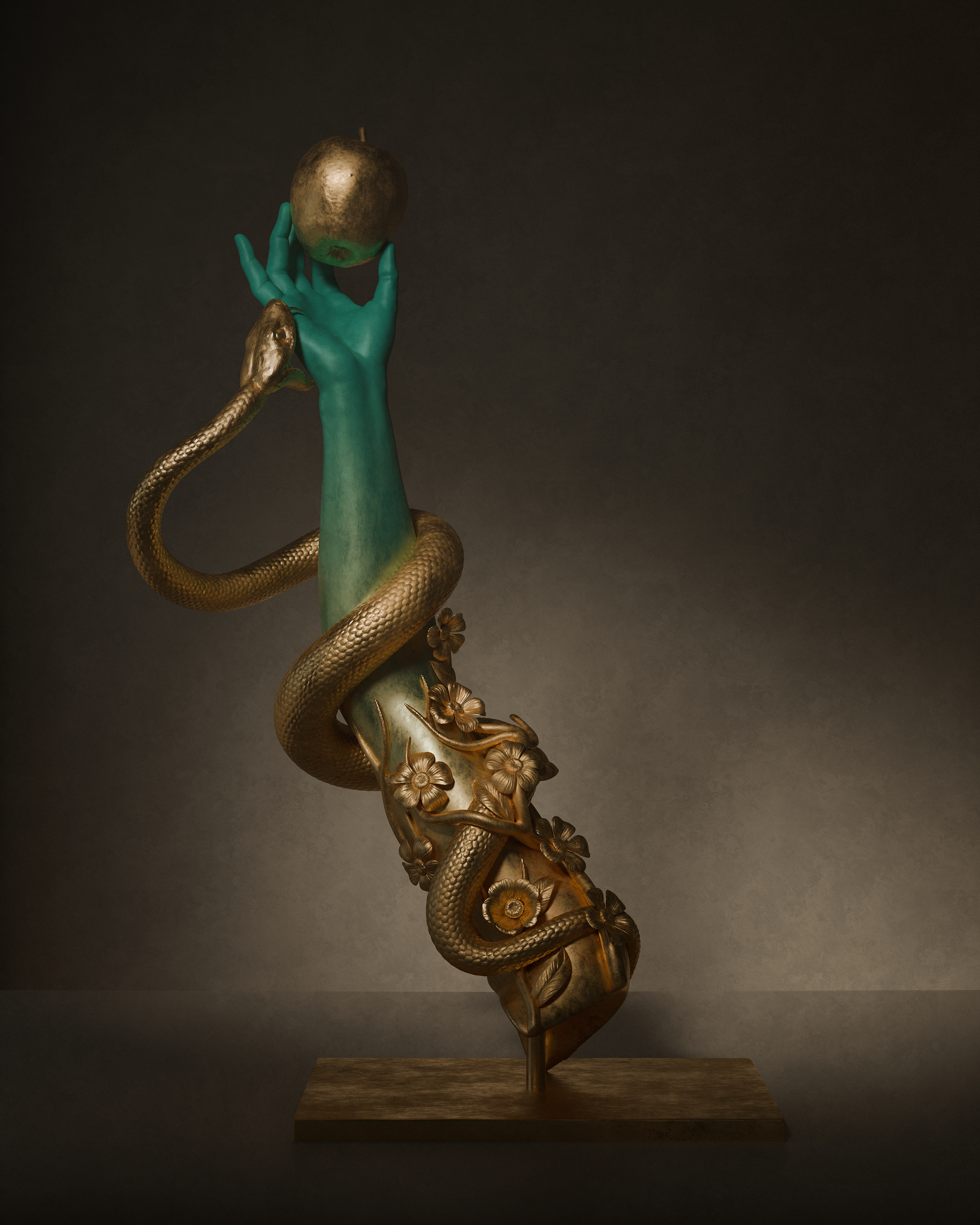
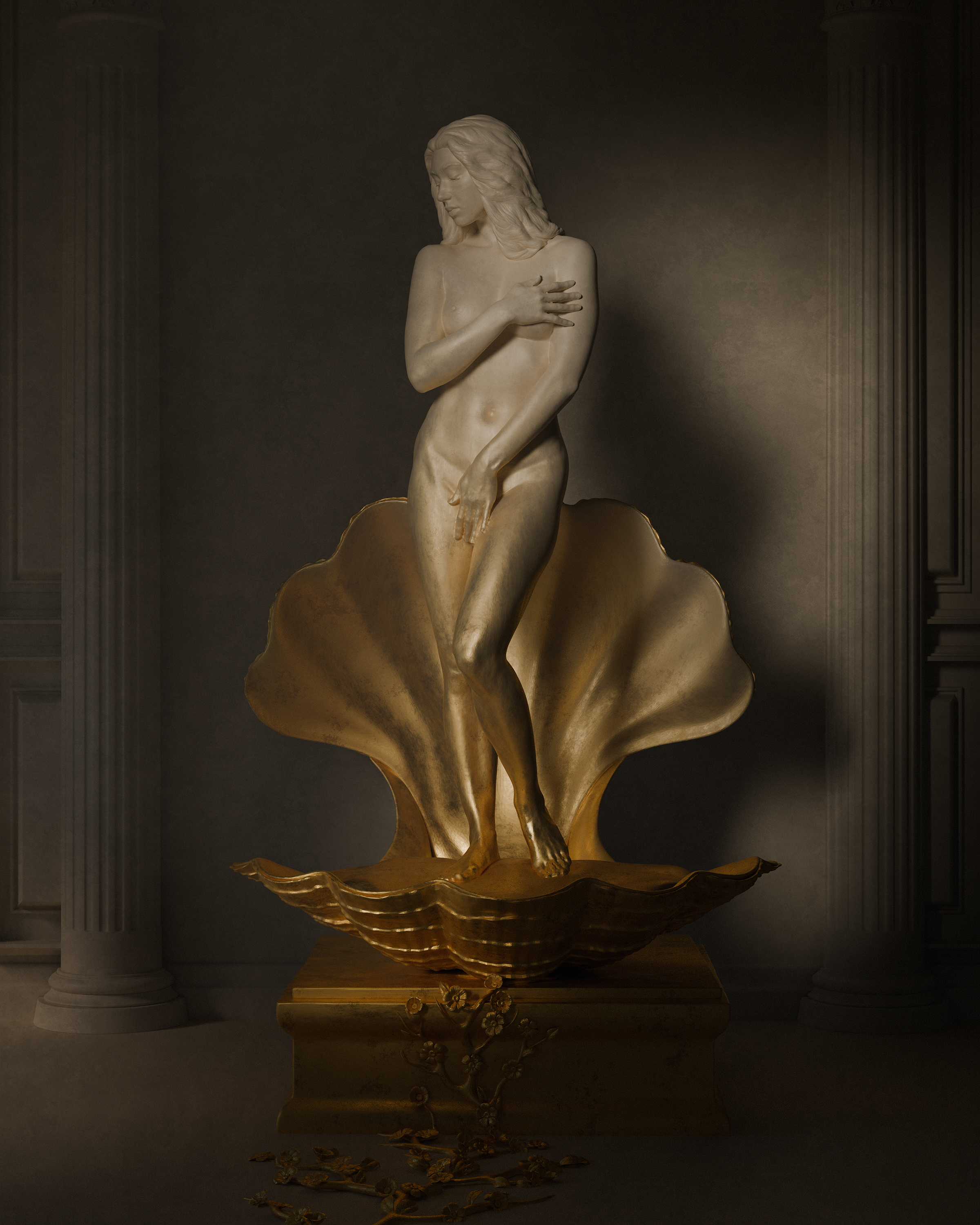
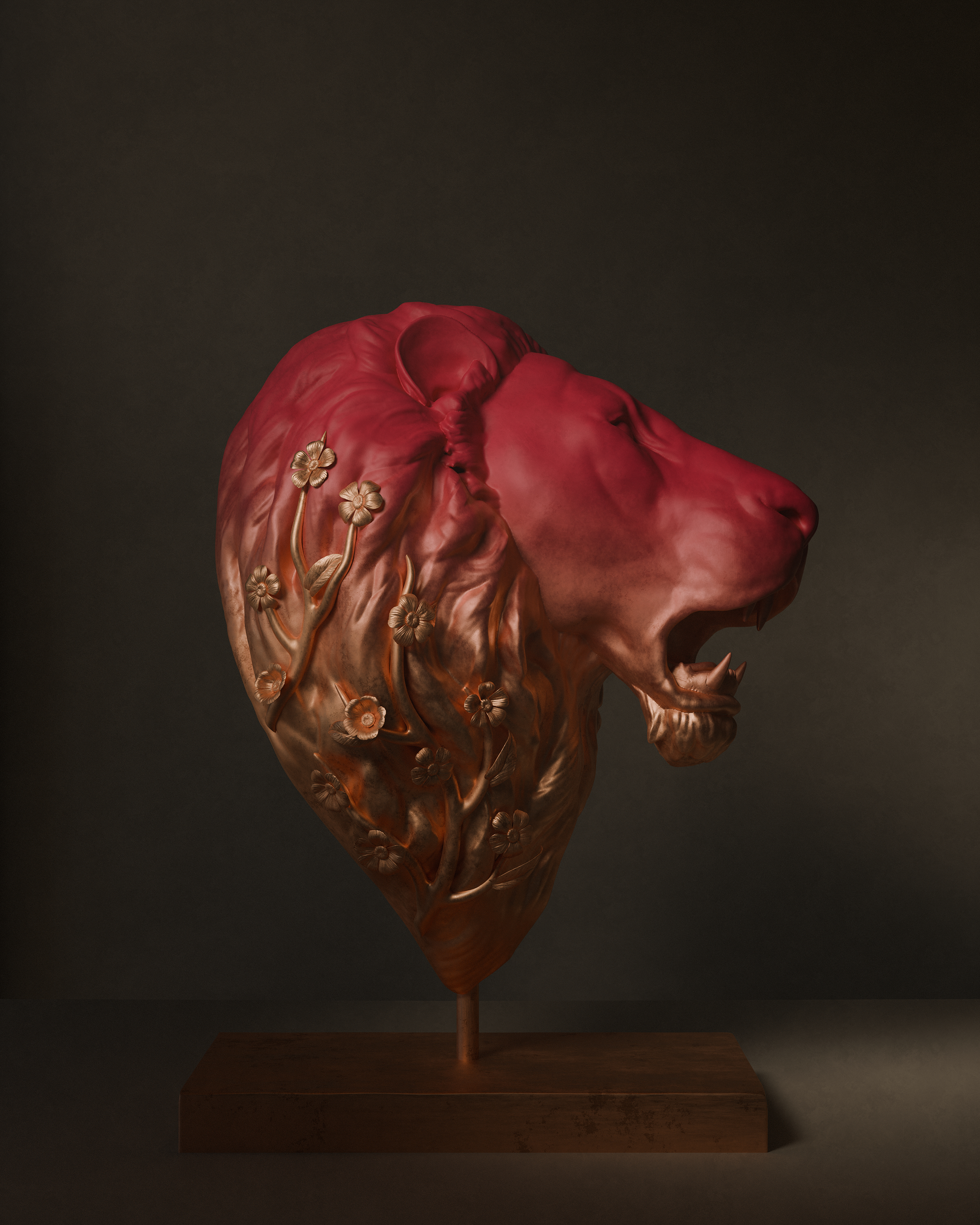
Gary James McQueen, Form & Flora Collection
The references to art history are unmistakable. McQueen's Venus Rising recalls the enduring image of the goddess popularized by Botticelli, yet the figure here feels less like a Renaissance ideal frozen in paint and more like a living sculpture suspended somewhere between past and future. Other works echo familiar monuments of Western art—most notably a reinterpretation of The Thinker, a gesture toward Rodin's famous sculpture that once symbolized intellectual contemplation but here appears as though it is slowly being reclaimed by nature.
Flowers provide the connective language throughout the collection. For centuries, flora has functioned as both ornament and metaphor in art and design—from the symbolic bouquets of Renaissance painting to the flowing botanical motifs that defined Art Nouveau architecture and jewelry. In Form & Flora, vines, blossoms, and gilded botanical forms spread across the figures themselves, blurring the boundary between decoration and anatomy until the human body begins to resemble a landscape.
The result is a body of work that feels both ancient and futuristic at the same time. Classical sculpture, mythology, and digital technology converge into images that hover somewhere between antiquity and tomorrow.
Marble breathes.
Metal blooms.
And myth begins to feel strangely alive again.
What Comes After the Runway
Fashion Week will move on.
Another season will arrive. Another set of collections will appear, disappear, and leave behind a stream of images that circulate briefly before fading into the endless archive of fashion history.
Yet the deeper questions that designers often explore—identity, mortality, beauty, transformation—tend to outlive the garments themselves.
Alexander McQueen proved that fashion could belong inside museums.
Gary James McQueen seems to be exploring what happens next.
When that same imagination leaves the runway entirely and becomes something else—something that doesn't move down a catwalk but instead shifts quietly as the viewer moves through a room.
Fashion has always flirted with impermanence.
Gary James McQueen simply makes that impermanence visible.
To learn more about available works by GJM, click here
