
Fashion Is Art: The Met Gala
Artwork from The Met collection, interwoven with fashion.
Maybe it's just me, but I follow just as many fashion, textile, and art direction Substacks as I do fellow advisors, curators, and artists.
I can't imagine a world where one is a fan of the visual arts and stops at painting, photography, and feels edgy with a little sculpture.
To appreciate art, in my view, is to live in a world surrounded by stories, questions, commentary, in all forms. Including living breathing bodies wearing, transporting, transforming, art through fashion.
By now, I hope you know tonight is the infamous Met Gala—where the theme is aptly, Fashion Is Art. Celebrating and fundraising to support The Costume Institute, tonight will hopefully be full of delicious looks, jaw-dropping feats of couture, and references to both contemporary and historical works of art.
What follows is a survey of my favorite on-theme works in the permanent collection of said institution:
From The Met:
The Met Announces New Details for the 2026 Met Gala and Spring Costume Art Exhibition
Starting May 10, the show will inaugurate the Museum's nearly 12,000-square-foot Condé M. Nast Galleries, named for the organization's late founder in recognition of a lead gift
Featuring nearly 400 objects from The Met's vast collection, Costume Art will juxtapose garments and works of art to illuminate new connections
The Gala dress code will be "Fashion is Art"
Met Gala 2026 Livestream
Tune in as guests arrive at the 2026 Costume Institute Benefit—also known as The Met Gala®—celebrating Costume Art. The livestream will begin on Monday, May 4 at 5:30 pm EDT.
Here are a few of my favorite "Fashion Is Art" works from The Met collection:
Gustav Klimt, Mäda Primavesi
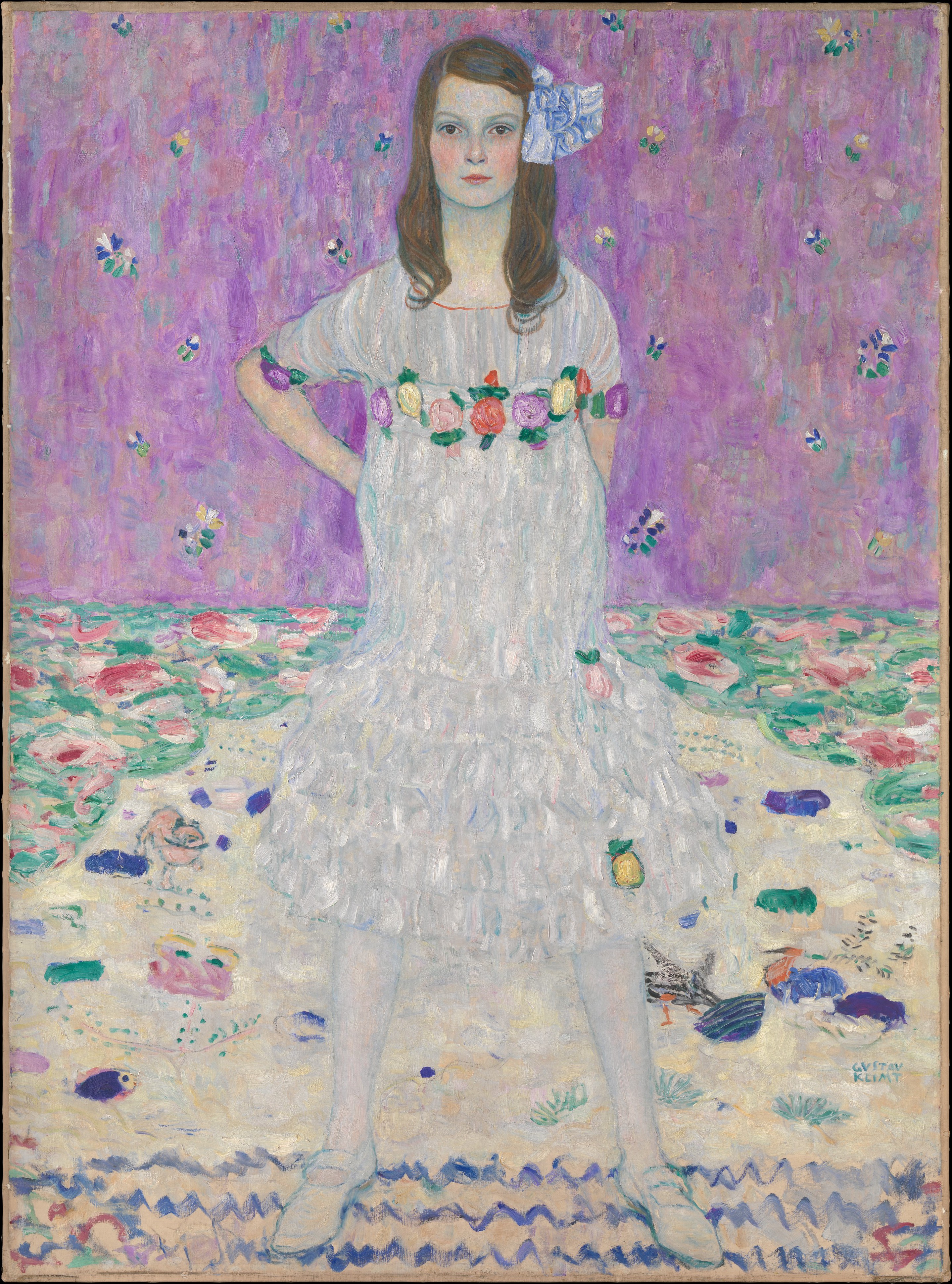
Gustav Klimt, Mäda Primavesi (1903–2000), 1912–13. Gift of André and Clara Mertens, in memory of her mother, Jenny Pulitzer Steiner, 1964
Mäda Primavesi's expression and bearing convey a remarkable degree of confidence for a nine-year-old girl. A strong-willed and active child, she vividly remembered posing while Klimt made numerous sketches, experimenting with her position, setting, and outfit. In the end, she wore a dress custom-made by the couture designer Emilie Flöge, the artist's close companion. Bright blossoms on the girl's clothing and in the background evoke youth and delicacy. The portrait attests to the sophistication of Mäda's parents, Otto and Eugenia, who were ardent patrons of Vienna's cutting-edge artistic circles.
This painting was seized by the Nazis from Jenny Pulitzer Steiner in 1938 in Vienna and restituted to her in 1951.
Georges Seurat, Study for "A Sunday on La Grande Jatte"
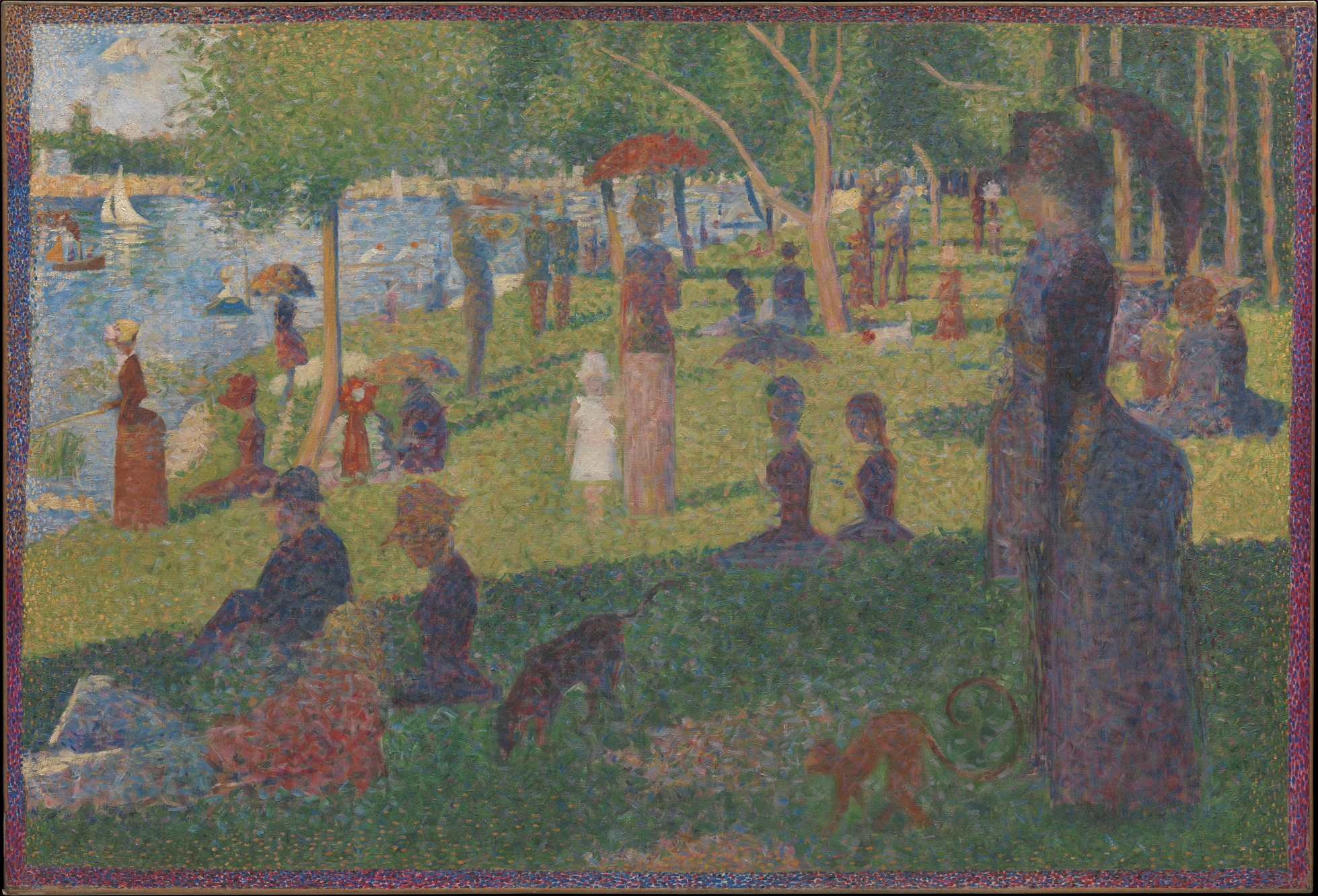
Georges Seurat, Study for "A Sunday on La Grande Jatte", 1884. Bequest of Sam A. Lewisohn, 1951
This is Seurat's final study for his monumental painting of Parisians at leisure on an island in the Seine (Art Institute of Chicago). Contrasting pigments are woven together with small, patchy brushstrokes, whereas in the mural-sized park scene—which debuted two years later at the 1886 Impressionist exhibition—Seurat used tighter, dot-like dabs of paint, a technique which came to be known as Pointillism (from the French word point, or dot). He preferred the term Divisionism—the principle of separating color into small touches placed side-by-side and meant to blend in the eye of the viewer.
Gustave Courbet, Woman with a Parrot
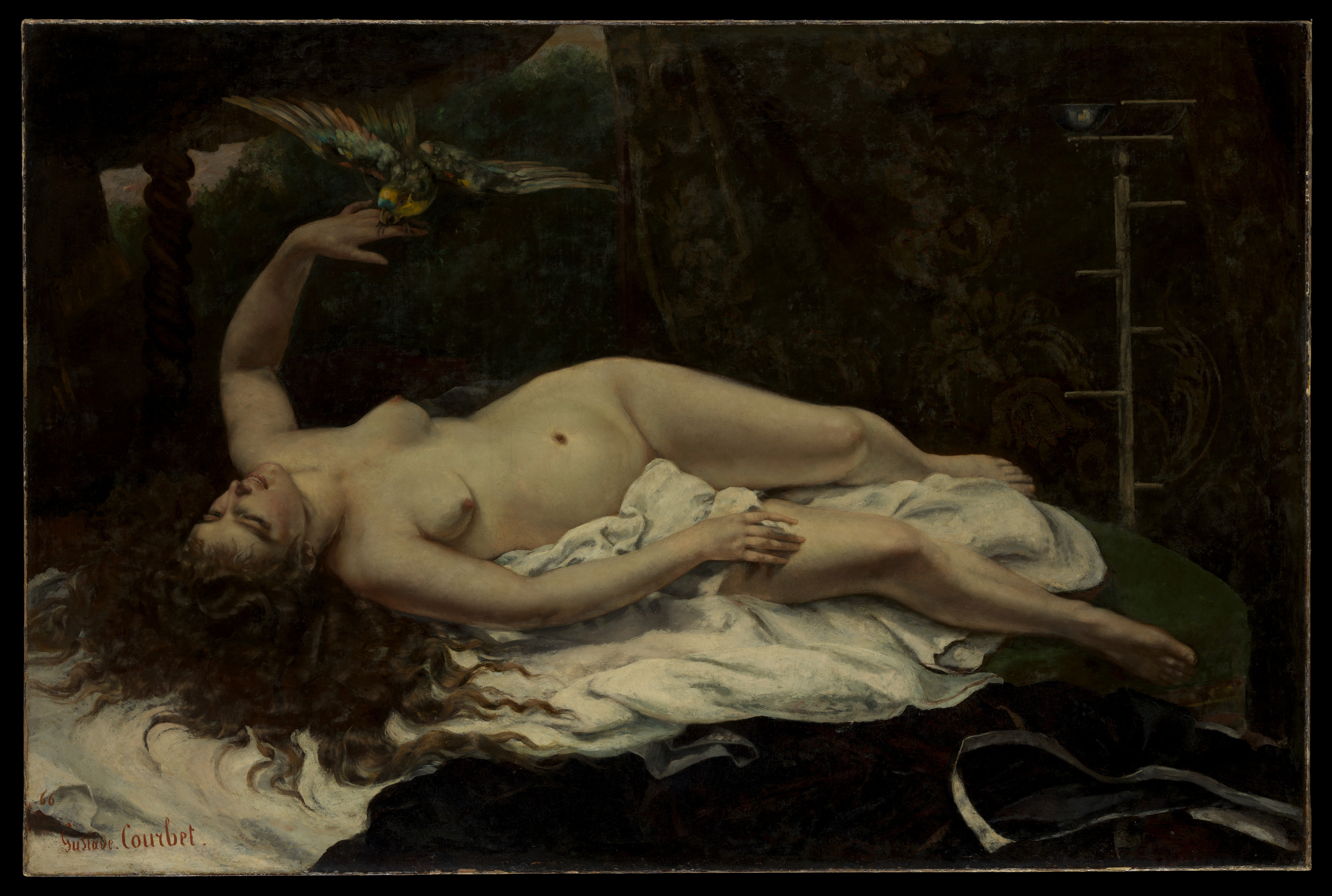
Gustave Courbet, Woman with a Parrot, 1886. H. O. Havemeyer Collection, Bequest of Mrs. H. O. Havemeyer, 1929
When this painting was shown in the Salon of 1866, some critics censured Courbet's "lack of taste" as well as his model's "ungainly" pose and "disheveled hair." Yet they were not unanimous, and the French state briefly considered purchasing it. Courbet himself wrote: "After twenty-five years of struggle, I am still fighting; and today I am still doing exactly the same kind of painting that in the beginning unleashed the entire official world against me . . . ." The provocative picture found favor with a younger generation of artists. Manet began his version of the subject the same year; and Cézanne apparently carried a small photograph of the present work in his wallet.
Egon Shiele, Seated Woman, Back View
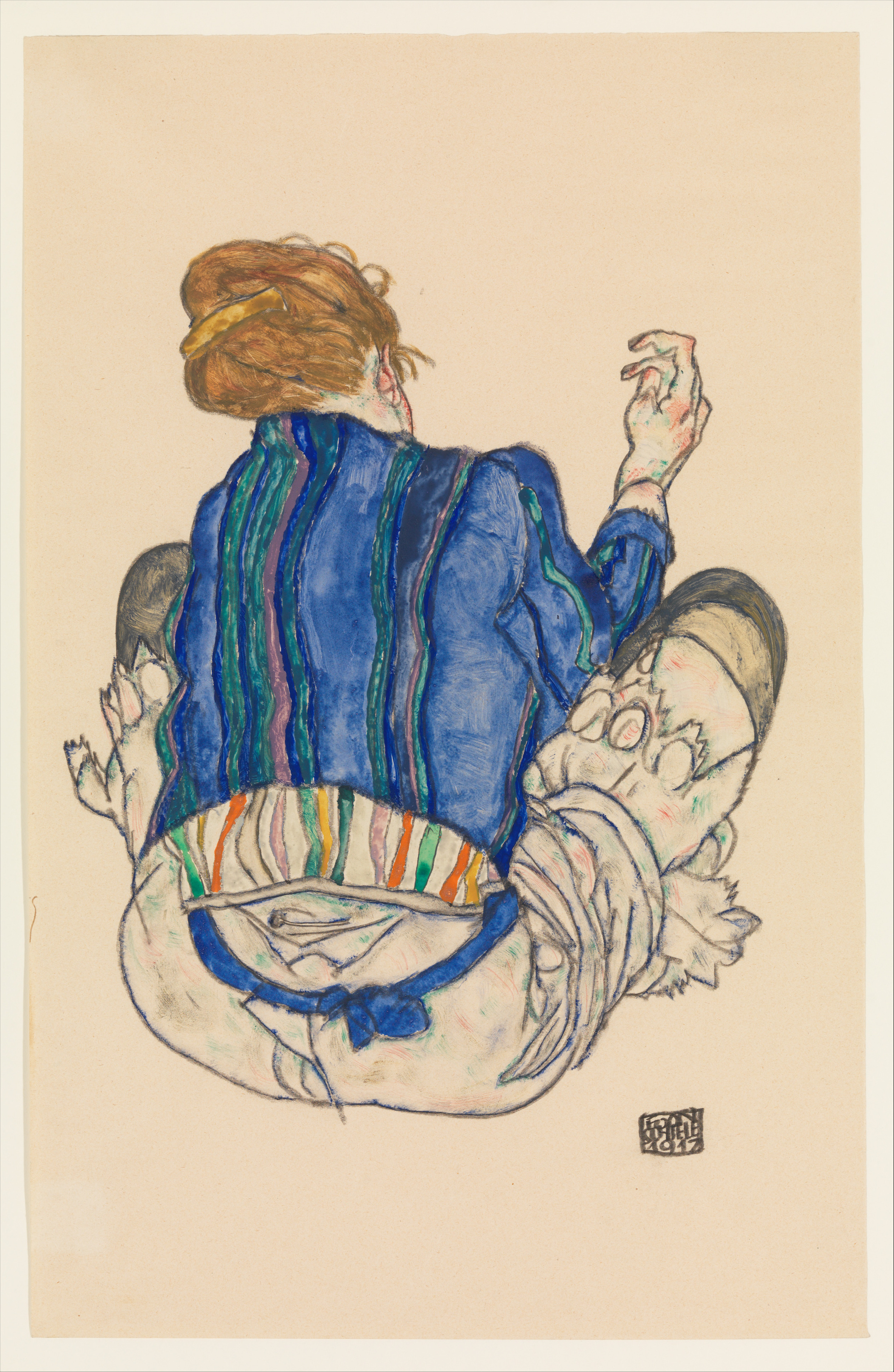
Egon Schiele, Seated Woman, Back View, 1917. Bequest of Scofield Thayer, 1982
While living in Vienna from 1921 to 1923, Scofield Thayer presumably bought many, or all, of the thirty drawings in his collection by the Austrian Expressionist painter Egon Schiele, whose work was virtually unknown in the United States at the time.
Schiele's career was short, intense, and amazingly productive. Before succumbing to influenza in 1918 at the age of twenty-eight, he created more than three hundred oil paintings and several thousand works on paper. The human figure provided Schiele with his most potent subject matter for both paintings and drawings.
The psychological intensity of Schiele's self-portraits is rarely encountered in his numerous studies of young women — many nude or provocatively dressed — who are treated in a detached manner as objects for formal analysis. Often isolated on a page, without any reference to their surroundings, these figures are exquisite studies in line, composition, and gesture. This portrait of a seated woman viewed from behind is expressive even though her face is hidden. The model was likely Schiele's wife, Edith Harms, then twenty-four, whom he married in 1915 and who died of influenza only three days before he did. Only partially dressed but with her strawberry-blond hair carefully coiffed, the figure wears a bright blue striped jacket over a white striped shirt — the attire of a respectable lady. Her lower body, however, is clad in the garments in which Schiele usually depicted prostitutes — a white lace slip and dark stockings. The marked difference between the two parts of her costume seems to reflect the artist's own ambivalent feelings about his wife, who is variously shown in his art as a cold virgin or a passionate lover.
Edouard Manet, Young Lady in 1866
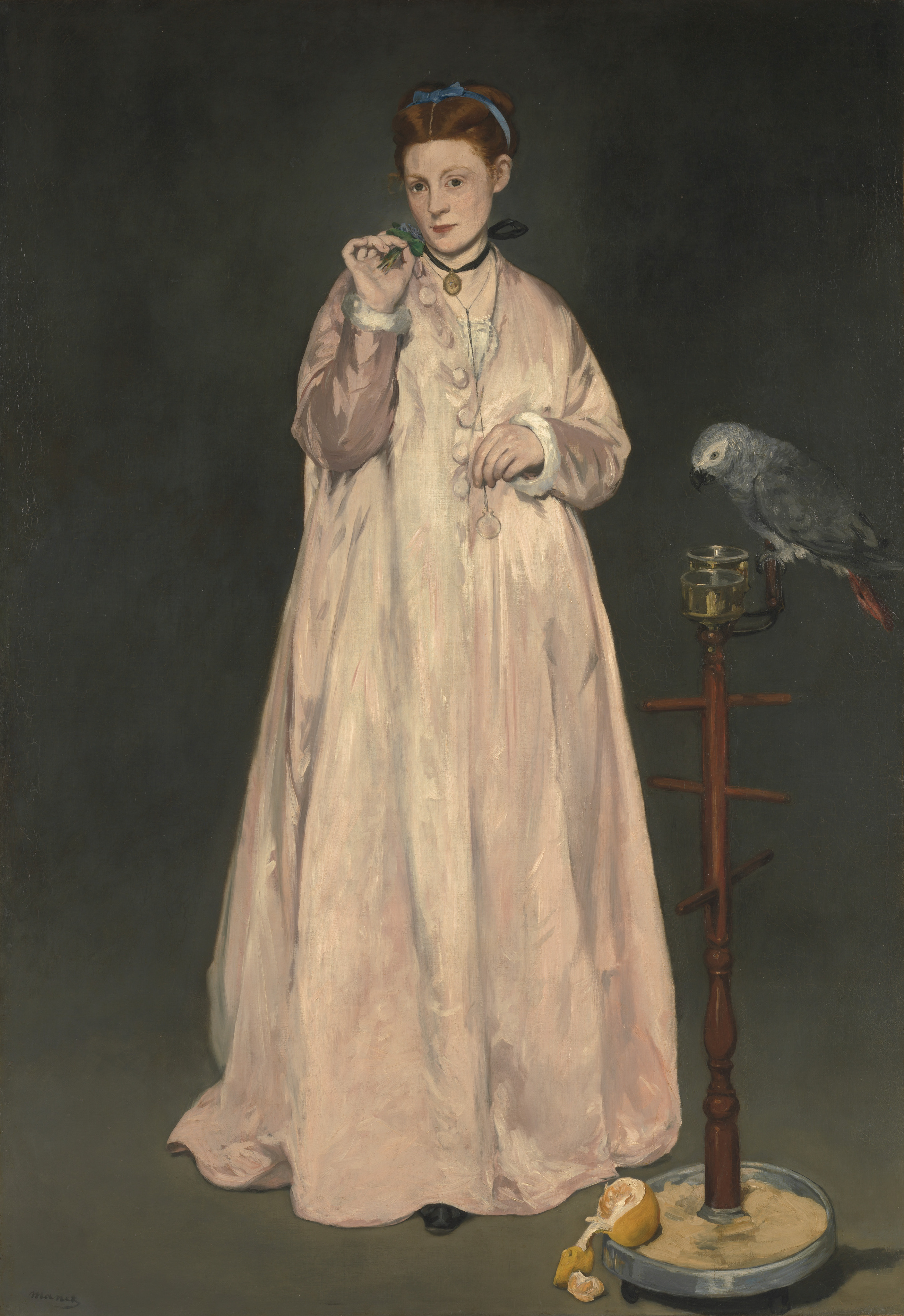
Edouard Manet, Young Lady in 1866, 1866. Gift of Erwin Davis, 1889
Manet's model, Victorine Meurent, had recently posed as the brazen nudes in Olympia and Luncheon on the Grass. Here, appearing relatively demure, she flaunts an intimate silk dressing gown. Critics eyed the painting as a rejoinder to Courbet's Woman with a Parrot and as indicative of Manet's "current vice" of failing to "value a head more than a slipper." Recent scholars have interpreted it as an allegory of the five senses: the nosegay (smell), the orange (taste), the parrot-confidant (hearing), and the man's monocle she fingers (sight and touch).
Vincent Van Gogh, Shoes
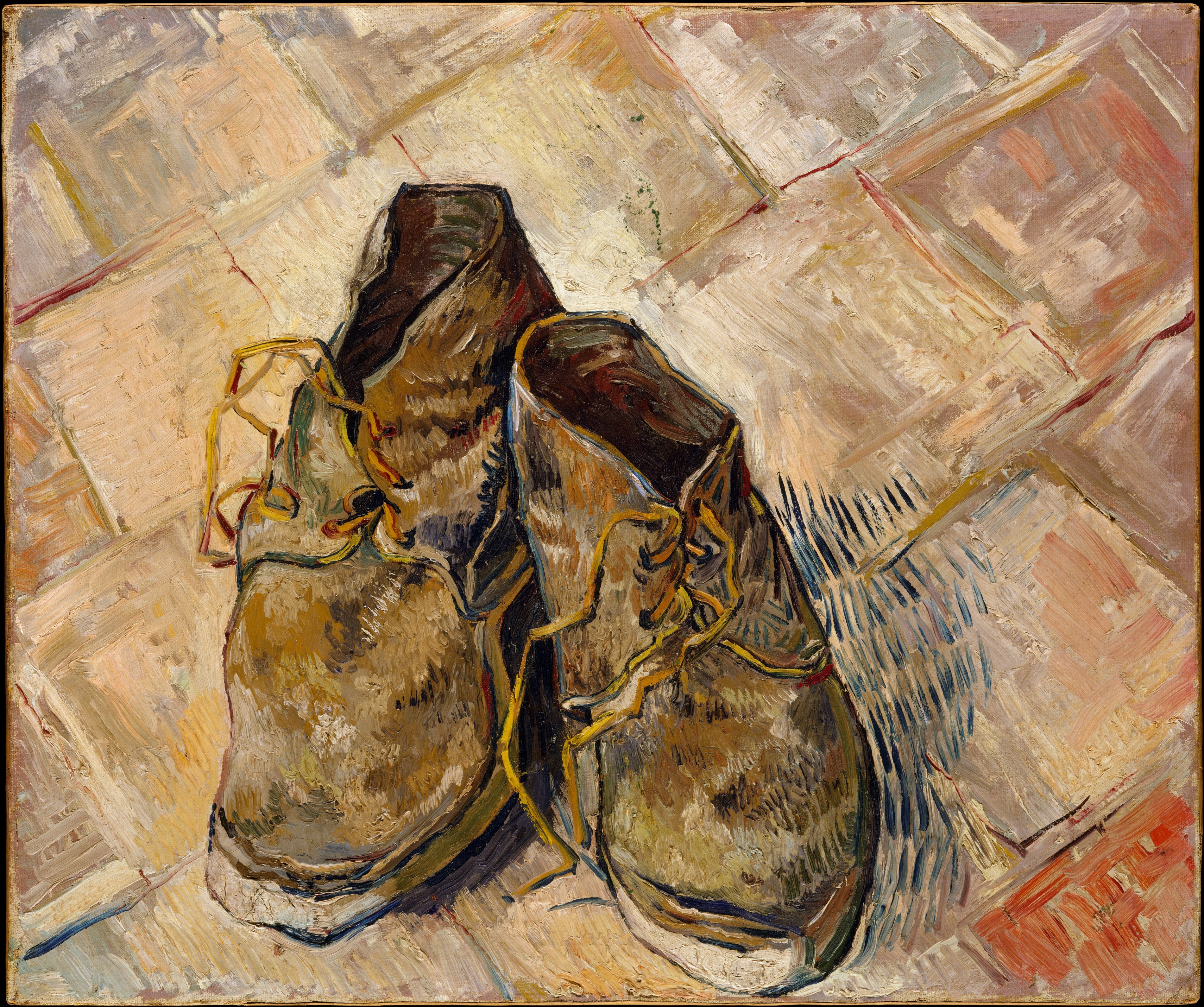
Vincent Van Gogh, Shoes, 1888. Purchase, The Annenberg Foundation Gift, 1992
Van Gogh painted several still lifes of shoes or boots during his Paris period. This picture, painted later, in Arles, evinces a unique return to the earlier motif. However, here Van Gogh has placed the shoes within a specific spatial context: namely, the red-tile floor of the Yellow House. Not only may we identify the setting, but perhaps the owner of the shoes as well. It has been suggested that this "still life of old peasants' shoes" may have been those of Patience Escalier, whose portrait Van Gogh executed around the same time, late summer 1888.
Berthe Morisot, The Pink Dress
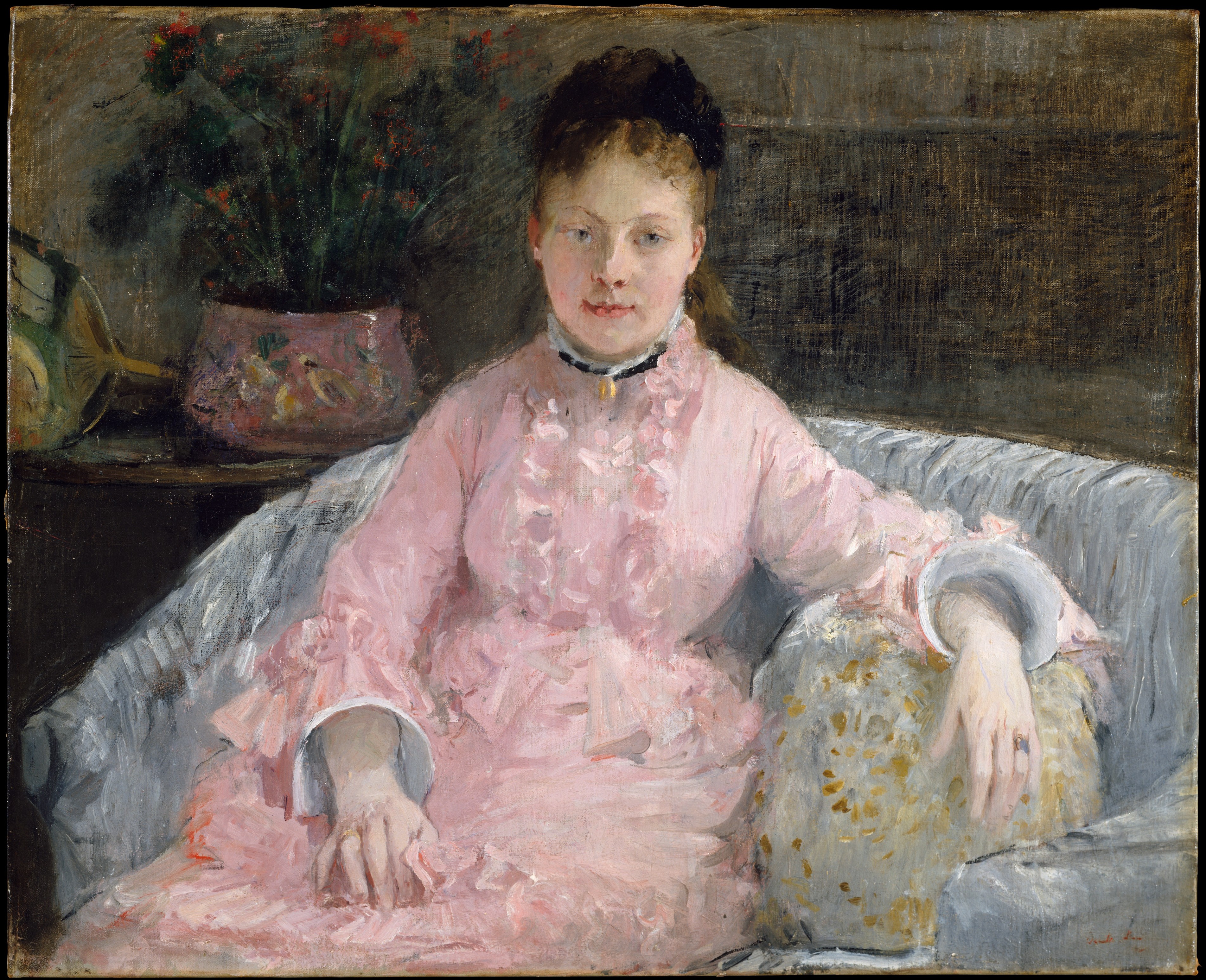
Berte Morisot, The Pink Dress (Albertie-Marguerite Carré, later Madame Ferdinand-Henri Himmes, 1854–1935), ca. 1870. The Walter H. and Leonore Annenberg Collection, Bequest of Walter H. Annenberg, 2002
The fashionable portraitist Jacques-Emile Blanche witnessed this painting being made at the Villa Fodor, the family home of Marguerite Carré, the sitter: "One day, she [Morisot] painted before my eyes a charming portrait of Mlle Marguerite in a light pink dress; indeed, the entire canvas was light. Here Berthe Morisot was fully herself, already eliminating from nature both shadows and half-tones." But the painting required several sessions, since Morisot "constantly changed her mind and painted over what she had done once the session was at an end . . . ." The Pink Dress is one of the artist's few surviving early works.
Velázquez, María Teresa (1638–1683), Infanta of Spain
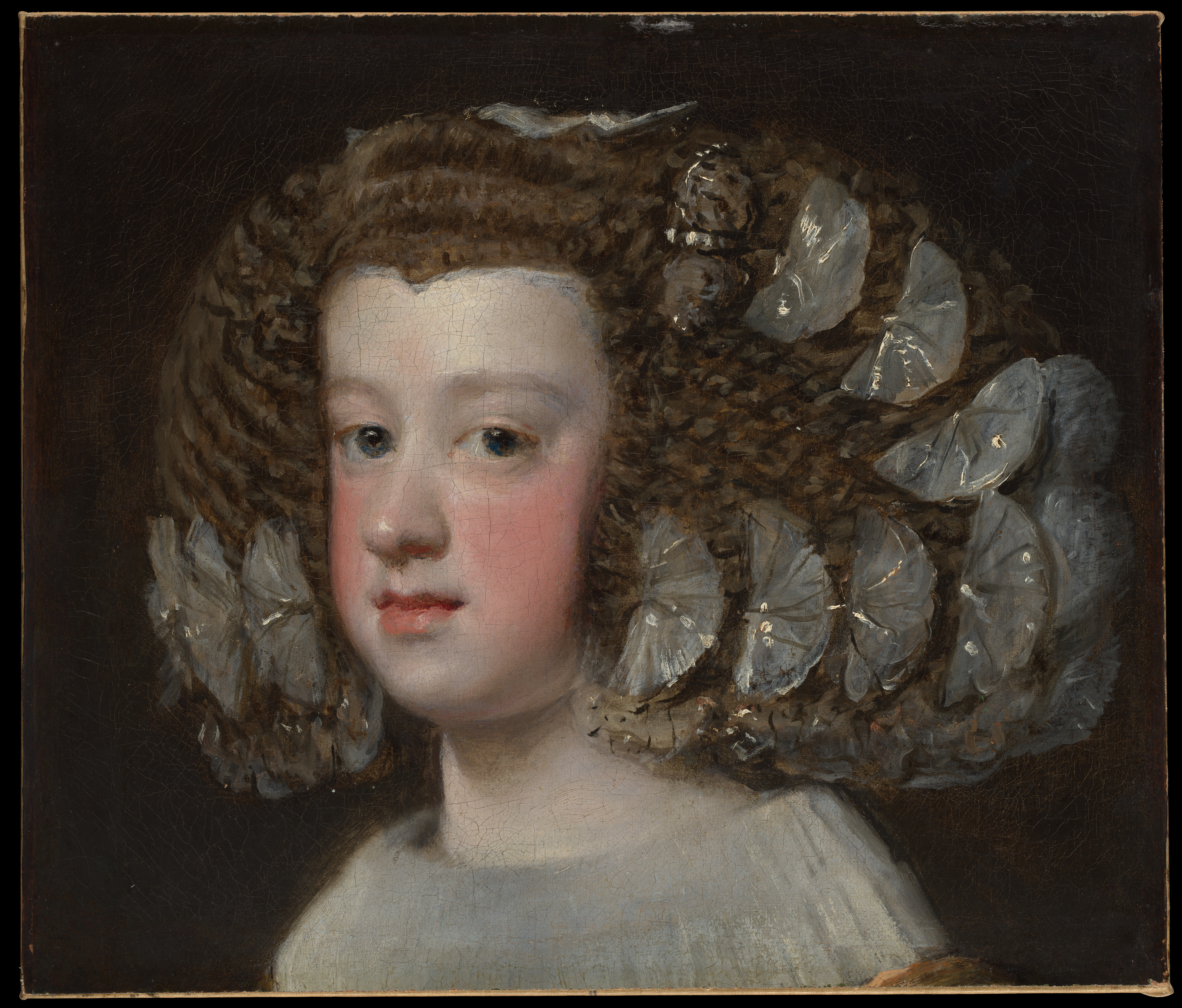
Velázquez, María Teresa (1638–1683), Infanta of Spain, 1651-54. The Jules Bache Collection, 1949.
Originally bust-length, this painting was subsequently cut down. Velázquez's likeness of María Teresa wearing a wig with butterfly ribbons served as a model for his assistants to copy as they met the high demand for official portraits of the young princess. The daughter of King Philip IV, María Teresa received the attention of suitors across Europe who would have known her appearance primarily from the circulation of these portraits. In a powerful 1660 political alliance, she married her first cousin, Louis XIV, and became queen of France.
India (Rajasthan, Kishangarh), A Lady Playing the Tanpura
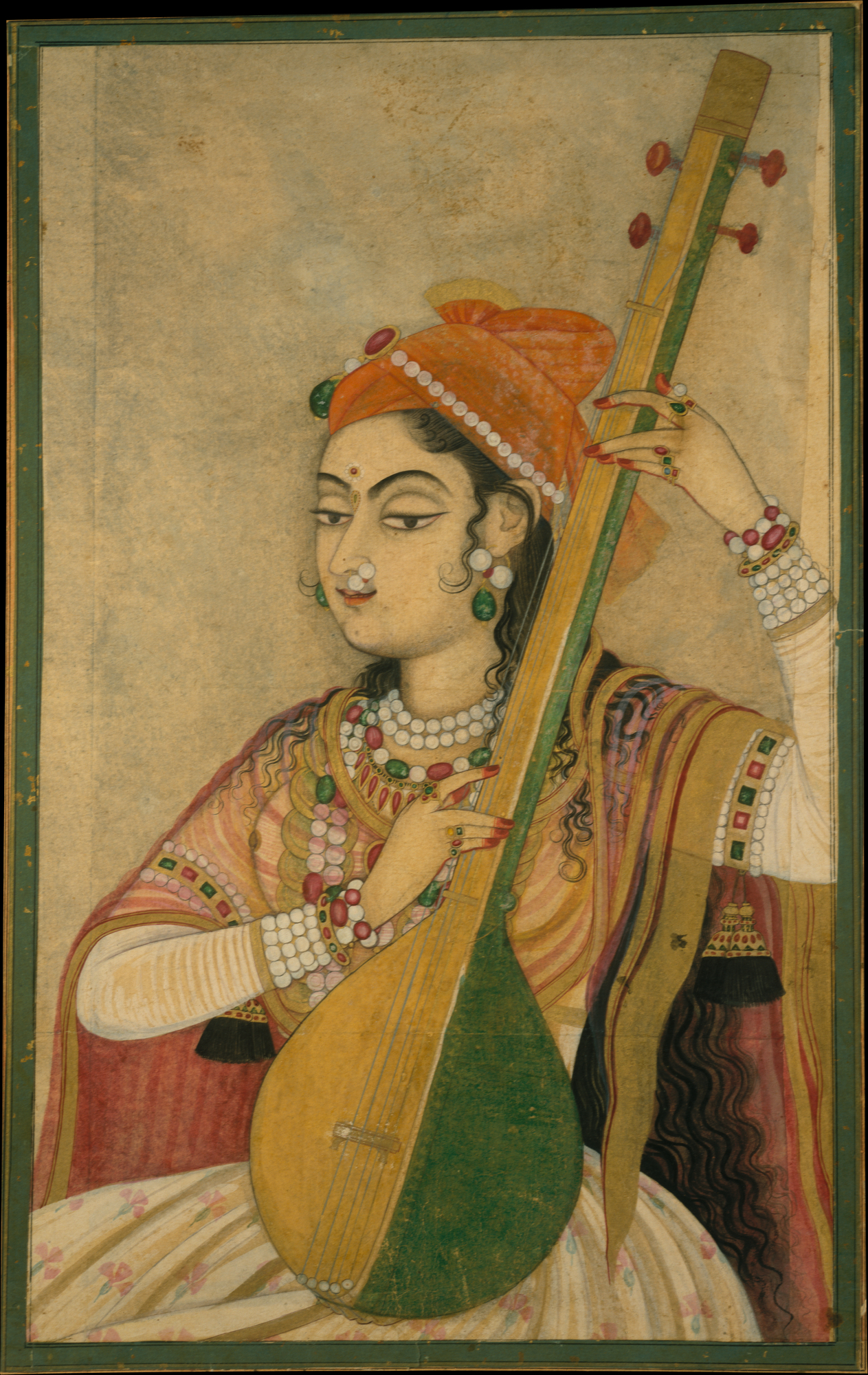
India (Rajasthan, Kishangarh), A Lady Playing the Tanpura, ca. 1735. Fletcher Fund, 1996
As a nayika (archetypal heroine), this figure personifies the ideal of feminine beauty as conceptualized in Indian devotional poetry of the period. She strums a tanpura and wears elaborate jewelry and sheer textiles, clearly placing her as a member of the court. At the same time, there is the allusion that she is Radha, the divine consort of Krishna, who was important to these Kishangarh patrons.
Elizabeth Louise Vigée Le Brun, Madame Grand (Noël Catherine Vorlée, 1761–1835)
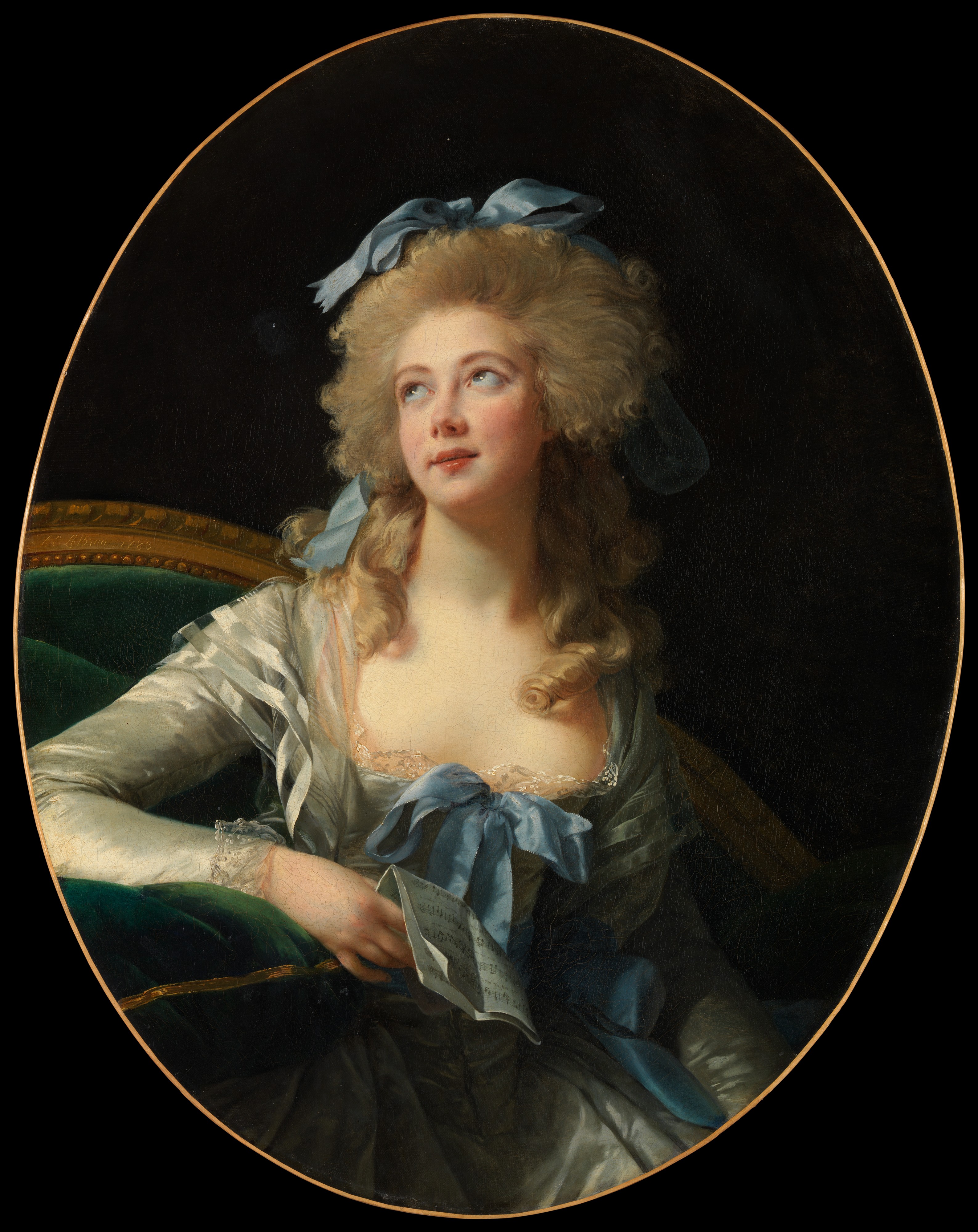
Elizabeth Louise Vigée Le Brun, Madame Grand (Noël Catherine Vorlée, 1761–1835), 1783. Bequest of Edward S. Harkness, 1940
Madame Grand was born to a French colonial family near Pondicherry, India. As she rose to fame for her beauty and eventual marriage to the minister and diplomat Talleyrand, admirers and critics alike exoticized her origins by giving her the epithet l'Indienne. This remarkable image of her with eyes raised and lips parted as if in song was among ten portraits and three history paintings shown by Vigée Le Brun at the Salon of 1783, the same year the artist was accepted as one of only four female members of the French Royal Academy.
