
Art Collecting 101: PART II - What Are You Really Buying?
Understanding value beyond the price tag
After someone learns how to look—really look—the next question usually comes quickly.
…wait, it's HOW much?
It's a fair question. It's also the one that tends to pull people out of the experience and back into logic too quickly.
Because pricing in the art world doesn't behave the way most things do.
There's no clean formula or universal baseline. There isn't an obvious correlation between size, time, and cost that neatly explains everything. In fact, I've worked with so many artists to determine pricing scales that veer away from pricing 'favorites' with top values, or 'the best ones' at premium pricing.
And that's usually where hesitation begins. And while caution is great in financial planning and investing, it can also be a smoke that suffocates the entire point of art acquisition— that effervescent bubbling of an authentic work of art, speaking directly to you in a soft whisper.
Don't believe me? Keep reading this series.
I've watched collectors stand in front of a work they're clearly drawn to—fully engaged, asking the right questions, staying longer than they expected—and then shift the moment the price enters the conversation.
Not because they don't love it.
But because they're trying to make it make sense in a way that it never fully will.
They start reaching for comparisons. For justification. For confirmation that the number in front of them is correct.
And in doing so, they move away from the very thing that brought them there in the first place.
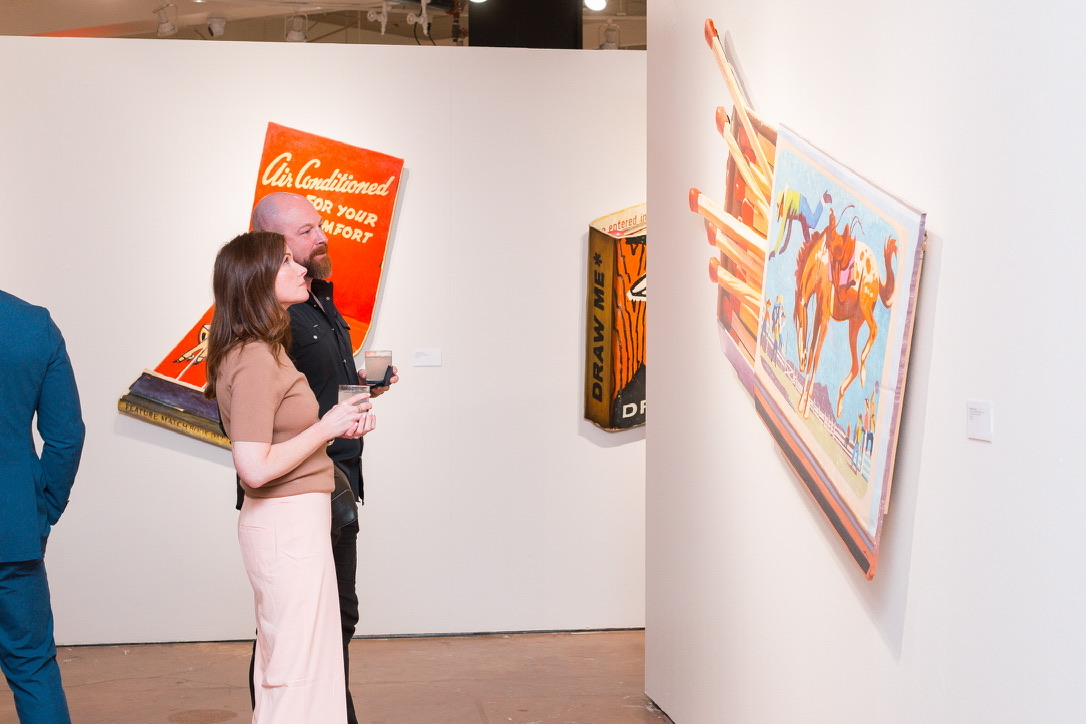
Collectors admiring the artwork BEFORE reading the wall label at the gallery.
Let's slow that down.
Because while pricing isn't arbitrary, it's also not purely rational, it's layered.
Part of what you're seeing is the artist's position: where they are in their career, how consistently they've produced, who has supported the work, and how widely it's been seen.
Part of it is context: exhibitions, galleries, institutions, collections. The infrastructure around the work that signals it has been taken seriously, and will likely continue to be.
Part of it is rarity: how often work like this becomes available, how many exist, whether this moment in the artist's practice will repeat itself or not.
And then there's something harder to quantify.
Demand, yes—but not just in the transactional sense.
Cultural relevance. Timing. A feeling that something is beginning to matter in a broader way, even if it hasn't fully materialized yet.
This is where most people default to the word investment.
And I understand why.
It creates a sense of control. A framework. A way to justify the decision externally, rather than internally.
But it's also where collecting can quietly flatten.
Because the works that define collections—the ones that stay, the ones that anchor everything else—are rarely the ones that felt the safest at the time.
They're the ones that required a bit of belief.
Not blind belief. Not uninformed risk.
But a willingness to say: this matters to me now, even if the rest of the world hasn't fully caught up.
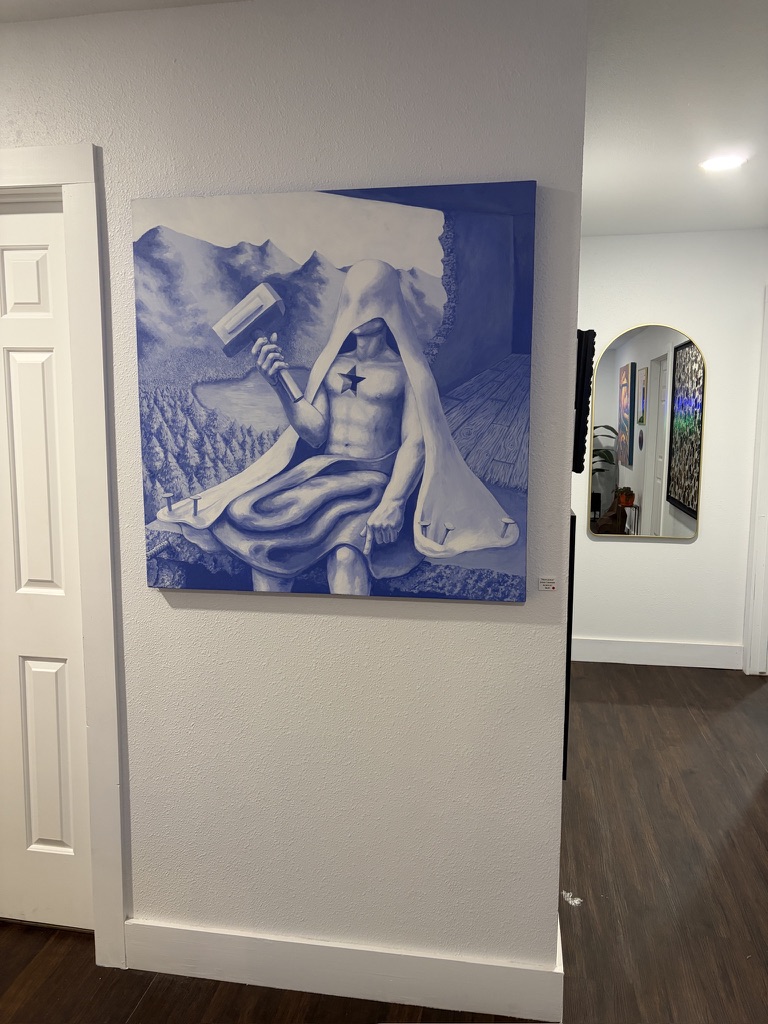
A work of art by my friend and colleague, Josie. This painting blew me away before the exchange of funds even entered the conversation. I ended up buying it, but because the price was comfortable to me. NOT because I felt it was "worth" it (though to be honest, I encouraged her to raise her pricing thereafter!)
That doesn't mean you ignore the structure around the work.
You should absolutely understand what you're buying.
Ask about exhibition history, the medium, the edition (if there is one), how often work is released, & how pricing has evolved. You should know where the artist has been, is now, and where they're headed.
You should ask (if it matters to you) who they are.
not for nothing—I'm not buying art from assholes, misogynists, or anyone in their orbits. not sorry.
This isn't a checklist—it's as a way of understanding the ecosystem the work exists within.
Because value isn't just in the object, I promise, it's in everything that supports it.
There's also a distinction that becomes important early on, even if no one explains it clearly.
The difference between buying on the primary market—directly from a gallery representing the artist or the artist themselves—and the secondary market, where works are resold through auction or private dealers.
The primary market is where careers are built. Where pricing is set with intention, often gradually, in step with the artist's growth.
The secondary market is where value is tested more publicly—sometimes amplified, sometimes corrected.
Both matter. But they function differently.
And understanding that difference helps you understand what kind of decision you're making.
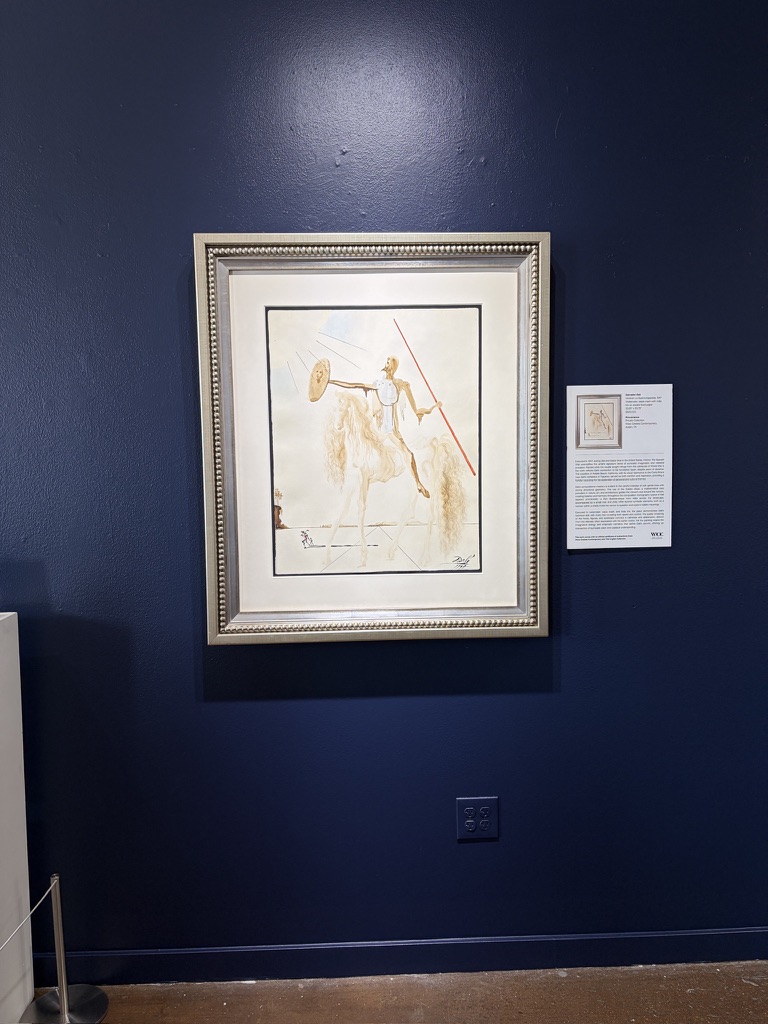
An original Salvador Dalí available for sale. What price is it "worth"? If you had access to unlimited funds, what would you be willing to pay for it, and how does that change the conversation in your head about value?
But even with all of that—career, context, rarity, market—there's still a point where none of it will give you a definitive answer.
You will not arrive at certainty.
You will arrive at enough information to decide whether you trust what you're seeing—and what you're feeling—at the same time.
You need to answer the question:
Would I still want to live with this if no one else ever told me it was valuable?
Because that's the baseline.
Everything else—the market, the appreciation, the external validation—sits on top of that.
If Part I was about learning how to recognize something,
Part II is about learning how to hold that recognition steady—even when numbers enter the conversation.
Because the collectors who build something lasting aren't the ones who eliminate risk.
They're the ones who learn which risks are worth taking.
And why.
Continue the Conversation
When you look at a work, what matters more to you right now—how it feels, or how it's positioned in the market?
What part of pricing feels most unclear or uncomfortable?
Would you buy something you love if you weren't sure it would appreciate in value?
