
The West, As It Actually Is
Not myth. Not cinema. Not nostalgia. Something far more human.
There's a version of the American West most people think they know.
It lives in film. In fashion. In the shorthand of culture—dust, denim, horses, horizon.
But sitting in the gallery during this conversation between Drew Merritt and Beau Simmons, something became very clear:
The West isn't an image. It's a relationship.
And most of us have only seen the surface.
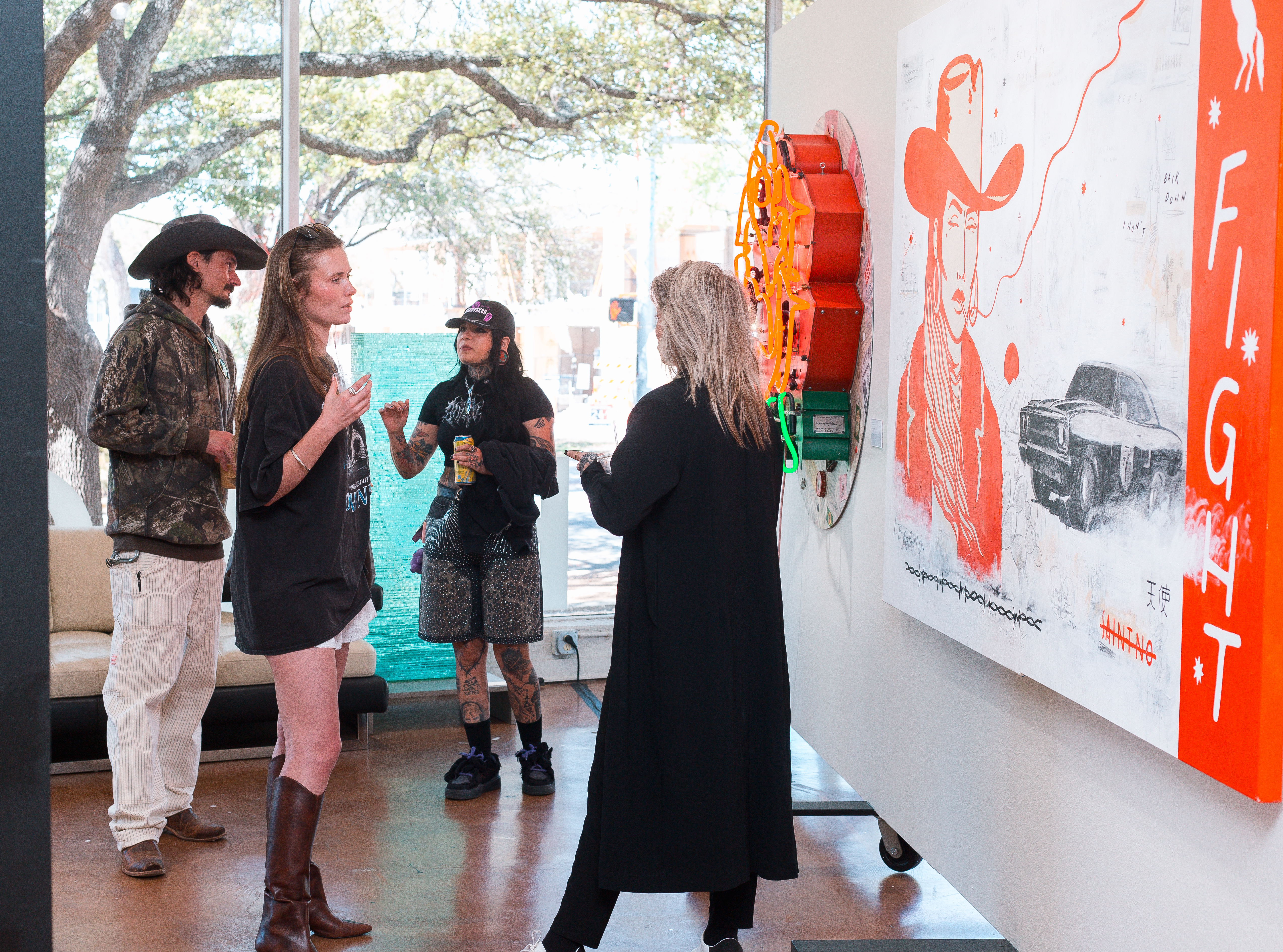
What Happens When You Return Home With New Eyes
For Drew, this body of work didn't begin with ambition—it began with return.
After years away, working across cities and industries, he went back to the place he grew up: the Llano Estacado, stretching across West Texas and Eastern New Mexico. What had once felt like somewhere to escape became something else entirely.
Not romantic. Not idealized. But deeply specific.
"It took leaving to really see it… there's a deep-rooted American history there that I had taken for granted." — Drew Merritt
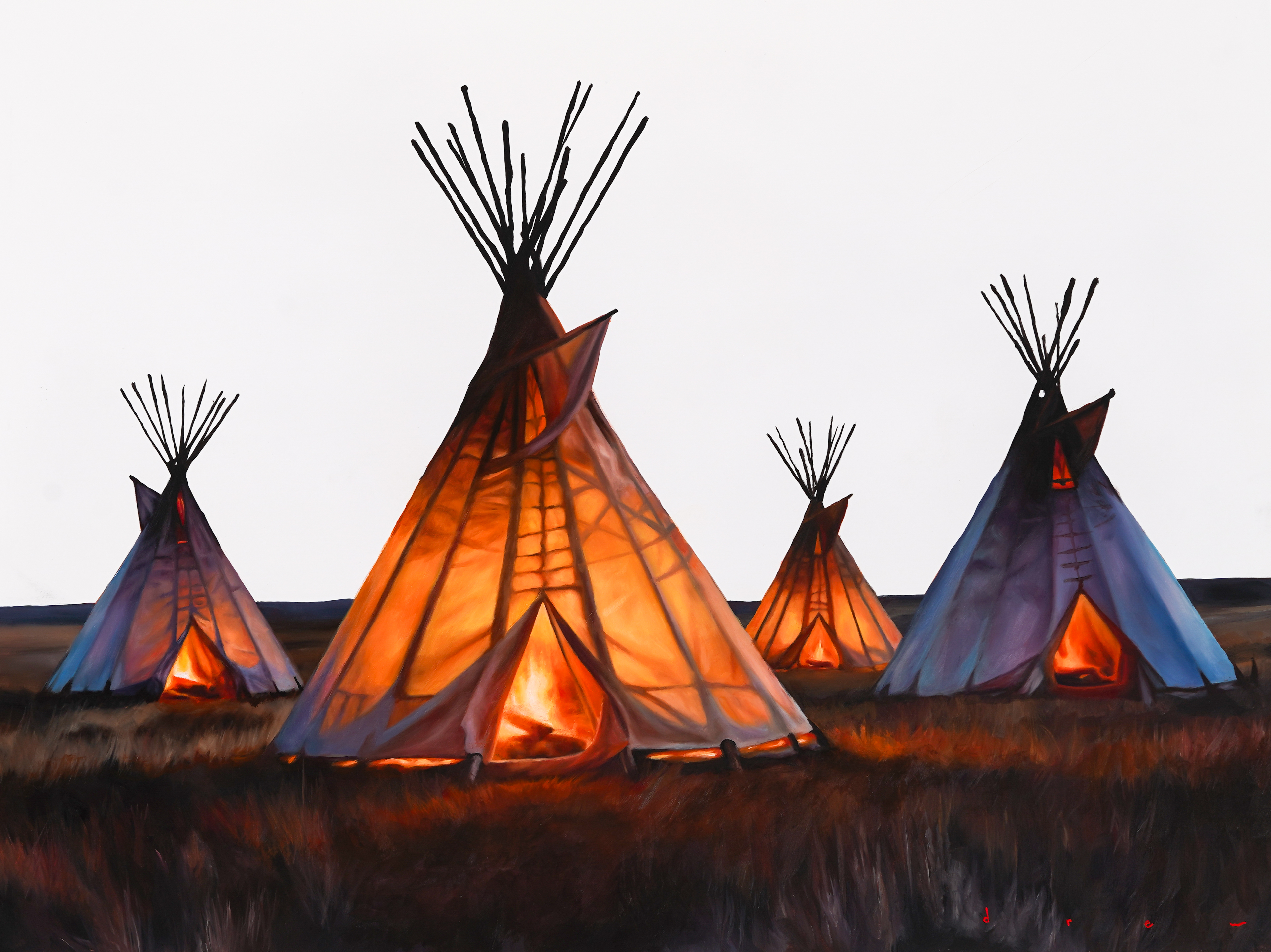
Drew Merritt, Llano Estacado, 2026. Oil on panel.
This is where the work shifts.
Because these paintings are not inventions—they're acts of re-seeing.
Old photographs—sometimes barely legible, crumpled, fading—become the foundation. Family histories, ranch life, inherited memory. Drew isn't documenting the West as it looks today; he's reconstructing how it feels across generations.
A great-great-grandfather reappears from a nearly lost image. A landscape is recolored with the exact hue of a West Texas sunset. A face is imagined indoors because no photograph ever captured it that way.
This is not nostalgia. It's translation.
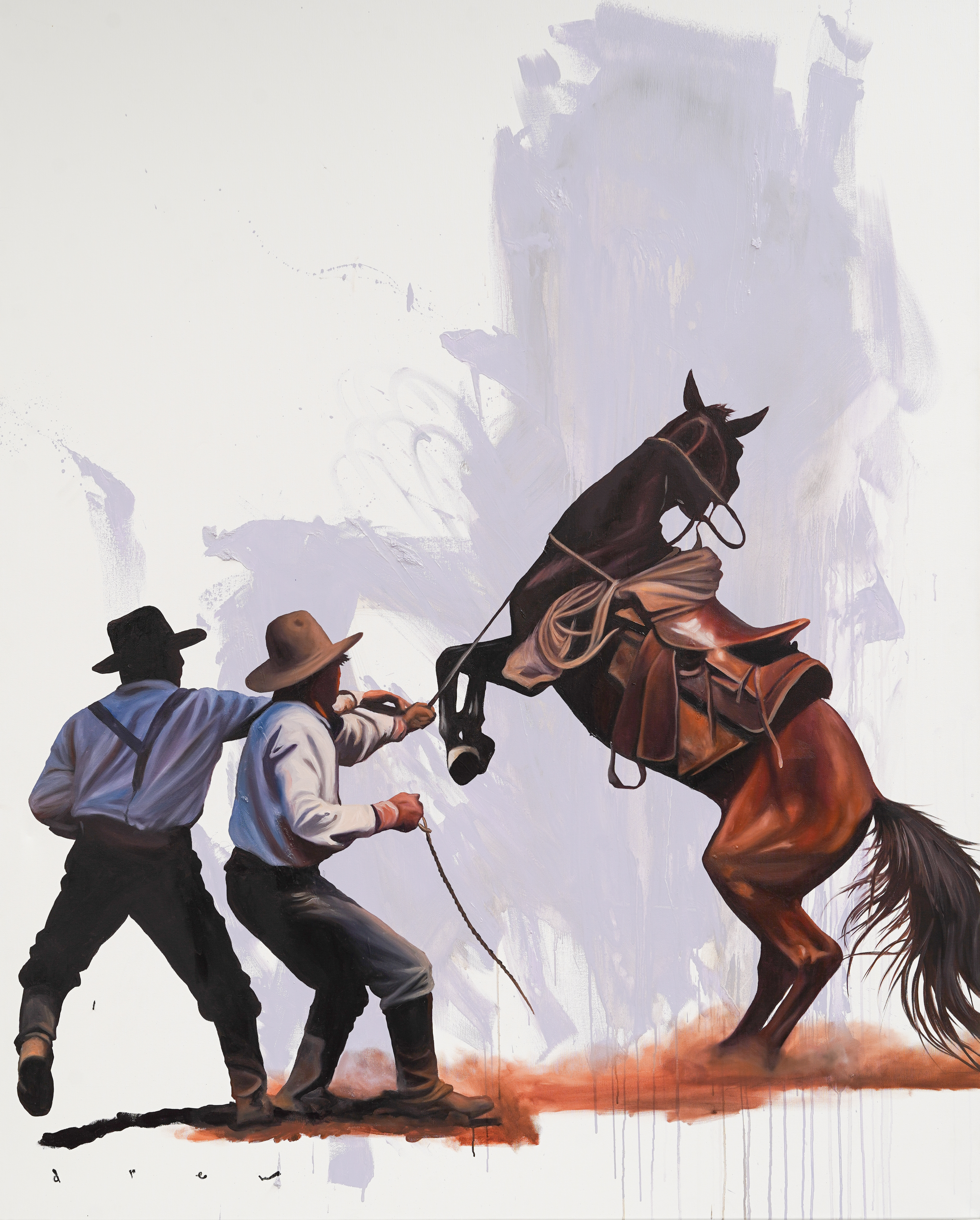
Drew Merritt, Pressure and Release, 2026. Oil on canvas.
The Archive of a Disappearing Life
Beau's work begins from the opposite direction.
Not from memory—but from access.
"There's a lot of people that think cowboys don't exist anymore… I wanted to document something real." — Beau Simmons
For nearly a decade, he's embedded himself in ranch life—learning to ride, to rope, to work alongside the people he photographs. What emerges isn't just imagery—it's an archive.
And that word matters.
Because what he's building isn't aesthetic. It's historical.
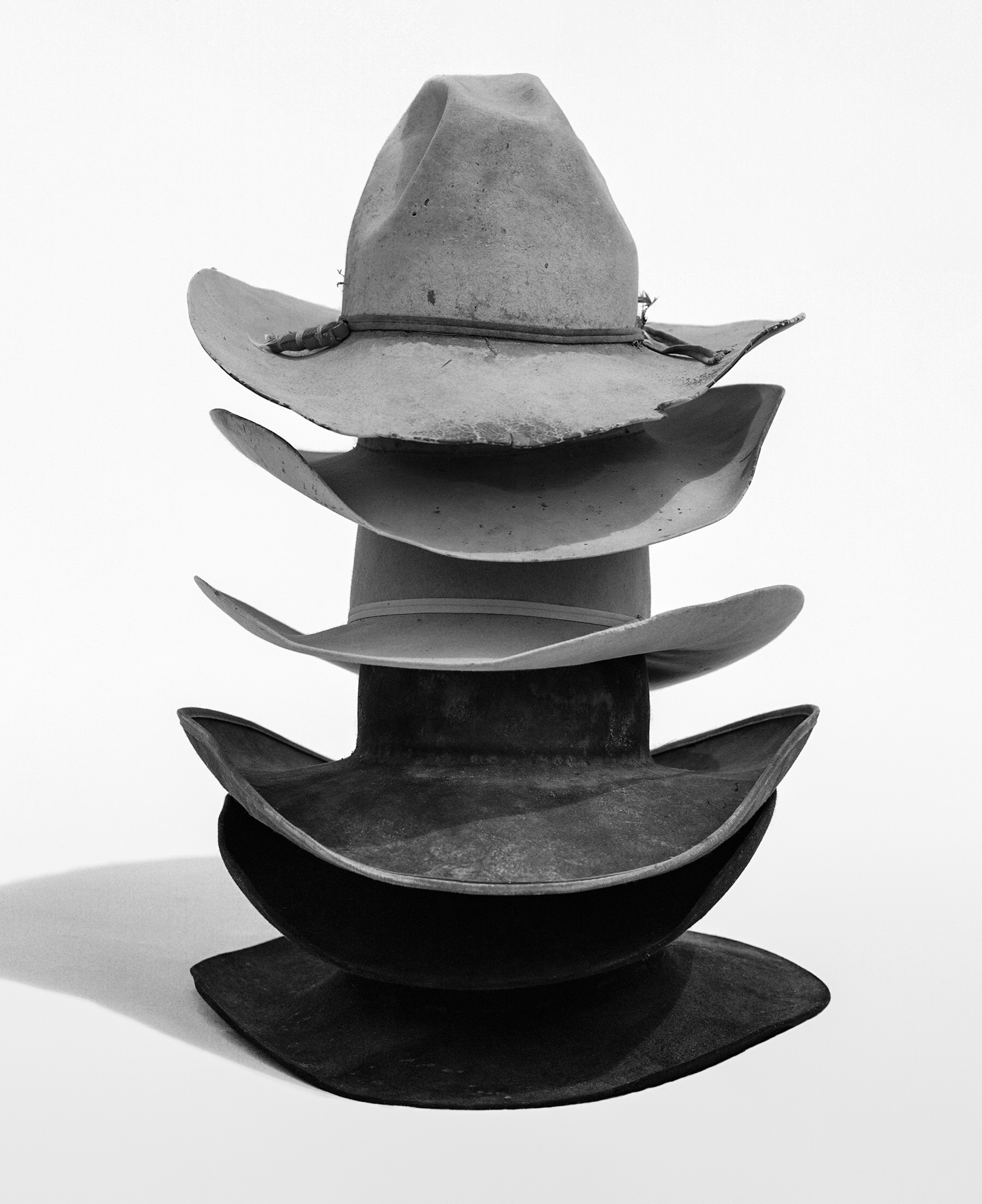
Beau Simmons, Western Heritage, 2026. Archival pigment print.
Cowboys, as they exist now, are not the same figures we've mythologized. They are workers. Caretakers. Stewards of land and livestock. Their tools—saddles, chaps, hats—aren't props. They're extensions of identity.
In one photograph, a stack of hats becomes a family lineage—six generations, arranged from oldest to newest.
"It was about honoring where they came from… each hat representing a generation." — Beau Simmons
This is where photography becomes something else.
Not observation. Preservation.
Process Is the Work
What's easy to forget—standing in front of a finished piece—is how much resistance exists behind it.
Drew paints in a studio where dust blows in constantly. Where wasps get caught in wet varnish. Where time itself becomes a material—oil paintings taking months before they can even be sealed.
Beau spends years planning a single image. Securing permits. Transporting horses. Returning again and again until the photograph matches what existed in his mind long before the shutter clicked.
"It's more of I create these images months prior or years prior in my head…" — Beau Simmons
This isn't fast work.
It's built slowly, against friction.
And that's part of what you're collecting.
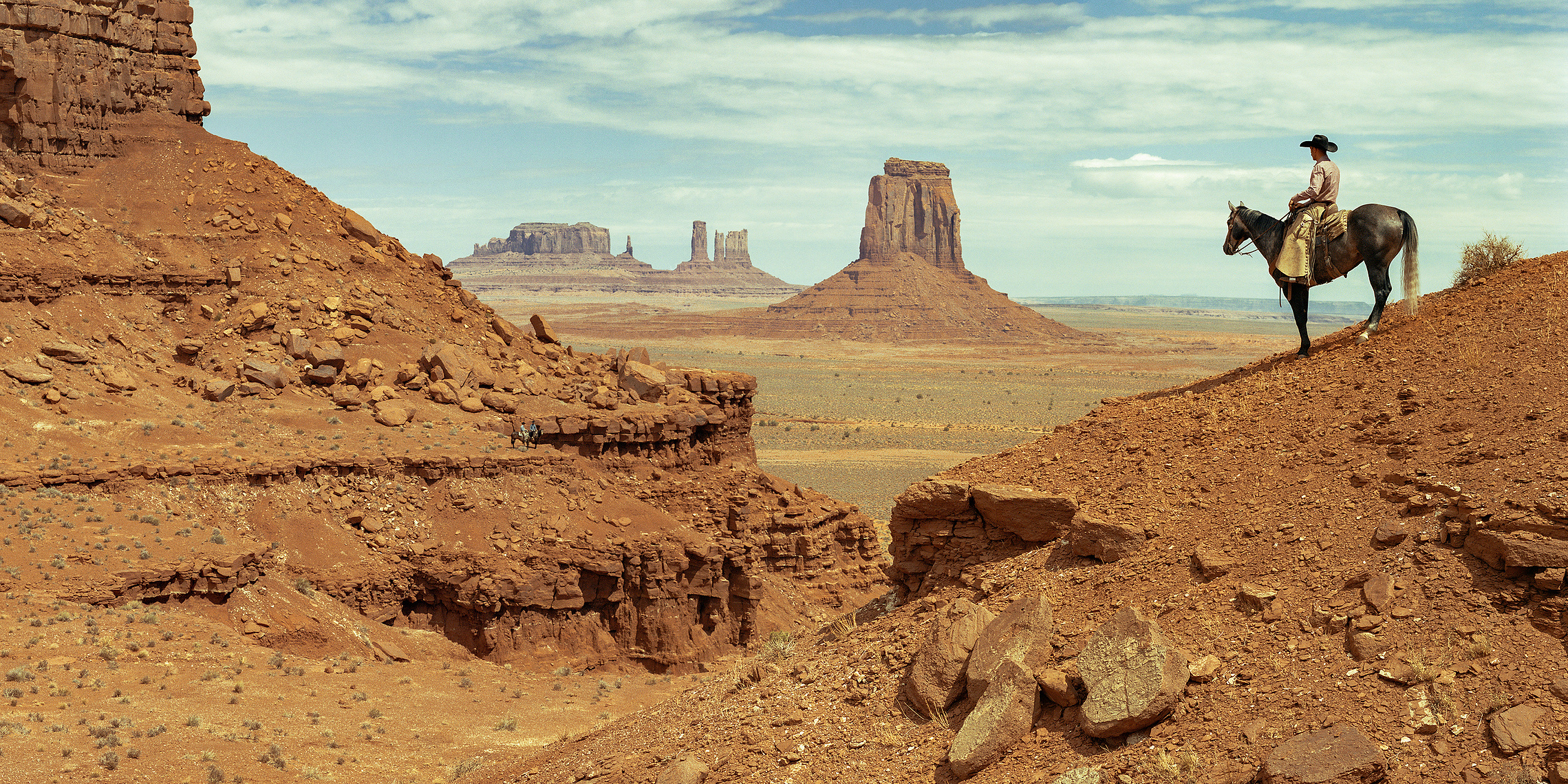
Beau Simmons, Echoes of the West, 2026. Archival pigment print.
What This Work Actually Asks of You
There's a moment in the conversation that shifts the responsibility back onto the room.
Not onto the artists—but onto the audience.
"Our part as collectors… is to preserve this history by acquiring it or sharing these stories." — Allee Beatty
This is the part that often goes unsaid.
Patronage is not passive.
When you collect work like this, you are actively deciding what continues—and what disappears.
The West isn't disappearing.
But the way it's lived—quietly, physically, without performance—might be.
And the artists paying attention to it now are doing something rare:
They're not recreating the myth. They're interrupting it.
The real question is whether we're paying attention—
—or just collecting the image of it.
