
The Pepsi In The Coke Crowd
Charlotte Rose, Princess Diana, and the aesthetic power of the stand out.
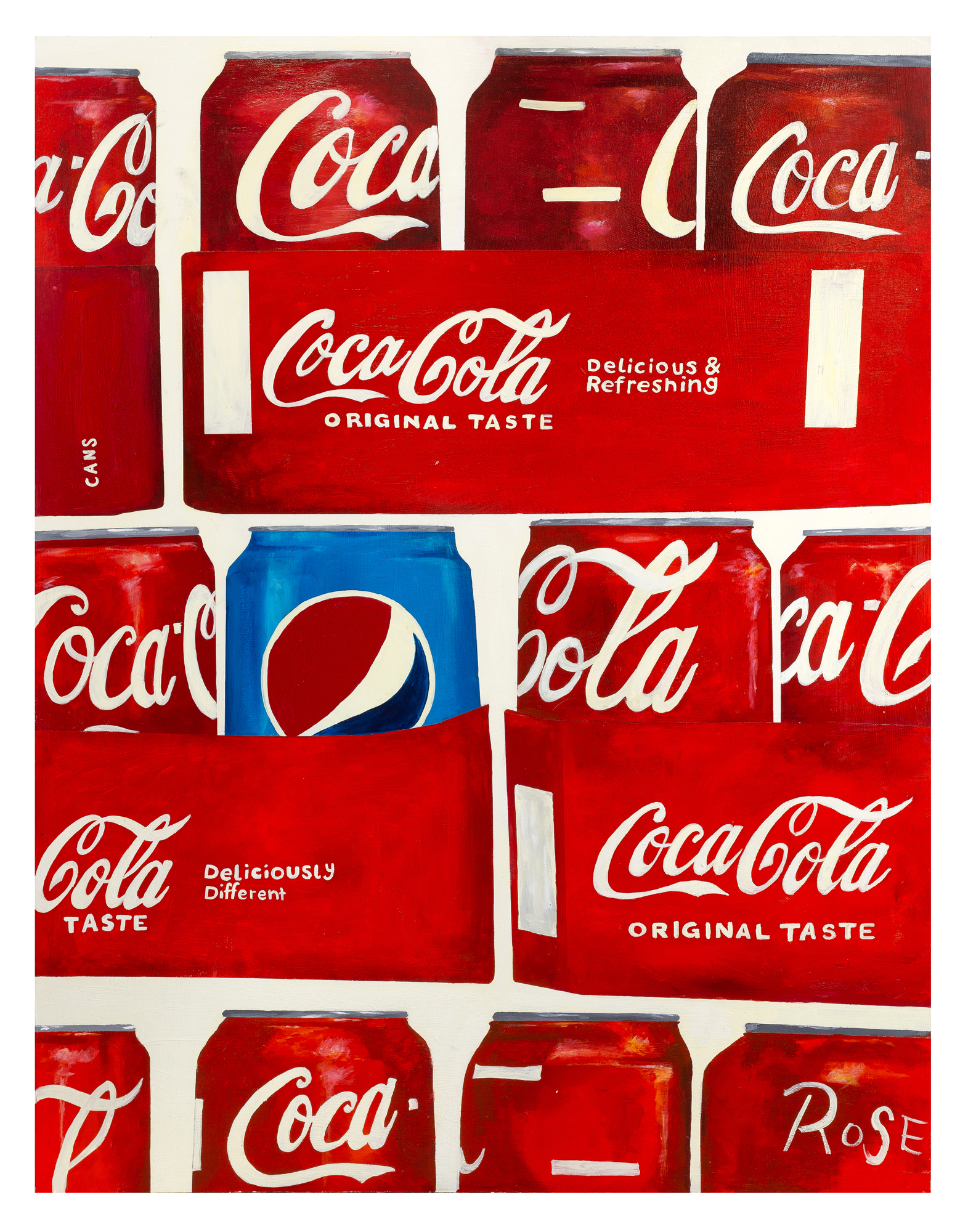
Charlotte Rose, Pepsi, 2025, Acrylic on birch plywood, 47.24 x 35.43 in
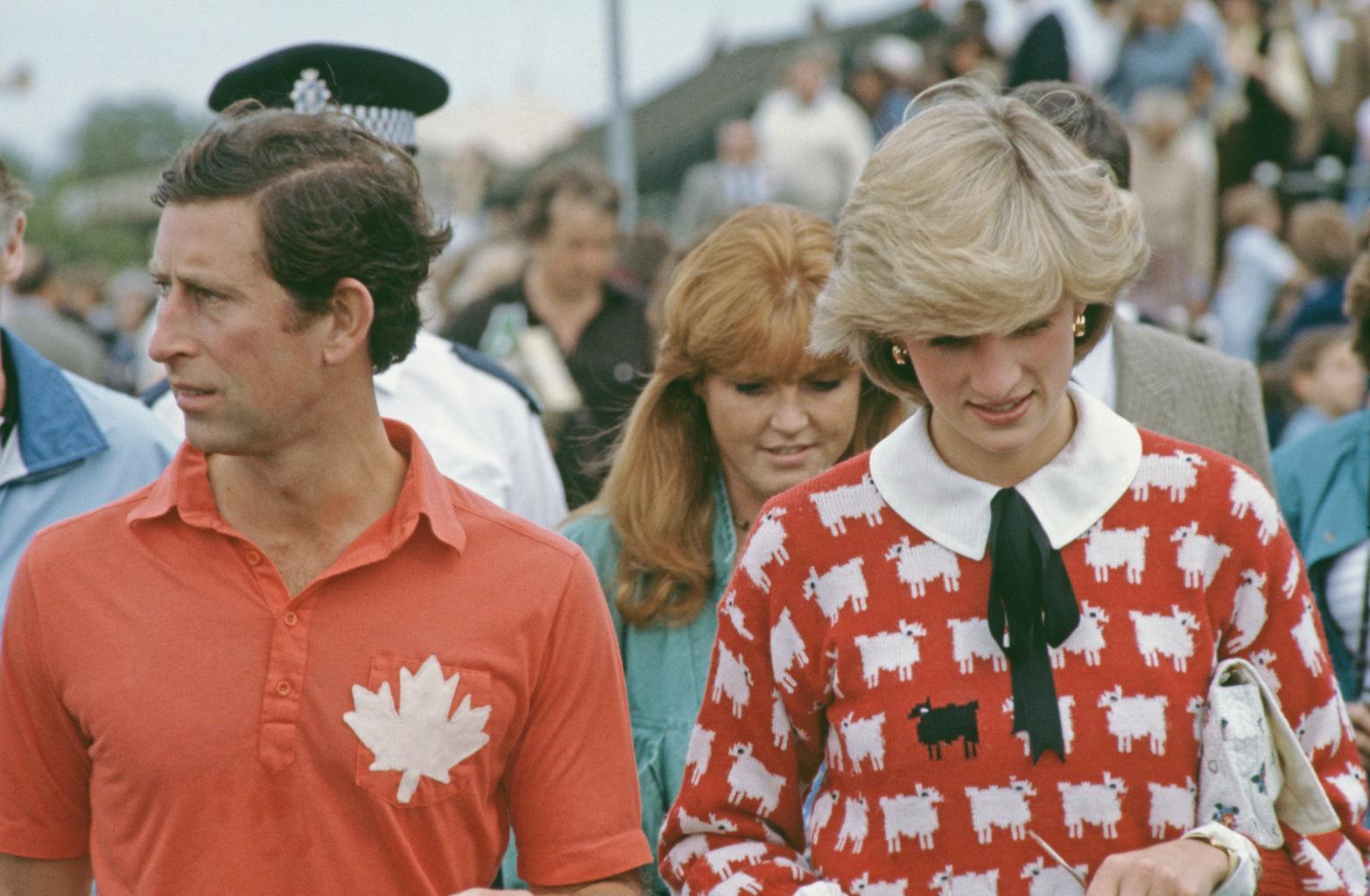
Princess Diana's legendary "Black Sheep Sweater", designed by Sally Muir and Joanna Osborne for "Warm & Wonderful"
At first glance, these two images come from entirely different worlds — one a 1980s tabloid celebrating a young royal, the other a contemporary painting rooted in the pop-advertising battlefield of today. Yet both use a deceptively simple visual device: an outsider embedded among the dominant norm.
Princess Diana's now–famous red sweater features rows of identical white sheep — except one. A single black sheep, front and center. Whether accidental or intentional, the sweater telegraphed a message: Diana understood that she did not fit the rigid conformity of the monarchy. She embraced individuality within an institution defined by tradition. The sweater became cultural shorthand for her humanity, vulnerability, and quiet defiance.
Charlotte Rose's Pepsi painting does something strikingly similar in a different register. The composition is filled almost entirely with Coca-Cola branding — the most globally recognizable symbol of commercial sameness. Except: wedged into the center is a lone Pepsi can. It's a challenge to the dominant power through a humorous and strategic act of infiltration.
Different eras. Different media. Different cultural ecosystems.
And yet they rely on the same deceptively simple visual device:
The outsider placed directly inside the dominant system.
A black sheep among white ones. A Pepsi among Coca-Colas.
Both images understand something fundamental about culture: difference is most powerful when it appears exactly where it "shouldn't."
The Original Black Sheep
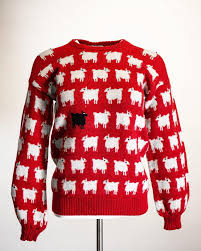
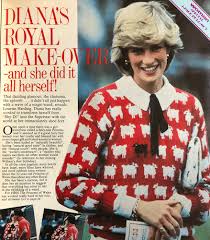
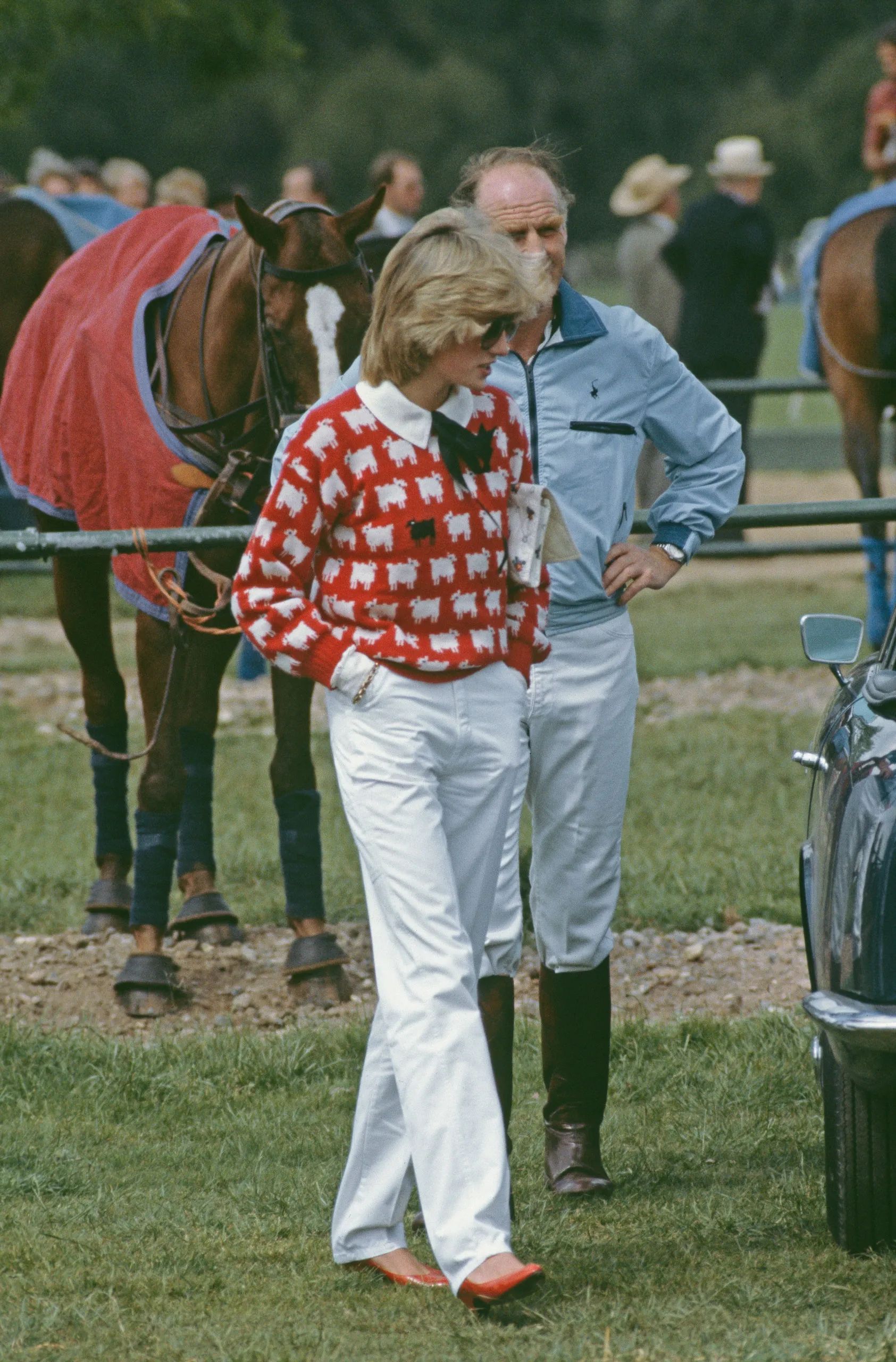
The sweater Diana wore in 1981 was designed by the knitwear label Warm & Wonderful, founded by designers Sally Muir and Joanna Osborne.
Across its bright red surface march rows of identical white sheep.
Except one.
A single black sheep sits squarely in the middle of the pattern.
When Diana wore it to a polo match shortly after her engagement to Prince Charles, the sweater quickly became an international sensation. At the time it seemed playful, almost whimsical — a young royal wearing something slightly irreverent.
But in hindsight the image feels almost prophetic.
Within the rigid architecture of the British monarchy, Diana would become the most visible outsider in the institution's modern history — empathetic where tradition required distance, emotionally transparent where the system valued restraint.
The sweater, intentional or not, became visual shorthand for something people instantly recognized in her: humanity inside a structure built for uniformity.
Charlotte Rose's Cheeky Rebellion

Charlotte Rose during our public artist talk, featuring "Pepsi"
In her painting Pepsi, Charlotte Rose uses the same strategy — but through the language of contemporary consumer culture.
The composition is saturated with one of the most recognizable visual systems on earth: the red-and-white branding of Coca-Cola.
It's a symbol of global sameness — a logo reproduced so many billions of times that it has become almost invisible through repetition.
Except Rose interrupts it.
At the center sits a single blue-and-red can from Pepsi.
The effect is immediate.
Your eye goes straight to the anomaly.
It's funny, slightly subversive, and visually precise — a small act of rebellion staged inside the machinery of global advertising.
Where Diana's sweater expressed personal difference inside a monarchy, Rose's painting stages brand rivalry as cultural infiltration.
The Pepsi can isn't shouting.
It's simply present — which is enough to disrupt the entire field.
Why Stand Out?
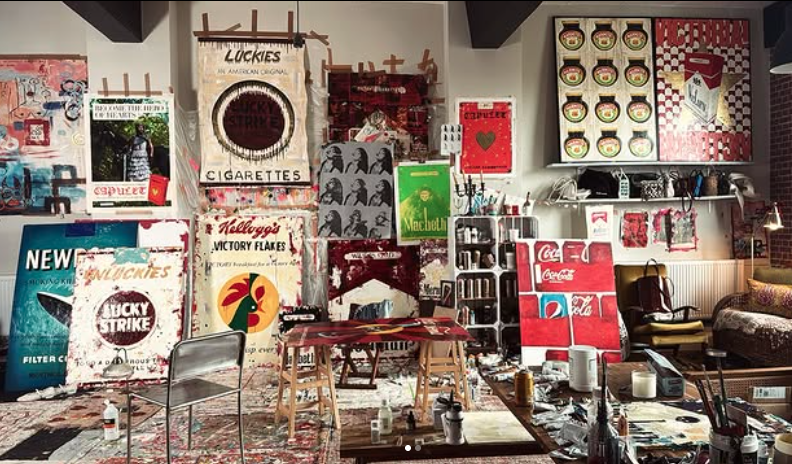
Rose's Studio in London
There's a reason this visual structure appears again and again across art, fashion, and advertising.
Human perception is built to detect anomalies.
A pattern establishes expectation. The break in that pattern creates meaning.
Artists have used this strategy for centuries — from Renaissance compositions that isolate a single figure within a crowd to contemporary conceptual work that disrupts familiar symbols.
The reason Diana's sweater endured — and why Rose's painting lands instantly — is that both understand something psychological.
People recognize themselves in the outsider.
Most of us have felt like the one person in the room who doesn't quite match the system we're standing inside.
That feeling — awkward, rebellious, sometimes lonely — is also where individuality begins.
Diana wore it. Charlotte Rose paints it.
Two very different cultural moments, connected by a single visual idea:
the courage of the stand out.
