
The Art of the Salon Wall
On building a salon-style hang that feels intentional, layered, and lived in
Most great collections aren't built all at once — they're layered over time, shaped by moments, memories, and the pieces that quietly stop you in your tracks.
One of my favorite ways to bring that story to life at home is through a salon-style wall. It's where fine art meets feeling, where contrast becomes conversation, and where your collection transforms from individual works into a living visual experience. Thoughtful, personal, and endlessly adaptable, the salon hang is less about rigid rules and more about creating a space that feels collected rather than decorated.
If you've ever stood in front of a blank wall wondering where to begin, this is your guide.
The History of Salon
Long before salon walls became a favorite of interior designers and collectors, they were born inside the grand exhibition halls of 17th- and 18th-century Europe. The term comes from the historic Paris Salons — large public art exhibitions where paintings were hung floor to ceiling, stacked in dense, dramatic arrangements across towering walls. Rather than isolating each work in white space as we do in modern galleries, these early displays treated the wall itself as a complete visual experience. Masterpieces, studies, portraits, and landscapes lived together in layered compositions, creating a rich, immersive environment where art was meant to be absorbed all at once.
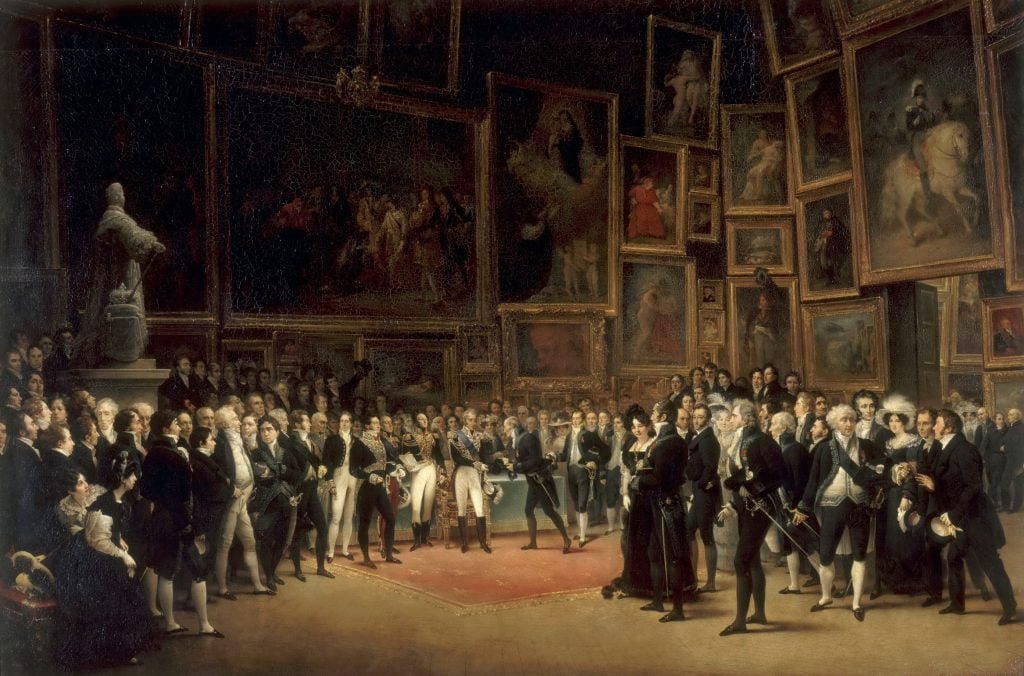
Charles X Distributing Awards to Artists by François Joseph Heim.
Over time, this approach migrated from museums into private homes, particularly among collectors who wanted to live surrounded by their art rather than reserve it for formal rooms or sparse displays. The salon wall became a reflection of personal taste — mixing old with new, large with small, fine art with objects of memory. In the 19th and early 20th centuries, writers, artists, and intellectuals often curated their homes this way, turning their walls into evolving visual diaries. Today's salon-style hangs draw directly from this tradition, blending historical richness with contemporary design sensibilities. What once filled palace walls now brings warmth, depth, and story into modern living spaces — proving that collecting has always been as much about experience as it is about individual works.
A salon wall is less about perfection and more about presence. It's the art of creating a "crowd" of works that speak to one another — some harmonizing, some contrasting — all coming together to form a single, curated visual moment.
Think of the wall itself as the artwork.
By grouping pieces of varying sizes, mediums, and styles both vertically and horizontally, you can maximize your space while turning your collection into a living installation that evolves with you.
Step One: Find the perfect wall
Start with a wall that naturally draws attention — behind a sofa, above a bed, along a hallway, or anchoring a dining space.
Notice if the architecture of the space calls for a vertical salon (taller than wide) or horizontal salon (wider than tall).
Generally, furniture and architecture play key roles here. For example, sofas often call for horizontal salons, whereas accent walls or office spaces can often call for vertical salons
If you're working with a large wall, decide where you want the focal point to live—where your eye should land first. Often it aligns beautifully with the end of a sofa, the center of a headboard, or the natural sightline when you enter a room.
Once you choose your focal area, everything else will fall into place around it.
Step Two: Gather works that reflect your taste (and your space)
A great salon wall balances personality with cohesion.
For example, you might pair:
• a vintage canvas thrifted from your favorite local haunt • an emerging artist from your local gallery • a family heirloom • a milestone artwork you're proud to share
For me, it looks like: • a photograph by my amazingly talented partner • a canvas by Dalton Tracee • a silkscreen by Alex Katz • a framed needlepoint by my great grandmother
The magic happens in the contrast.
When working with flatter, contemporary pieces like prints or photography, lean toward thinner frames in two or three complementary tones. Varying mat margins can help create visual balance without making the wall feel rigid.
For paintings, floater frames work beautifully — or even no frame at all. A salon wall allows framed and unframed works to live together naturally without feeling disjointed.
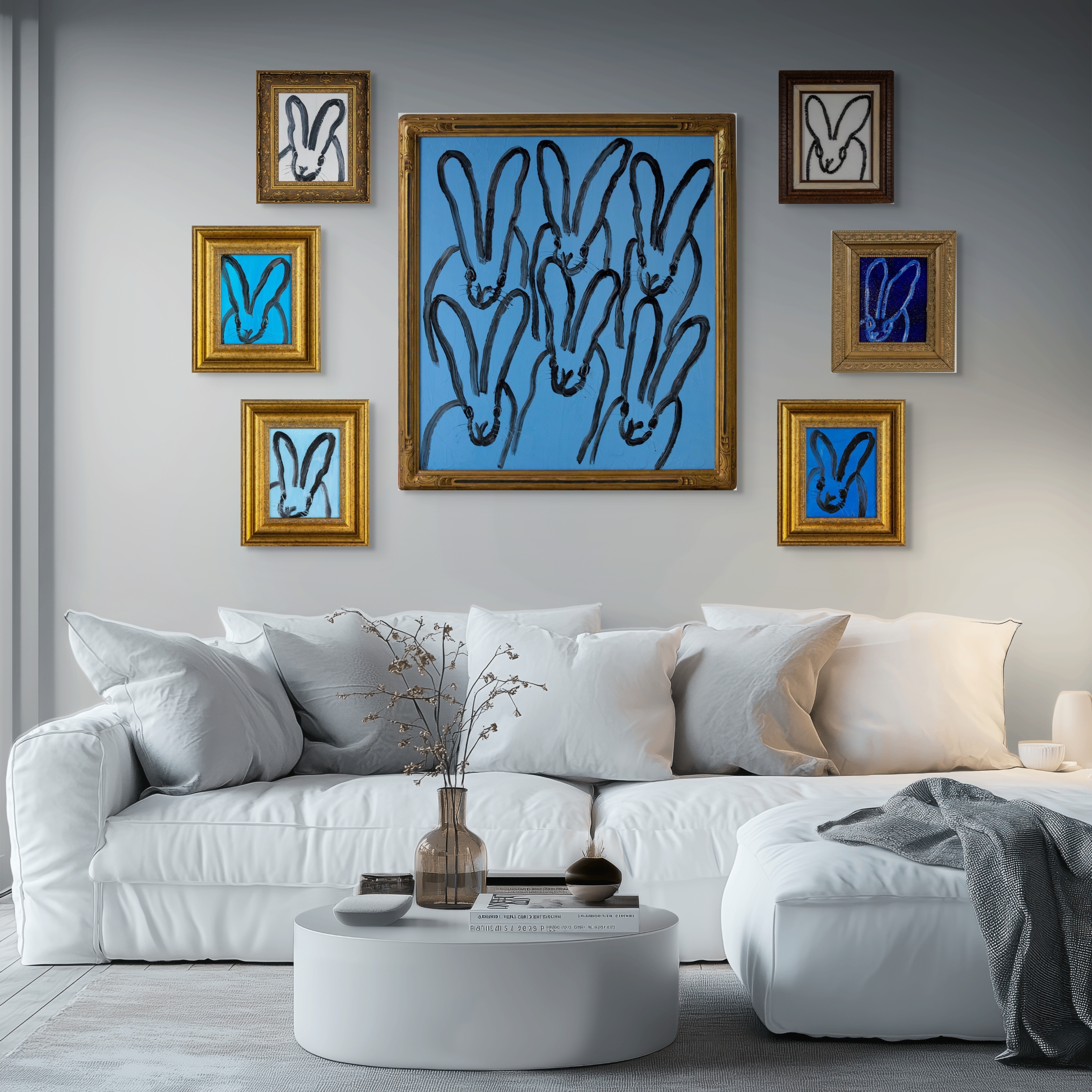
Artwork by Hunt Slonem
Step Three: Anchor your hang
Choose your anchors — the largest or most impactful pieces you know you want on the wall.
These are your visual pillars.
Place them first, and treat everything else as a conversation built around them. Once your anchors feel right, filling in the surrounding space becomes far easier (and much more fun).
Step Four: Play with spacing before committing
This is often the part that feels intimidating — but it doesn't have to be.
One curator trick I love: cut paper to match the dimensions of each framed work and tape them to the wall. Label each one so you know what it represents.
This lets you experiment with spacing, alignment, and flow without lifting a hammer.
Move them around. Step back. Trust your eye.
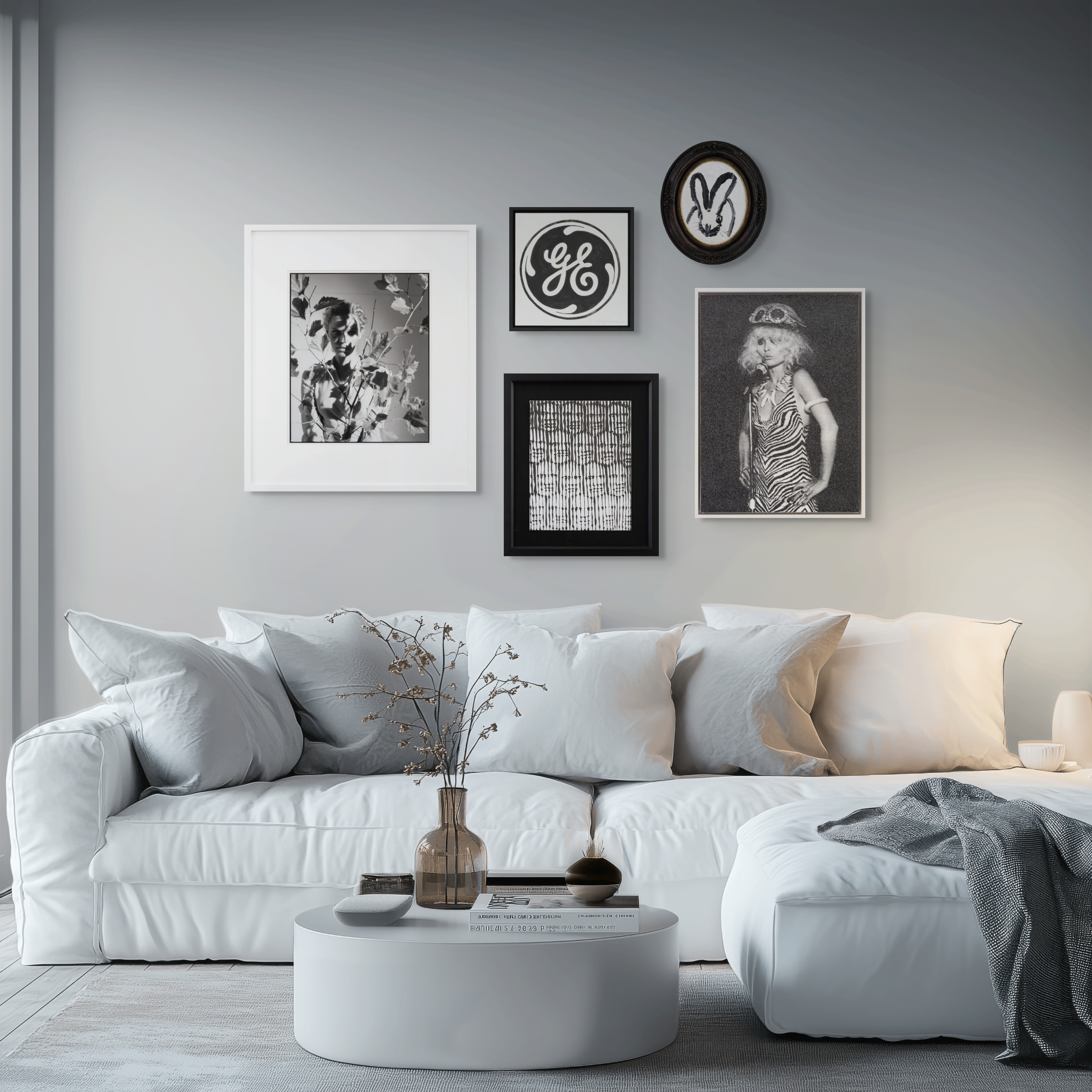
Artwork: (Left to Right): David Salle, Bill Tavis, Cey Adams, Hunt Slonem, Bob Gruen
Final thought
A salon wall isn't about filling space.
It's about telling your story through art — building a visual rhythm of what you love, where you've been, and what moves you.
When done well, it becomes the most dynamic wall in your home.
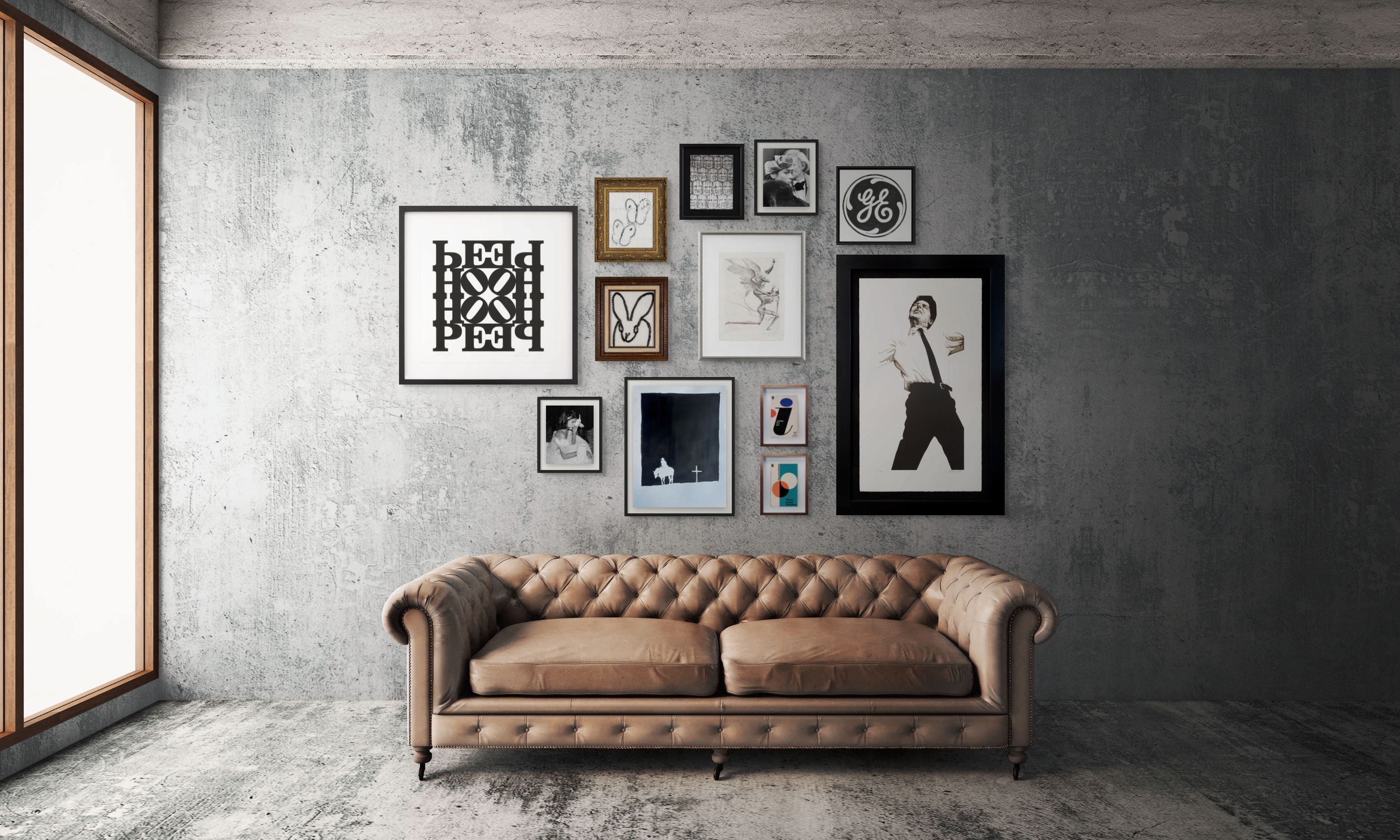
Artwork: Robert Indiana, Ron Galella, Hunt Slonem, Terry Urban, Bill Tavis, Salvador Dali, The Connor Brothers, Cey Adams, Robert Longo
Looking for inspo to curate your own salon-style hang? Subscribe for artwork, artist, and interior design features
