
Howdy, Y'all. Texas Is No Longer Emerging—It Has Arrived
From Opera Gallery's Houston debut to new market data, a closer look at the state's accelerating cultural authority
Last week, I stood in a packed room in Houston, shoulder to shoulder with collectors who didn't fly in for the moment—they already live here.
That distinction matters.
Because for years, the conversation around Texas has been predictable: wealth, expansion, opportunity. All true. But incomplete. What's happening now is something far more consequential—money is meeting taste, and it's doing so quickly.

By now, you may realize I live in Texas. Austin, specifically. What you may not know, is that we have not just a burgeoning art scene, but rather, top institutions, galleries, collectors, and artists either a) already spend six months and one day here (no state income tax) and b) collect or create here.
If you read any of the recent market reports, you'll note Texas was specifically named as one of the fastest growing art markets in the United States, which leads the world in overall art sales across all sectors.
According to the Statesman, Texas is currently experiencing a massive surge in wealth, with Houston, Dallas, and Austin ranking among the world's wealthiest cities in 2025. Houston leads the state in high-net-worth individuals, followed closely by Dallas, while Austin has shown the fastest growth in millionaire population over the last decade (110%).
- Texas Billionaires: The state is home to 88 billionaires.
- Top 50 Richest Cities: Houston (5th in U.S.), Dallas (6th in U.S.), and Austin (10th in U.S.) are ranked as top wealth hubs in the country.
- Economic Drivers: Tech expansion, real estate growth, and a business-friendly environment (no state income tax) are primary drivers of wealth accumulation.
The Houston Chronicle reports:
Wealth by High-Income ZIP Codes (2022-2023 Data)
- Austin: 78746 (West Lake Hills) - ~$994K average income.
- Dallas: 75225 - ~$830K average income.
- Houston: 77024 - ~$683K average income.
Here's the headline: Texas has money. We knew that.
But here's the bottom line: Texas money is now being influenced by an influx of taste-minded HNW/UNHW (high net worth, ultra high net worth) families.
In Austin alone, I would estimate about a third of my clients have recently relocated from other major cities— Los Angeles, San Francisco, New York City, and London being the most prominently mentioned.
Many existing collectors are looking for cultural institutions to further develop their acquisitions, and frankly, fill the walls of their now bigger, more beautifully custom designed homes in Texas.
Moreover, whether by proximity physically or influence culturally, newer-to-wealth folks within the rapidly growing tech industry or eons-old oil industry are looking to break into the art economy and world, at large.
One of the key indicators of this surge in art-minded influence (beyond my day-to-day reflections as a gallery director in Austin), is the opening of mega-gallery giant, Opera, in Houston.
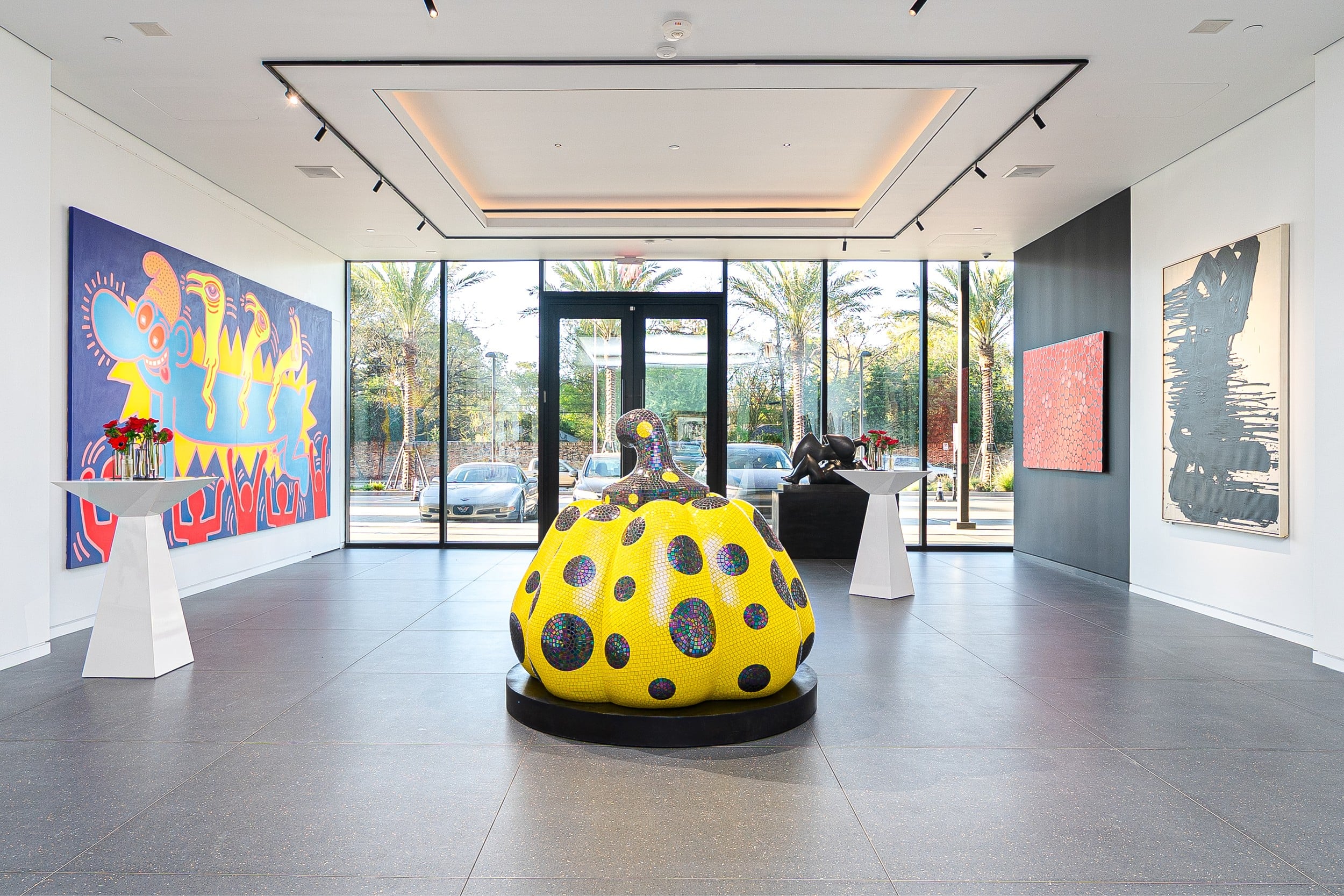
From Opera:
Opera Gallery is proud to announce the opening of its newest international location in Houston, Texas—a significant milestone in its continued global expansion.
The Houston gallery is conceived as both a destination and a dialogue—an intimate yet ambitious space where museum-quality masterworks meet the energy of one of America's most dynamic collector communities. Throughout the year, the gallery will present a rotating selection of approximately forty works, with three to four curated exhibitions annually. Each presentation is carefully conceived to create meaningful connections across time, movements, and artistic practices.
Opera Gallery has long built its presence through meaningful engagement within each community it serves. Houston's collectors are recognised for their sophistication, international outlook, and discerning eye. The gallery's permanent presence offers direct access to exceptional works while fostering lasting partnerships rooted in trust, expertise, and shared passion.
Opera Gallery Houston opens its doors not simply as an exhibition space, but as a carefully curated environment where historic significance and contemporary vision converge—inviting collectors and visitors alike to engage with art across generations, geographies, and ideas.
I was both honored and intrigued to visit the opening last week, where I had the opportunity to see original works by Kusama, Picasso, Haring, Miró, Botero and others in real time.
More than anything, I was curious about how the market would receive a gallery with whom I've exhibited at Art Miami annually, and whose list of locations spans longer than most can recount (16, in fact, including Madrid, Seoul, Hong Kong, Beirut, and Aspen).
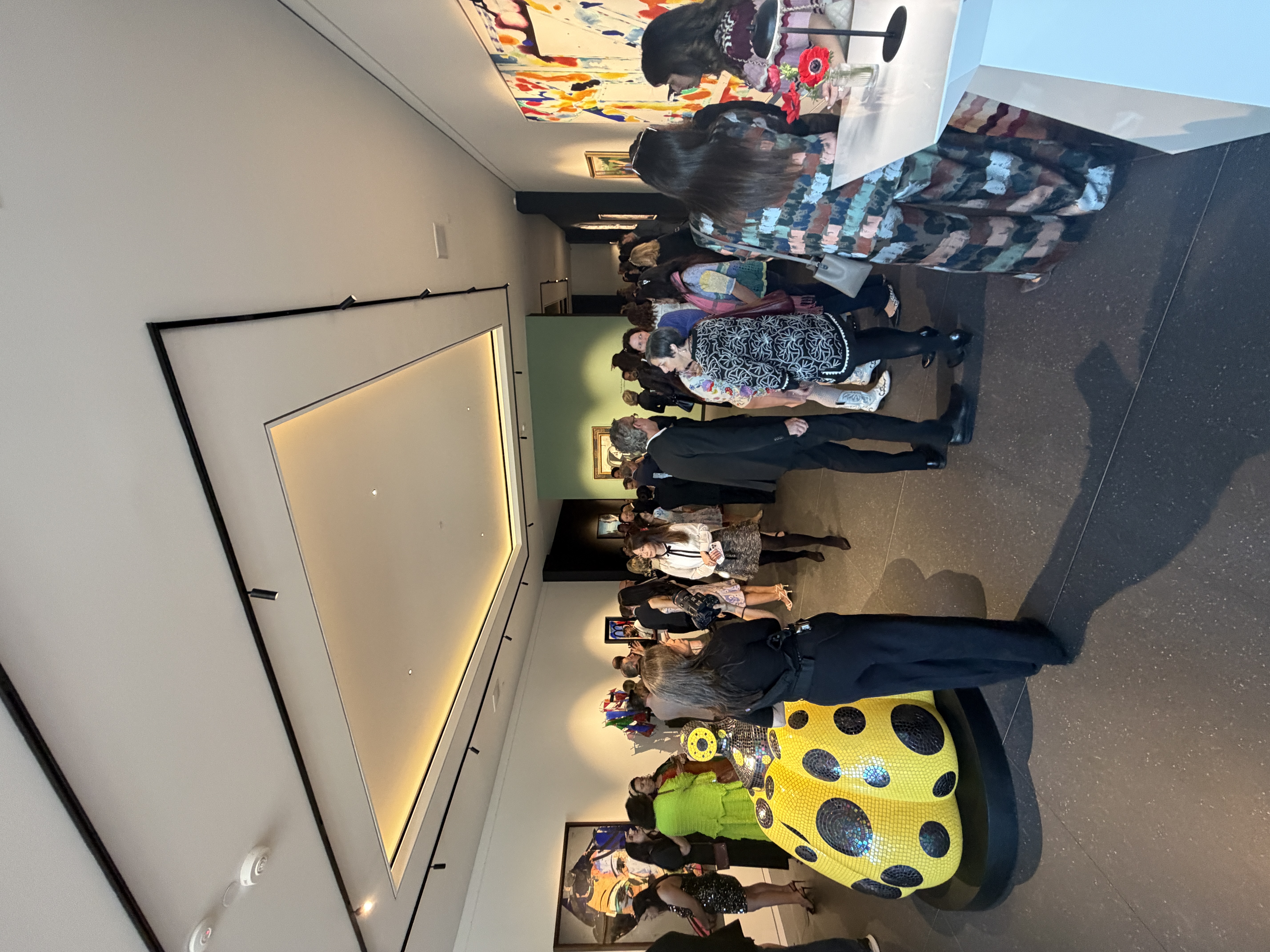
Opening Reception at Opera Gallery, Houston. Yayoi Kusama, Starry Pumpkin (2016)
From where I was standing (and there was standing room, only), I saw a vibrant room full of Houston's elite, overjoyed with the ability to see and be seen. If anyone has doubts on the viability of a gallery in Texas, enjoy this iPhone photo of the beginning hours of the reception.
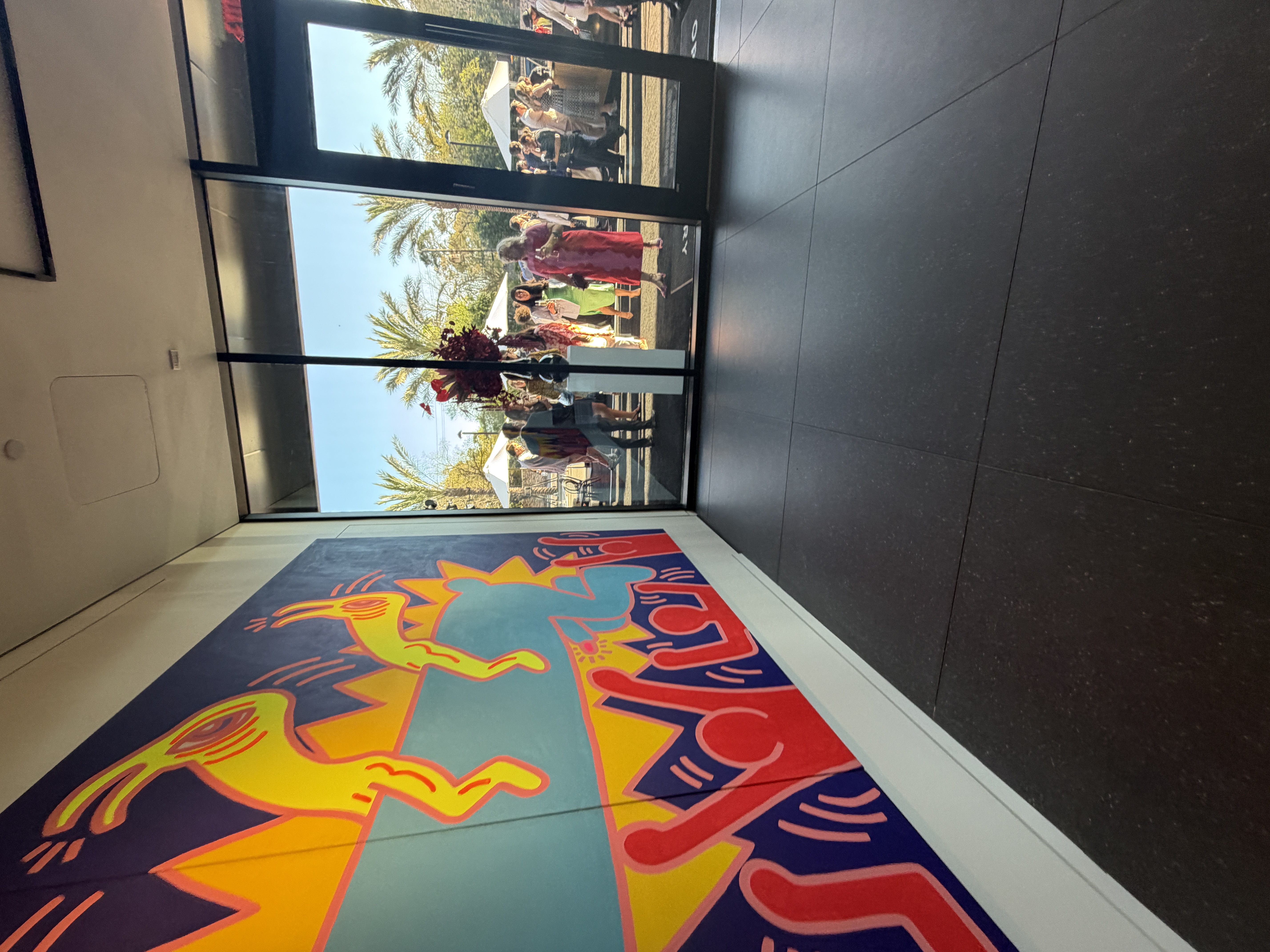
Opera Gallery Houston, opening reception featuring an original Keith Haring painting (left)
In addition to millions of historically significant original artworks, Opera spared no expense on its treatment of existing and potential collectors. Full was the VIP valet queue, stocked were the multiple open bars, lively were the umbrella topped cushioned lounges, and high-energy were the sounds from the live DJ performing.
While sensationally overwhelming, I was pleased to see that our state continues to march to the beat of its own drum—making time for a good time.
And yet, beneath the spectacle—the valet lines, the champagne, the unmistakable choreography of a room that knows it has arrived—something more important is happening.
Texas is no longer asking for validation from the coasts. It's building its own.
Not as a replica of New York City or Los Angeles, but as something distinctly its own—where collecting is tied as much to lifestyle as it is to legacy, where space allows for ambition, and where new money is learning, quickly, how to become meaningful patronage.
What I felt in that room wasn't just excitement. It was acceleration.
Because when galleries of this caliber plant roots, they don't just bring inventory. They bring expectation. They raise the standard of what is shown, what is collected, and ultimately, what is remembered.
And that shift doesn't stay contained within one gallery's walls.
It ripples—into institutions, into private collections, into conversations like the ones I have every day in Austin. It sharpens the eye. It challenges the default. It asks more of both the work and the collector.
This is how markets mature.
Not through consensus, but through proximity. Through access. Through moments where a collector stands in front of a work by Pablo Picasso or Yayoi Kusama not in a museum abroad, but in their own state—and realizes the distance between looking and owning is smaller than it once felt.
That's the real story here.
Texas has always had money.
Now, it has the infrastructure—and increasingly, the appetite—to turn that money into collections that matter.
And if last week was any indication, we're only at the beginning.
