Crying at the Museum of Fine Arts, Houston
Kusama, Van Gogh, and why your body will always know good art, first.
What follows is a small visual diary of a trip to one of the best museum collections I’ve seen in a while, a sob story, and a reminder.
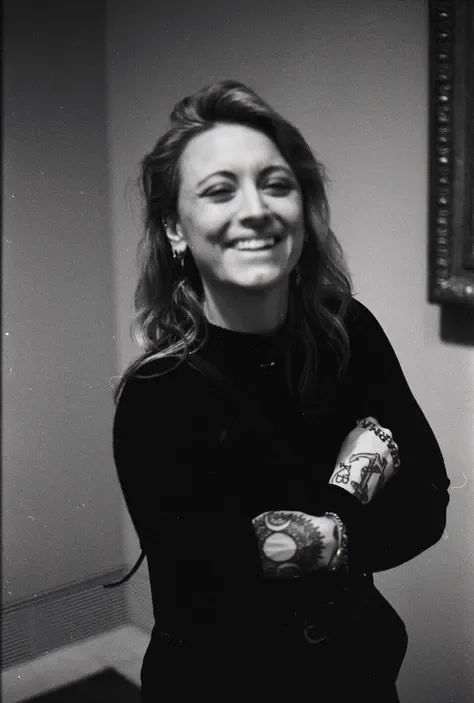
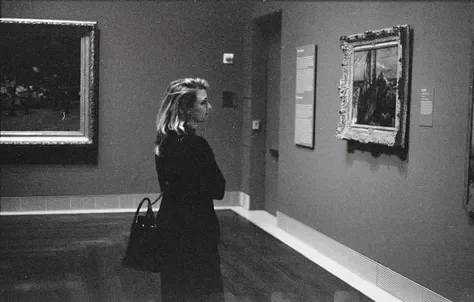
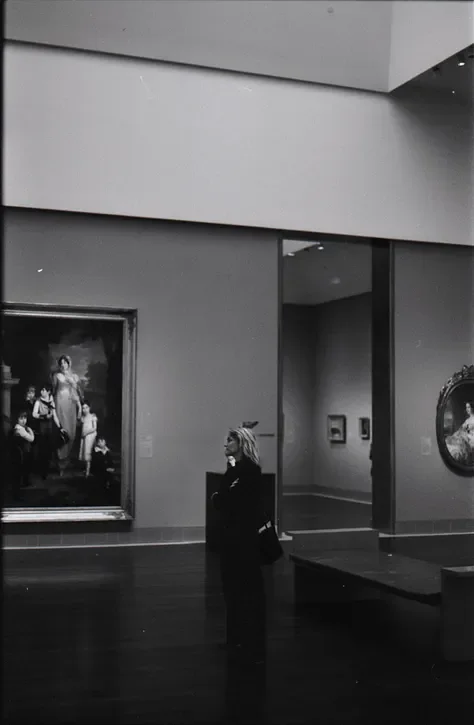
Photos by my brilliant partner, Ima @imashoots
I don’t go into a museum to wander.
I go to study.
Last week in Houston, walking through the Museum of Fine Arts with my partner, the experience wasn’t passive—it was active, deliberate. The kind of looking that comes from years of training your eye, building collections, and understanding how objects live beyond the wall on which they’re hung.
We moved quickly at first. A scan of the room, a calibration of quality, condition, authorship. What holds up. What doesn’t. What still has presence after a century—and what feels like it’s trying too hard to prove it.
Then you slow down.
Not because the room demands it—but because something earns it.
A work of art doesn’t need to be explained when it’s working. You feel it immediately in the structure. In the restraint. In the confidence of what’s left unsaid.
That’s what I’m always looking for.
Here are a few highlights that stood out from our visit. I hope they inspire you, too.
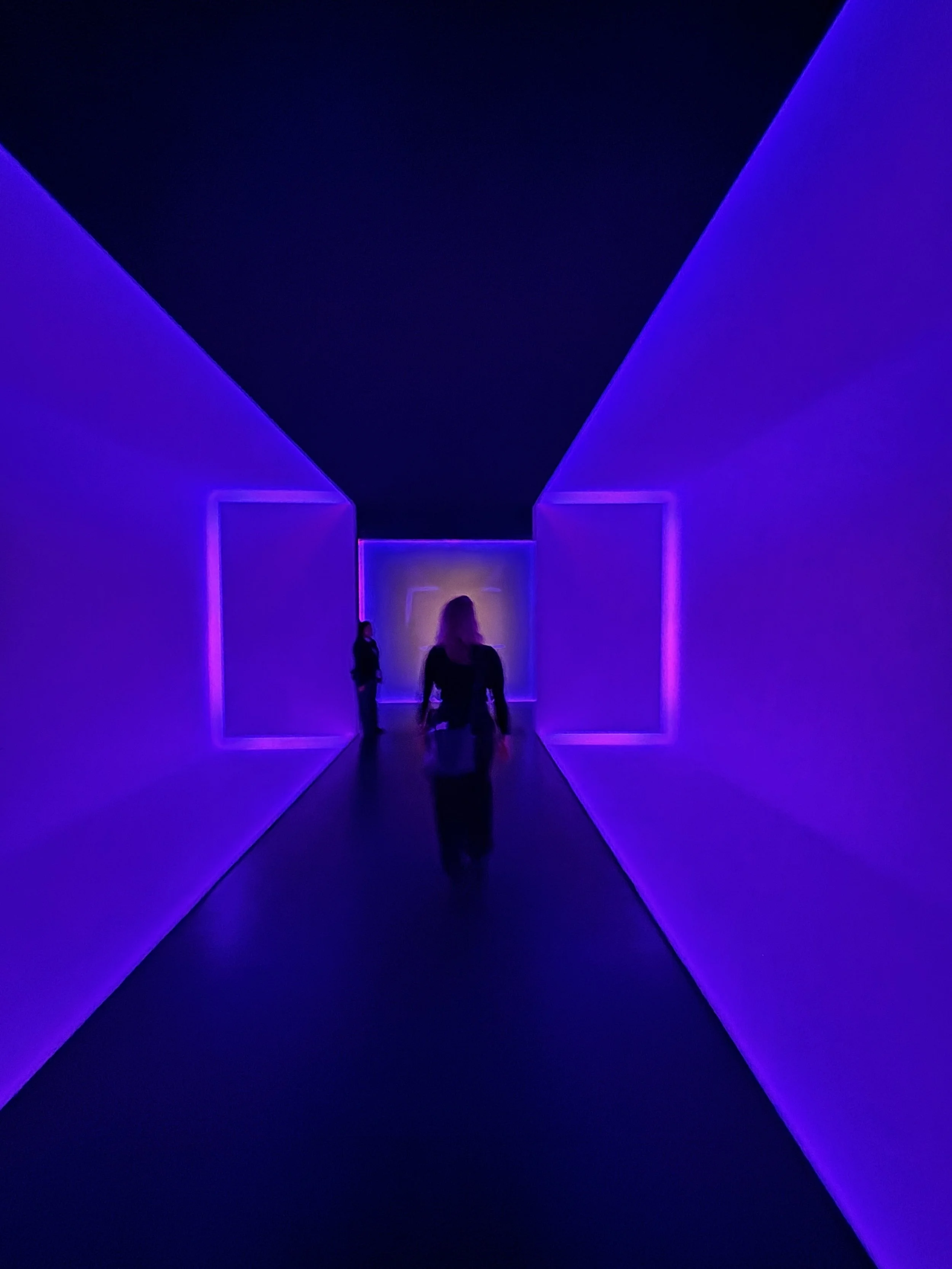
James Turrell, The Light Inside, 1999.
Yayoi Kusama: Aftermath of Obliteration of Eternity
My Sob Story, Part I
Stepping physically into a Yayoi Kusama, you can feel the criteria shift.
The work isn’t asking the same questions as a 19th-century painting, but it still has to resolve itself. It’s asking you to locomote into a confined space and suspend your conception of reality in favor of the artist’s message.
It’s quite a bold requirement, if you think about it.
As an art-minded person, I always begin a line of questioning that sounds something like:
Does the experience hold conceptually?
Is the execution precise enough to support the idea? Is it immersive—or just impressive?
What’s interesting is that even in an environment built on spectacle, your eye still searches for the same thing: intention.
And when it’s there, you know immediately.
My first Kusama infinity room experience was nothing short of life- changing.
At the Rubell Museum in 2021, I fell to the floor, hysterically laughing, crying from joy and overwhelming emotion. My skin was riddled with goosebumps, my eyes were spread as wide open as physically possible.
What helped was a security guard, responsible for timing my experience to two minutes generously (or seditiously) allowing me a full ten.
I stood when I could, spinning in slow circles, breathless. The cadence of my short inhalations created a frenzy of sensations— lightheadedness, adrenaline, stupor, wonder, and a kind of high I had never felt before.
This is when I first learned of Stendhal Syndrome: the guard pulled a tissue for me to use after exiting like a newborn baby deer.
“I’ve never seen it in person, before,” he said. ”Seen what?” I asked.
“You know, what they talk about happening in front of the greatest Masterpieces. The loss of bodily control, hysteria, emotion, all of it... I’ve never seen it happen. Thank you.”
According to Wikipedia: Stendhal syndrome, Stendhal’s syndrome or Florence syndrome is a psychosomatic condition involving rapid heartbeat, confusion, hallucinations, and even fainting, allegedly occurring when individuals become exposed to objects, artworks, or phenomena of great beauty.
Stendhal syndrome was named after Marie-Henri Beyle (1783–1842), better known by his pen name, Stendhal.
The affliction is named after the 19th-century French author Stendhal (pseudonym of Marie-Henri Beyle), who described his experience with the phenomenon during his 1817 visit to Florence, Italy, in his book Naples and Florence: A Journey from Milan to Reggio. When he visited the Basilica of Santa Croce, where Niccolò Machiavelli, Michelangelo and Galileo Galilei are buried, he was overcome with profound emotion. Stendhal wrote:
I was in a sort of ecstasy, from the idea of being in Florence, close to the great men whose tombs I had seen. Absorbed in the contemplation of sublime beauty . . . I reached the point where one encounters celestial sensations . . . Everything spoke so vividly to my soul. Ah, if I could only forget. I had palpitations of the heart, what in Berlin they call ‘nerves’. Life was drained from me. I walked with the fear of falling.
Although psychologists have long debated whether Stendhal syndrome exists, the apparent effects on some individuals are severe enough to warrant medical attention.
Thankfully, my first and now second experience of Kusama’s infinity room did not merit an emergency room visit.
At MFA Houston, I felt my palms begin to sweat and my eyes try to calibrate as openly as possible queuing for the second taste of this experience.
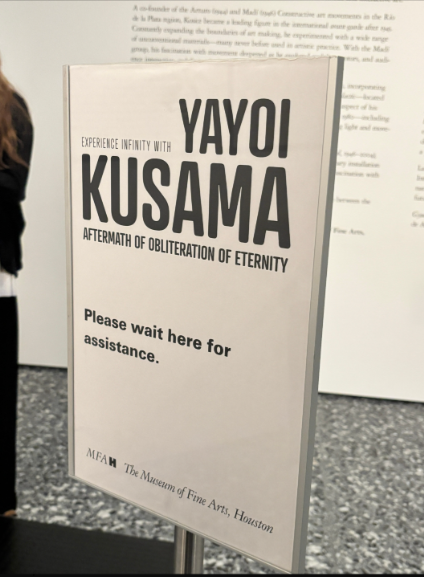
This round, I was ready. I gripped my partner’s hand ardently— ready for the wave of emotion to tackle me. I braced my legs, took a deep breath, and stepped into Aftermath of Obliteration of Eternity.
And sure enough, that familiar feeling slowly wrapped its warm embrace around my body and mind. It wasn’t a friend, but this time, it wasn’t strange.
It was joyful, this recognition of awe. Cognitively, I felt the grip on my sensations, rationality, verbalization, and even memory begin to slacken.
To be quite honest, I remember very little. All I know now is that it felt part-homecoming, part obliterating (well done, Kusama).
In the face of the infinite and intimate, I fell apart gladly.
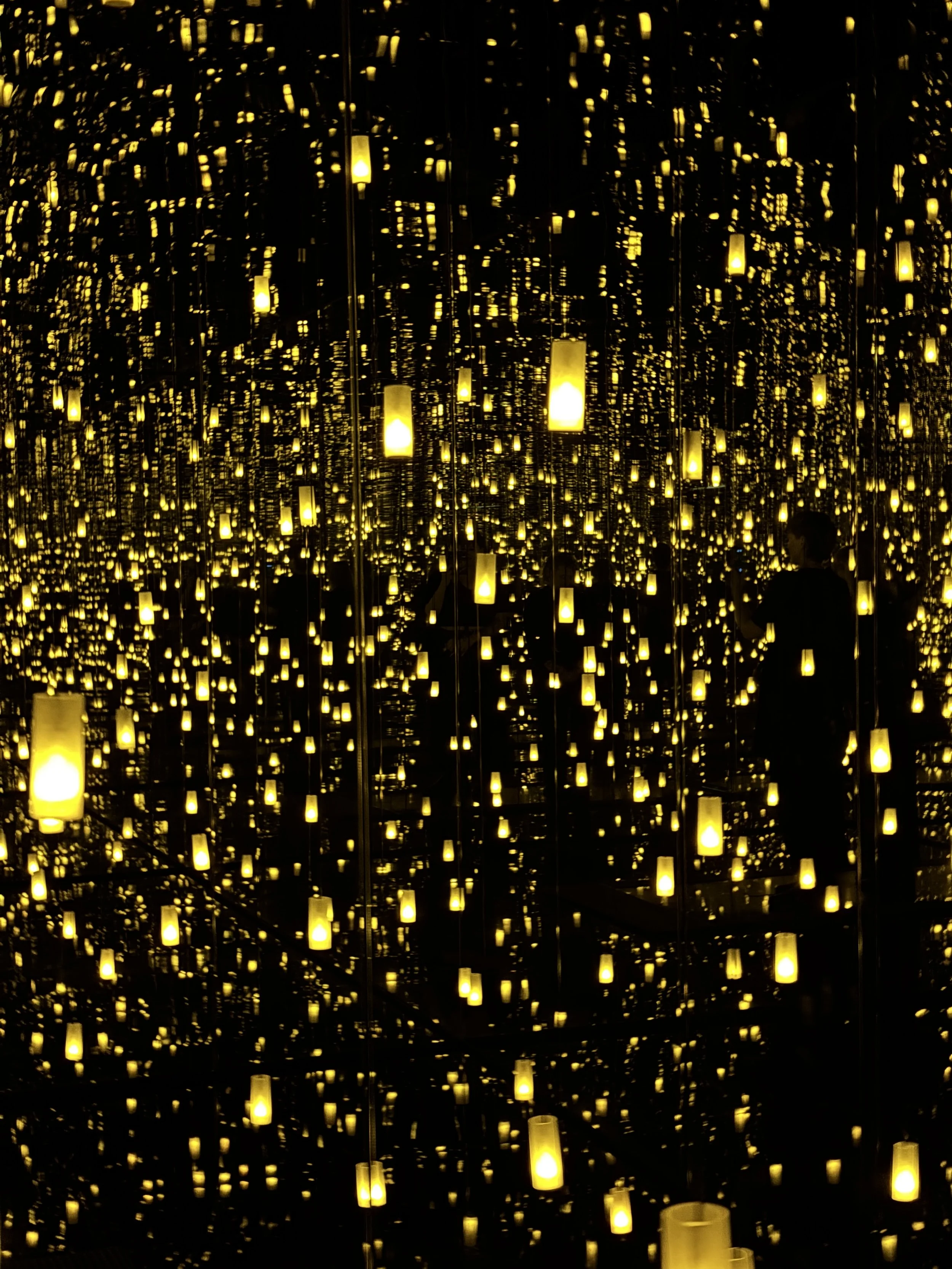
Yayoi Kusama, Aftermath of Obliteration of Eternity, 2009. MFA Houston.
From MFA Houston:
Yayoi Kusama Japanese, born 1929 was living in New York when she created her first Infinity Room in 1965. Engaging the viewer directly, through reflections that project into an infinite distance, these installations combine aspects of Minimalism’s clean use of industrial materials with ritual and performance. Kusama returned to Japan in 1970, and subsequent works became increasingly personal. She marked her 80th birthday with Aftermath of Obliteration of Eternity, which references the annual Buddhist Tōrō nagashi Water Lantern) ceremony honoring one’s ancestors.
“In the human world, what arouses our body and feeling of vitality is Eternity. I have been living in this Eternity, where enormous love for humanity passes through and the vast brilliance of life is infinitely reflected. . . . We keep flashing, disappearing, and again blossoming out in this Eternity.” —Yayoi Kusama
Stendhal Syndrome (and why I’m lucky to have it)
There’s a point where training stops being the primary tool. Not because it fails—but because something stronger interrupts it.
You’re no longer scanning for quality or parsing intention. You’re not placing the work historically or evaluating where it sits in the market.
You’re just... reacting.
Your chest tightens a little.
You stay longer than you planned.
You feel something you can’t immediately explain.
This is what’s often called Stendhal syndrome.
It’s usually described in extremes—people overwhelmed in museums, dizzy, emotional, even disoriented in front of great works of art. And because of that, it gets dismissed as something rare, almost theatrical.
But that framing misses the point.
At its core, Stendhal syndrome (as I believe it to be) isn’t about excess emotion.
It’s about undeniable recognition.
A moment when your body registers something before your intellect has time to organize it.
And for me, standing inside Kusama’s Infinity Room, that’s exactly what happened.
Not because it was overwhelming in scale—but because it was limitless in perception.
The repetition. The light. The illusion of endlessness. It didn’t ask to be understood first. It asked to be felt.
And that’s what makes this kind of experience so useful—especially if you’re someone who’s been trained to analyze before reacting.
Because it interrupts that pattern.
It shows you, very clearly, where your attention naturally goes when you’re not trying to get it “right.”
And that’s information you can’t be taught.
The Sob Story, Part II
My second Stendhalian (yes, I made that up) experience really surprised me.
I’ve been lucky enough to walk through museums around the world, often at a young age, with nowhere to be. I’ve paraded myself through the European Masters, Modern & Contemporary giants, and traveled to the Van Gogh Museum in Amsterdam, curated chronologically across the artist’s lifetime.
All of that to say, I’ve seen Van Gogh paint rocks and trees before. This wasn’t new.
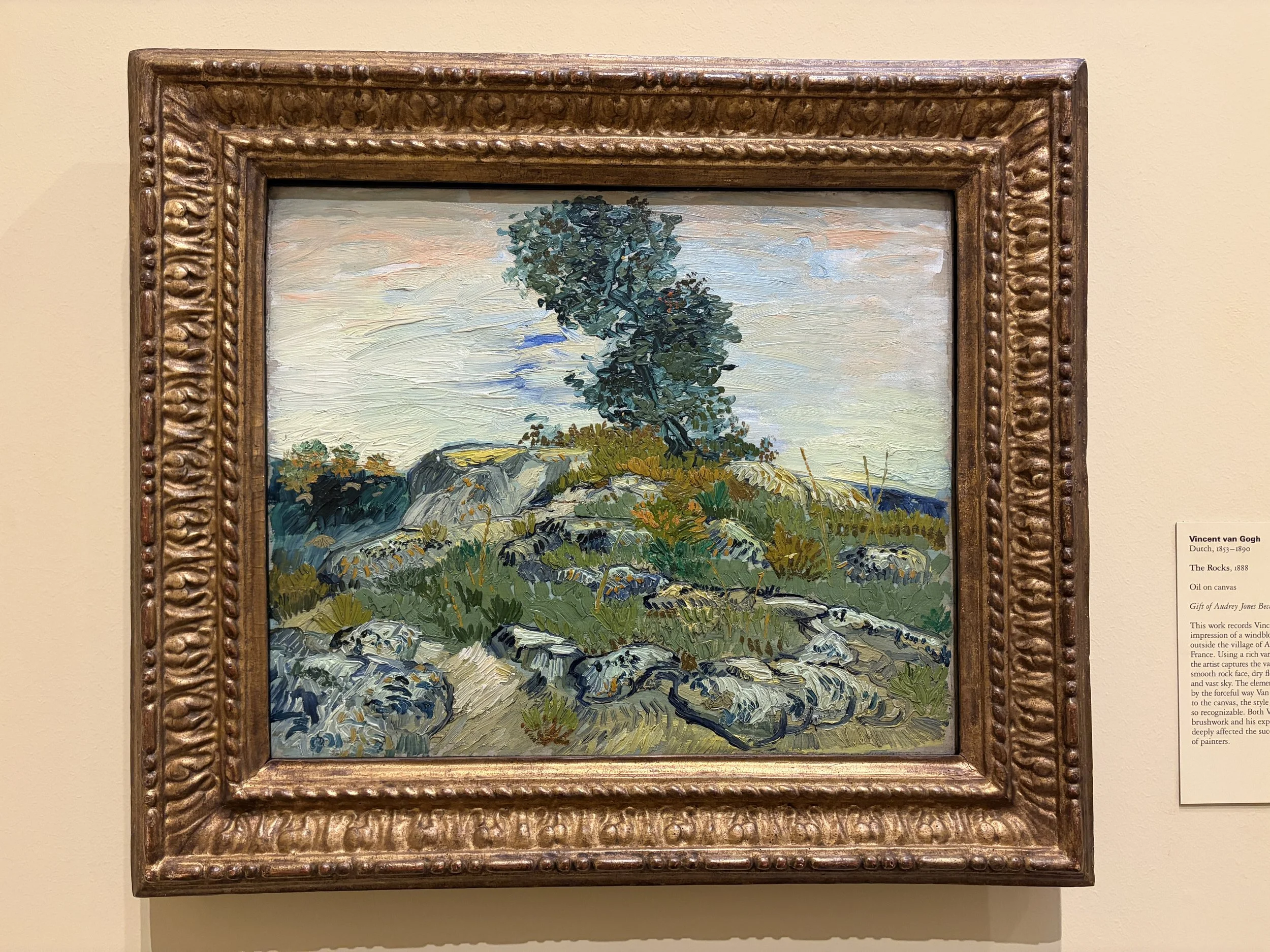
Van Gogh, The Rocks, 1888.
But this time, an average sized painting in a relatively unassuming corner of the museum stopped my breath deep in my chest. Different was this kind of full body sensation, loss of words, functionality, reality, and emotional control.
Tears began pouring from my eyes as my face tingled numbly. Shocked — electrically, was the best way to describe it. There is something
incredibly, overwhelmingly, morose and transmogrifying about The Rocks, 1888. You won’t see it in these images— you’ll appreciate the thick impasto brushstrokes, the bold colored layers that look as if they taste like grass and dirt and loam.
It’s something I can’t write, record, mimic, parrot, or explain. You have to feel it yourself.
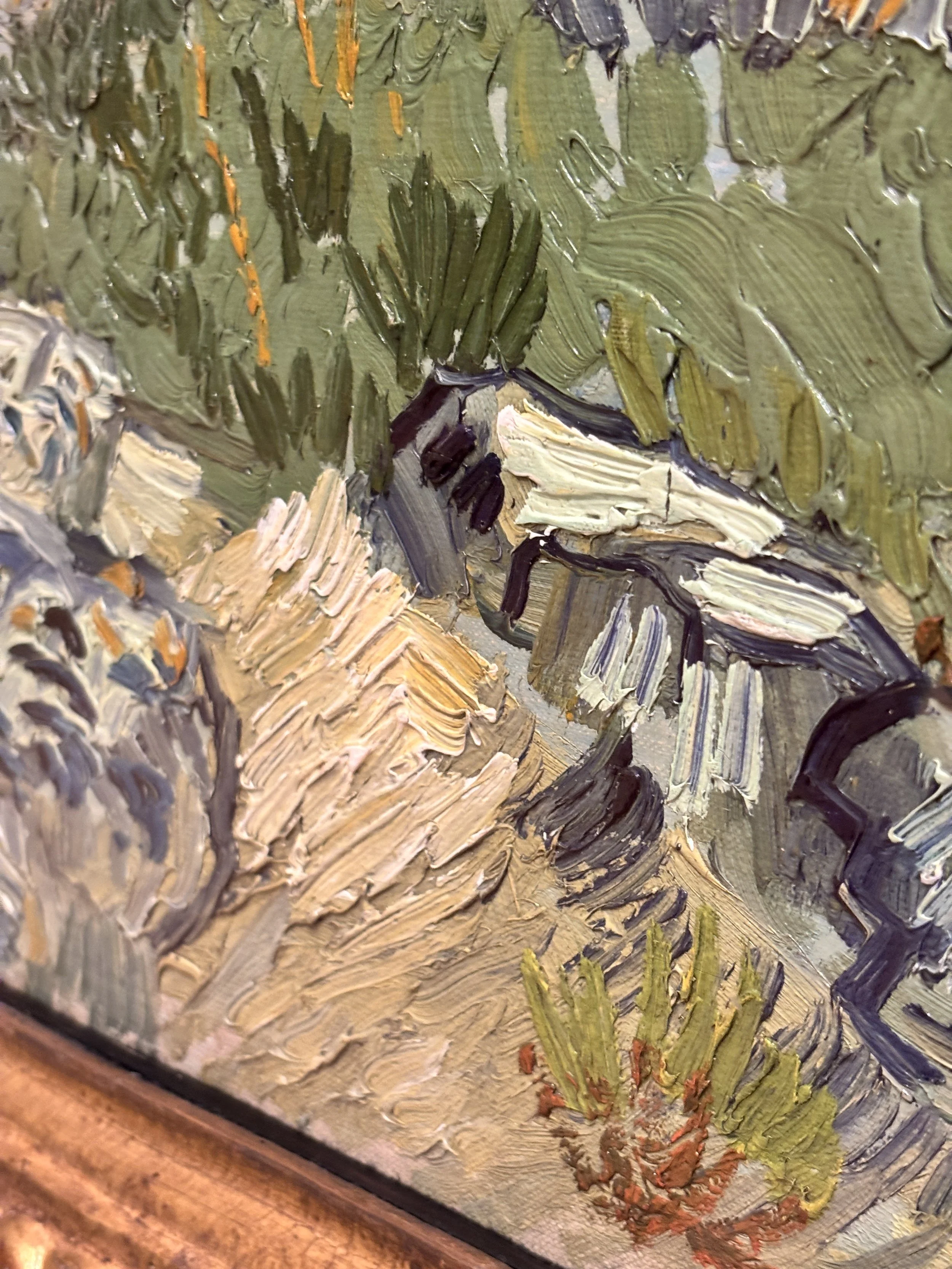
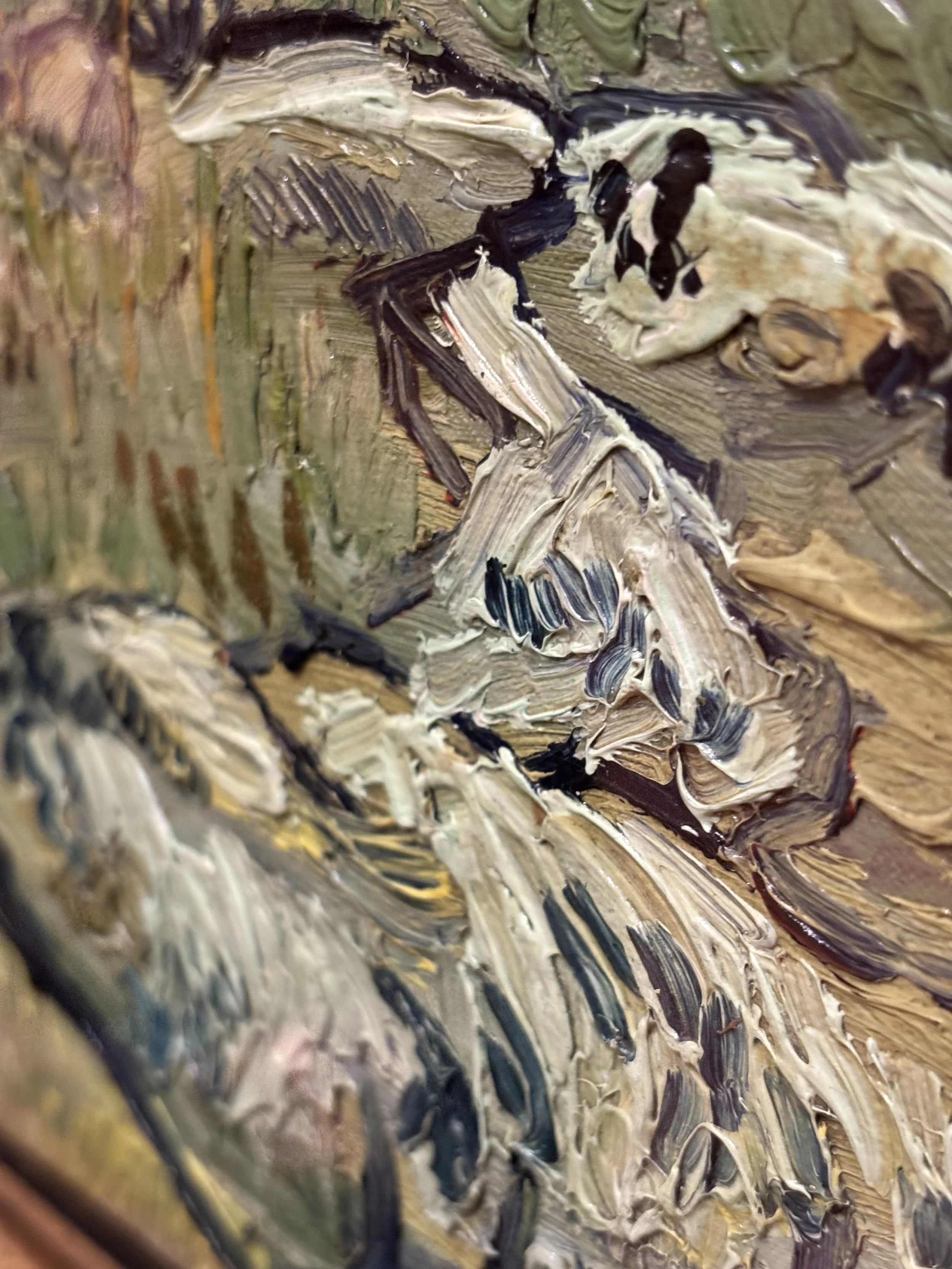
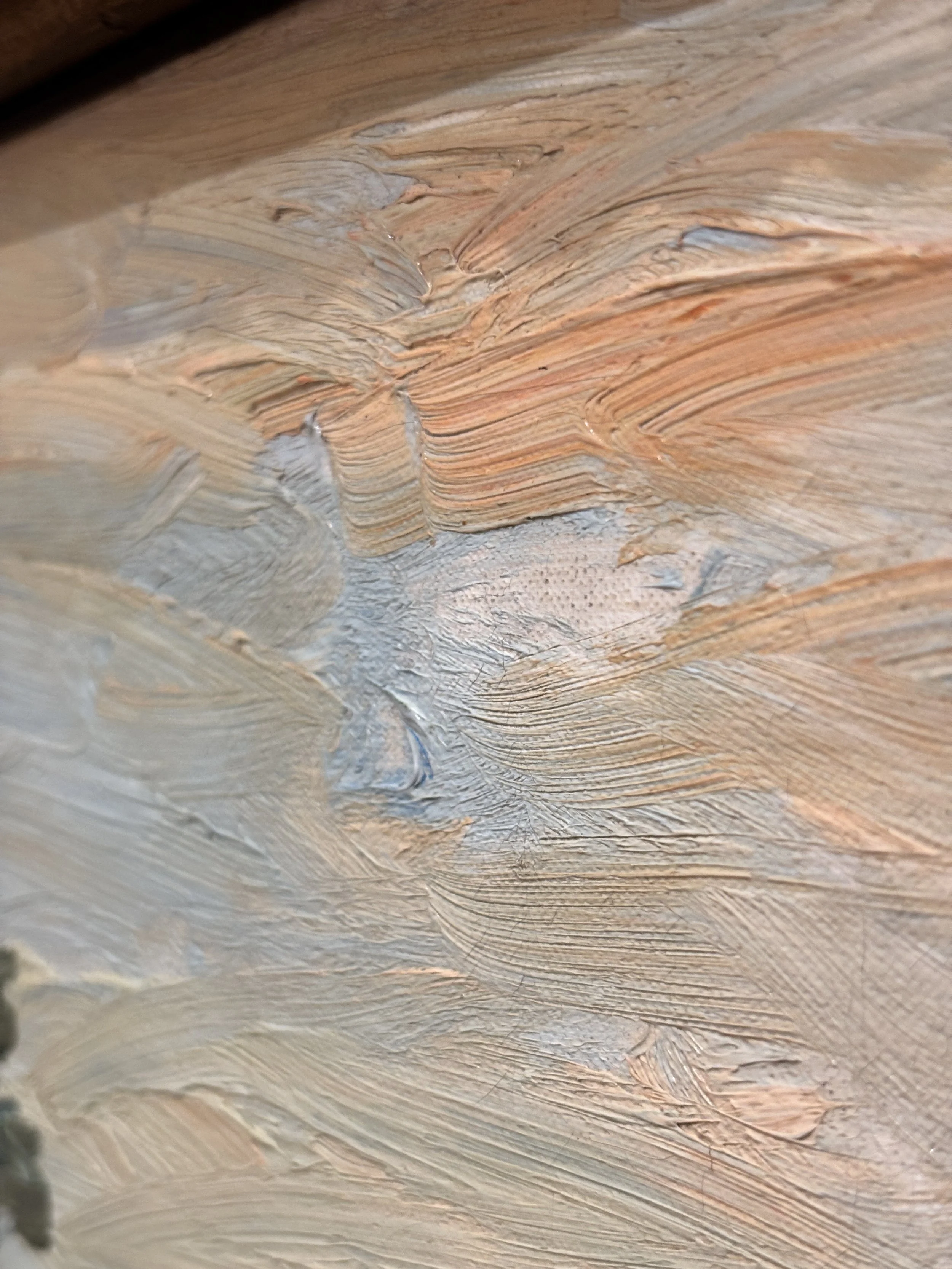
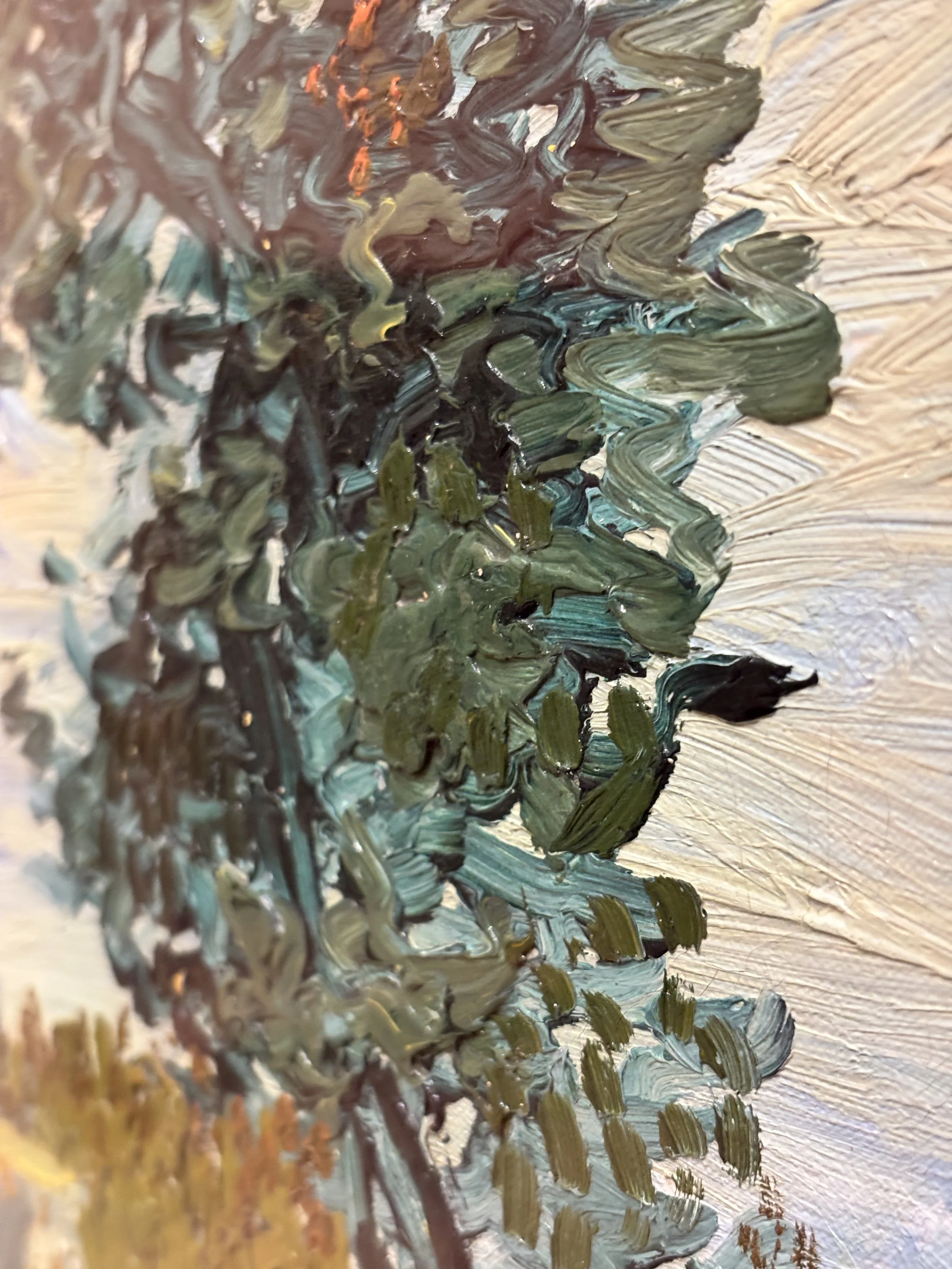
Details: Van Gogh, The Rocks, 1888
A Reminder: Run Toward It
My hope for you— future, current, potential collectors, artists, and enthusiasts, is this...
...this experience of overwhelm, absurdity, the starkly non-quotidian.
Some call it Stendhal Syndrome, others might call it taste. Both are probably perverse in trying to trap such an experience within a system of language.
What I’ll remember from Houston is the part of the visit where looking moved from assessment to recognition—where everything I’ve been trained to do as an advisor, a director, a student of art, stepped aside just long enough for something more honest to come through.
Because both are necessary.
The discipline to understand what you’re looking at.
And the awareness to notice when something moves you before you understand why.
That second part is the one people don’t talk about enough.
But it’s the one that builds collections with identity.
It’s the one that separates acquisition from attachment. It’s the one that stays.
You can learn the market.
You can study condition, provenance, historical relevance.
But you cannot manufacture recognition.
You can only notice it—and decide what to do with it.
And if you’re paying attention, you’ll know exactly when it happens. Not because someone tells you.
Because your body does.
A very special thank you to Imashoots for the photographs in this article. And for everything.
